
The Cutest Discovery of the Year (That's Also Ancient)
Imagine finding a complete skeleton of a dinosaur that's been locked inside solid rock for over 100 million years—without having to painstakingly chip away at it for months. That's exactly what happened recently when scientists in South Korea made a discovery so charming they named it after a cartoon character with adorable hair tufts.
The new dinosaur species is called Doolysaurus huhmini, and honestly? The naming story is just as delightful as the discovery itself.
Why "Dooly"? Because Korea Gets It
In South Korea, there's this beloved cartoon dinosaur named Dooly who's been around for generations. He's got these two cute little tufts of hair on his head and has basically become a cultural icon. When the research team realized they'd found a baby dinosaur—their very first one with skull fragments from the country—the connection was obvious.
"Every generation in Korea knows this character," explains Jongyun Jung, the researcher who led the investigation. "And our specimen is also a juvenile, so it's perfect."
This isn't just a fun naming choice either. The second part of the name honors Min Huh, a paleontologist who's dedicated decades to dinosaur research in Korea and helped establish the country's dinosaur research center. That's the kind of legacy you want attached to your name.
Hidden in Plain (Rock) Sight
Here's where it gets really cool. When researchers initially found the fossil on Aphae Island back in 2023, they only saw a few bones sticking out—some leg bones and vertebrae. Nothing that suggested a jackpot hidden inside.
But then they took it to the University of Texas and ran it through a micro-CT scanner (think of it like an X-ray that can see through solid rock in incredible detail), and suddenly everything changed.
"There was a fair amount of excitement when we saw what was hidden inside the block," Jung said. And I bet there was! The scan revealed skull fragments, additional bones, and way more of the skeleton than anyone expected. This is the first fossil from South Korea that's ever included actual skull pieces.
Instead of spending years carefully chipping away at the rock—which could damage delicate bones—the team got a complete 3D visualization of the skeleton in just a few months. That's the power of technology working smarter, not harder.
What Would This Little Guy Actually Look Like?
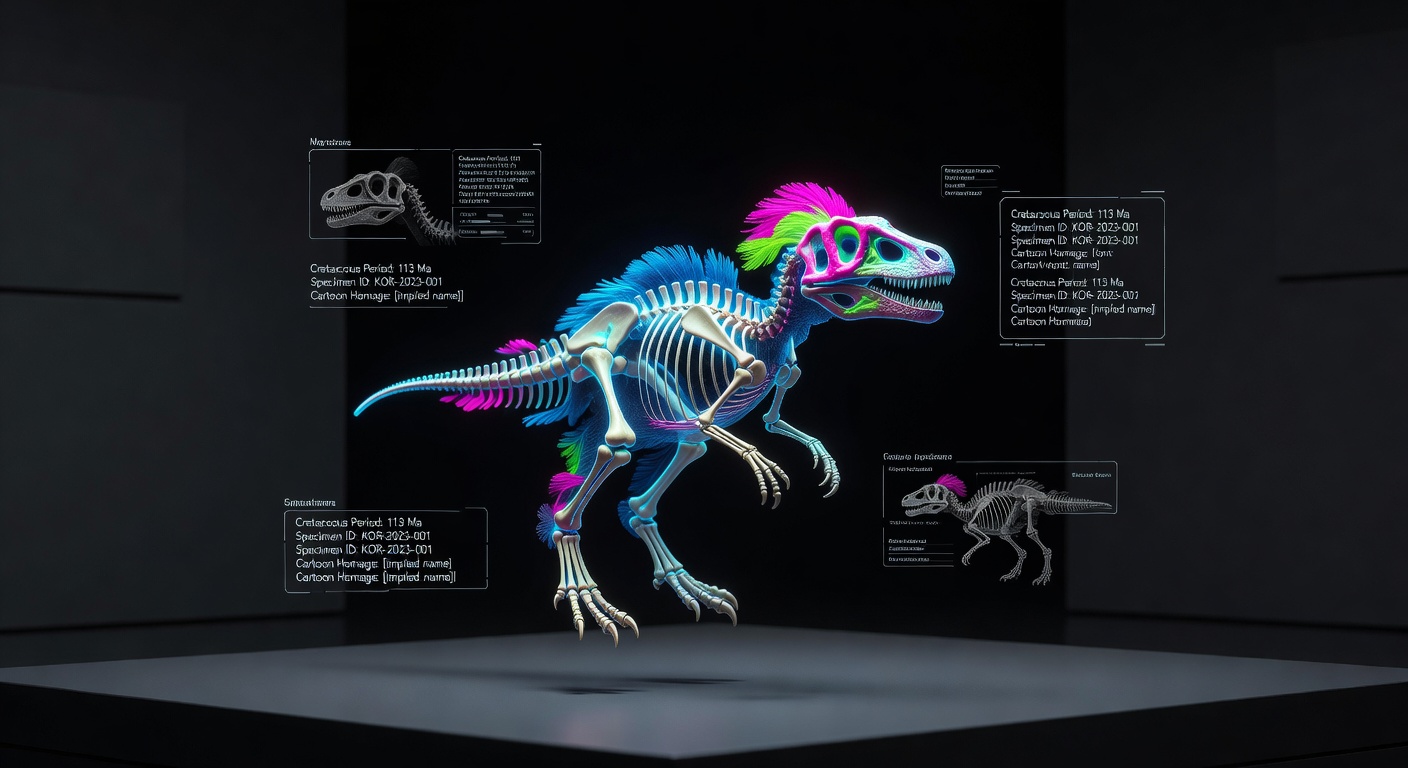
Let's talk about the adorable part. This baby dinosaur died when it was only about two years old (ancient toddler, basically). It was roughly the size of a turkey, though adults of the species probably grew to be about twice as big.
Here's the really cute bit: scientists think this creature was probably covered in soft, fuzzy filaments—kind of like feathers, but not quite. One of the researchers, Julia Clarke, actually said it might have looked "a bit like a little lamb."
A fuzzy, two-legged lamb from 113 million years ago. I mean, come on. That's objectively adorable.
The Forensic Evidence: What Did Baby Doolysaurus Eat?
This is where the detective work gets interesting. Inside the fossil, researchers found dozens of small stones called gastroliths. These are basically dinosaur dietary aids—animals would swallow them to help grind up their food in their stomachs (kind of like how birds use grit).
The fact that these stones were intact and arranged together told researchers something important: this dinosaur wasn't scavenged or torn apart before it fossilized. It was buried relatively quickly and gently, which is why so much of the skeleton survived.
The stones also revealed something about what this little creature ate—a mix of plants, insects, and small animals. So Doolysaurus was an omnivore, not a picky eater.
Why This Matters for Finding More Dinosaurs
Here's the thing that's got paleontologists genuinely excited: if this much fossil material was hiding inside solid rock, what else could be out there?
South Korea is famous for finding dinosaur tracks, nests, and eggs, but actual bones are surprisingly rare. Researchers think that micro-CT scanning might be the key to unlocking fossils that have been hiding in plain sight for millions of years.
The team members who traveled to Texas to learn this scanning technique are already applying it to other Korean fossils. Jung is also planning to return to Aphae Island to search for more specimens.
"We're expecting some new dinosaur or other egg fossils to come from Aphae and other small islands," Jung said optimistically.
The Bigger Picture
What I find really exciting about this discovery isn't just that we found a cute baby dinosaur (though that's genuinely cool). It's that this represents a shift in how paleontologists approach their work.
Instead of being limited by the physical challenges of excavation, technology is opening up entirely new possibilities. Delicate bones that would shatter if someone tried to chip them out can now be studied with perfect precision from inside their protective rock casing.
And naming it after a cartoon character? That's just scientists being human. That's recognizing that our discoveries aren't just for museums and academic journals—they're part of our shared culture and heritage.
So here's to Doolysaurus huhmini—the fuzzy little creature that captured our hearts across 113 million years of time.