
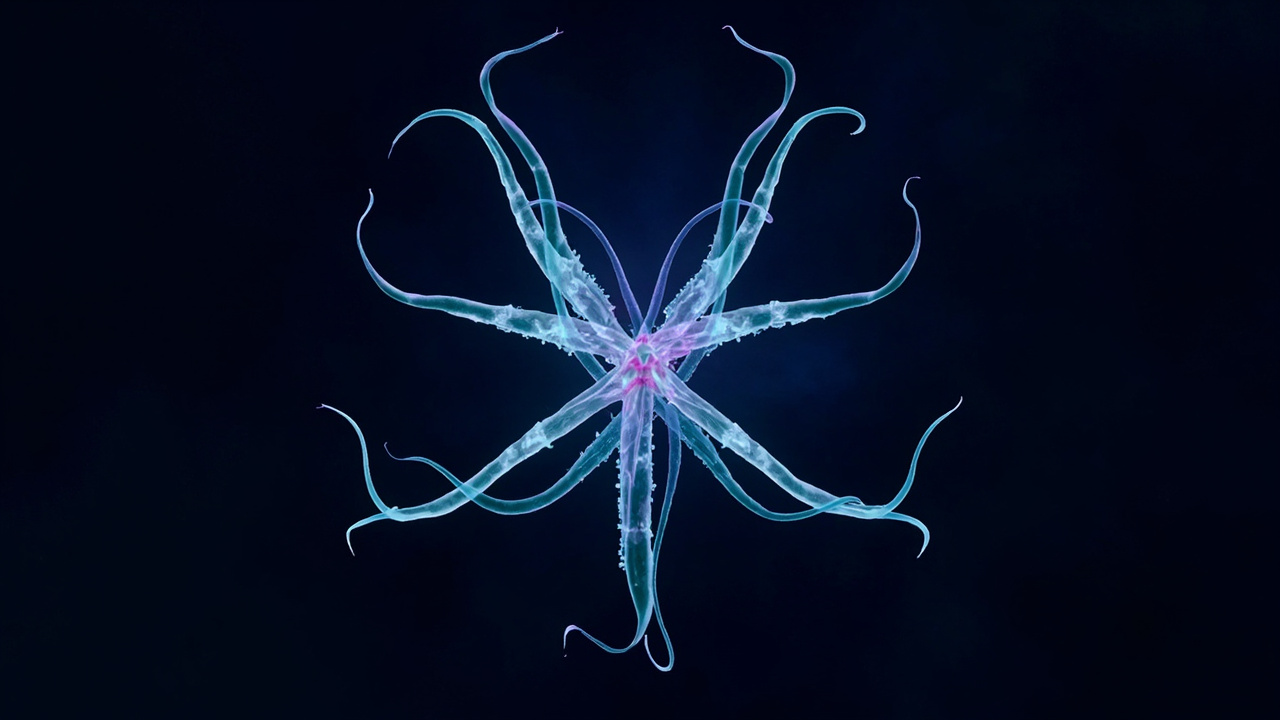
The Ocean's Best-Kept Secret Is Hiding in Plain Sight
You know that feeling when you realize there's a whole room in your house you've never noticed? That's basically what just happened with the ocean off Western Australia. A research team basically found an entire hidden neighborhood of bizarre creatures living miles underwater—and we had no idea they were even there.
How Do You Study Something You Can't See?
Here's where it gets clever. Traditional ocean exploration relies on cameras and nets, which is... honestly kind of like trying to photograph your neighbors through a foggy window. These researchers decided to try something completely different: they collected water samples from depths over 4 kilometers and looked for the DNA that animals shed into the ocean.
Think about it this way—when you're sick, you shed virus particles. When fish swim around, they shed skin cells, scales, and genetic material. All that DNA floats in the water like invisible calling cards. By analyzing these genetic traces (called environmental DNA or eDNA), scientists could basically create a guest list of every creature living in those deep canyons without ever having to catch them.
Pretty clever, right?
Giant Squid Are Real, And They're Down There
The headline-grabbing discovery? Giant squid. Actual, real-life giant squid—the legendary creatures that inspired centuries of sailor stories and sea monster mythology.
These things are absolutely bonkers when you really think about them. We're talking animals that can grow longer than a school bus, weigh as much as a small car, and have eyes the size of dinner plates (30 centimeters across—basically a large pizza). Yet we know almost nothing about how they actually live.
What makes this even cooler: researchers found genetic evidence of giant squid in six separate water samples from the canyons. The Western Australian Museum's researchers confirmed this was the first time we've detected giant squid using eDNA in this region, and the northernmost finding of this species in the eastern Indian Ocean.
226 Species? Some Might Be Brand New to Science
But honestly, the giant squid might be the least surprising discovery here. The research team identified 226 different species living in those submarine canyons. We're talking about deep-diving whales, weird fish with names like "faceless cusk eel," sleeper sharks, and creatures with bizarre adaptations we've barely studied.
Here's the kicker: dozens of these species had never been recorded in Western Australian waters before. Some of them don't cleanly match anything already catalogued by science. Now, that doesn't automatically mean they're entirely new species—they could just be creatures that wandered further north than usual. But it does suggest we're completely overlooking massive parts of ocean biodiversity.
The lead researcher, Dr. Georgia Nester, put it perfectly: finding the giant squid was cool and all, but it's really just one piece of a much bigger puzzle we're finally starting to assemble.
Why This Matters More Than You'd Think
These submarine canyons off Western Australia are basically underwater apartment complexes—rich, complex ecosystems teeming with life. Until now, they've been almost completely unexplored, mostly because studying them is genuinely hard. You can't just send a diver down 4 kilometers. You need specialized equipment, research vessels, and time.
eDNA changes everything. A single water sample can reveal the presence of hundreds of species. That's like having a security camera that doesn't just record faces—it tells you everyone who's ever walked through the room.
What This Tells Us About What We Don't Know
Here's something that genuinely fascinates me about this discovery: we've mapped the surface of Mars. We've sent robots to asteroids. We've built submarines that can reach the deepest ocean trenches. Yet we're still stumbling upon entire ecosystems off the coast of a developed country that we barely understand.
This research is basically a reminder that Earth still has massive blind spots. The deep ocean covers most of our planet, and we're exploring it with the equivalent of a flashlight in a stadium. Who knows what else is down there?
The cool part? Technology like eDNA is making exploration faster and cheaper than ever before. We might finally start filling in those knowledge gaps.
Source: https://www.sciencedaily.com/releases/2026/05/260513221807.htm