
We Finally Found the Milky Way's Edge—And It's Kind of Mind-Blowing
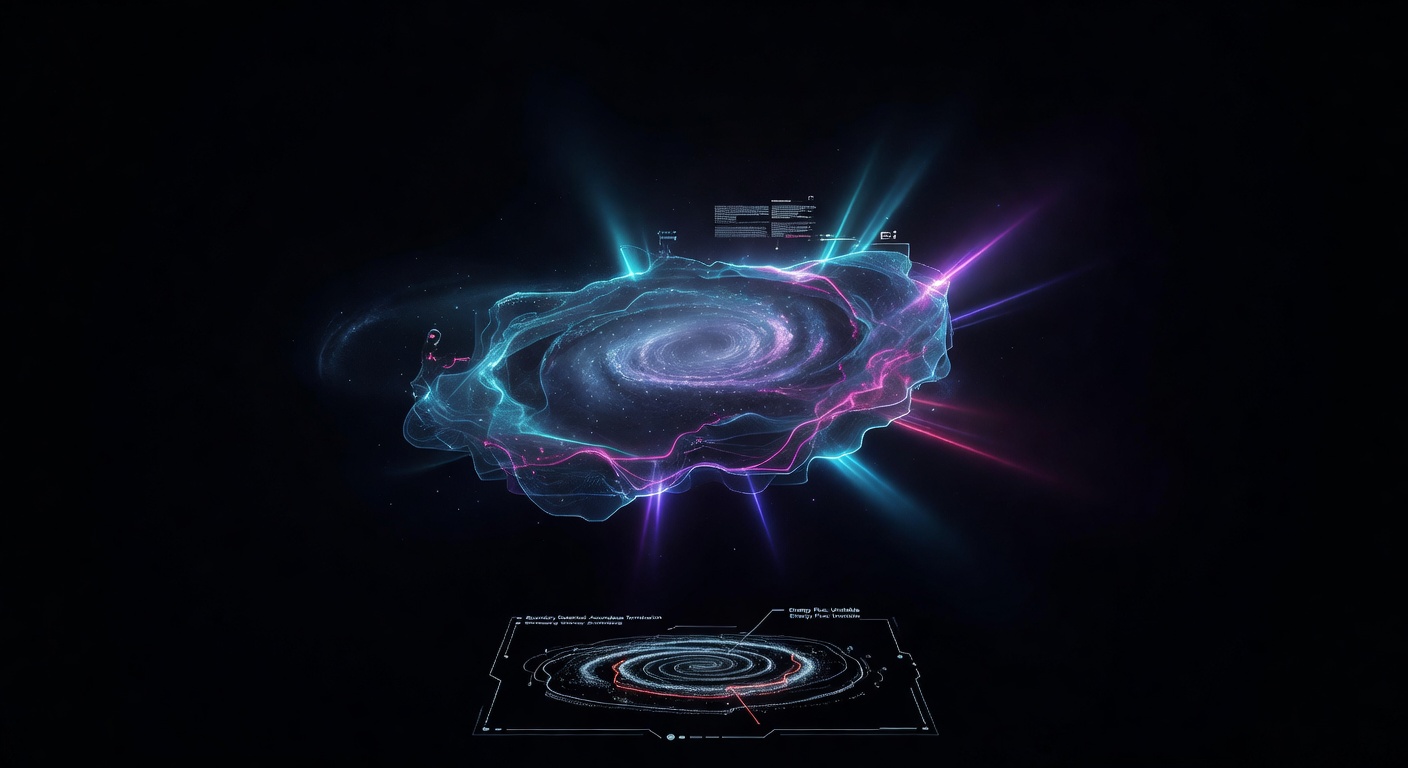
You know that feeling when you're looking up at the night sky and the band of stars stretching across it seems to go on forever? Yeah, I get it. It looks infinite. But here's the thing: our galaxy actually has an edge. We just couldn't quite pin down where it was... until now.
The Mystery That Stumped Astronomers
For decades, scientists have been asking a seemingly simple question: "Where does the Milky Way actually end?" Sounds straightforward, right? Except it's not. Our galaxy is surrounded by a thick fog of dust and gas that makes seeing its outer regions incredibly difficult—kind of like trying to see the edge of a forest when you're standing in the middle of it during a heavy snowstorm.
The Hubble Space Telescope and James Webb Space Telescope spotted some weird breaks in the light coming from the galaxy's outer regions, but nobody could quite figure out what they meant or where exactly they pointed to.
The Breakthrough
A team from the University of Malta decided to take a different approach. Instead of just looking at light patterns, they analyzed over 100,000 giant stars using data from multiple surveys—basically creating a stellar census of our galaxy. And by mapping out where these stars are and how old they are, they found something fascinating.
The Milky Way's outer edge sits about 40,000 light-years from the galactic center. And here's where it gets really cool: that's exactly where star formation basically stops.
The Stellar Age Mystery
This is my favorite part of the story. When researchers looked at the ages of stars at different distances from our galaxy's center, they discovered something that looks like the letter U when you graph it:
- Near the center: Old stars
- Moving outward: Stars get progressively younger
- At the outermost edge (the break): Stars start getting old again
- Beyond the edge: Really ancient stars
Wait... what? Why would the oldest stars be hanging out in the galaxy's outer suburbs?
The Migration Theory
Here's the mind-bending answer: many of these outer, ancient stars didn't actually form out there. They formed closer to the galactic center billions of years ago and then moved outward over time.
Think of it like this: imagine a city where young people tend to move to the center for jobs and opportunities, while older folks gradually drift toward the suburbs over decades. That's kind of what's happening in our galaxy, except on a scale of billions of years.
The researchers think this happens because of something called "galactic migration." As the spiral arms of the galaxy shift and the central bar rotates (yes, our galaxy has a giant rotating bar at its core!), gravitational forces act like a cosmic conveyor belt, slowly shuffling stars outward.
Even our Sun probably migrated outward from where it originally formed. Wild, right?
Why This Edge Matters
So what's special about this 40,000-light-year boundary? It's the last place where the galaxy still has enough gas and dust to make new stars. Beyond it, things are too thin and cold for stellar nurseries to operate.
This dividing line reveals how galaxies evolve over time. The Milky Way's structure tells the story of its history—where there was once enough raw material to spawn billions of stars, and where things have become too sparse and quiet for new star birth.
The Bigger Picture
This discovery isn't just about satisfying our curiosity about where we live (though that's pretty cool). It helps us understand how spiral galaxies like ours actually work. When astronomers look at similar galaxies elsewhere in the universe, they see similar patterns and breaks in their light profiles.
By figuring out what our galaxy's break means, we're essentially getting a playbook for understanding galaxies billions of light-years away.
The Cosmic Perspective
What strikes me most about this finding is how it reminds us that even something as impossibly large and seemingly permanent as a galaxy has structure, boundaries, and a story written in the ages and positions of its stars.
The Milky Way isn't just this infinite swath of light stretching across the sky. It's a dynamic, evolving system with suburbs and a recognizable edge. We're not living in an eternal cosmos of stars—we're living in something more like a vast, ancient city with distinct neighborhoods and limits.
And somehow, that makes our place in it feel even more special.