
The Microscopic Data Revolution Nobody Saw Coming
Imagine if you could store an entire library's worth of information on something smaller than a single bacterium. That's not science fiction anymore—it's actually happening right now in a lab in Vienna.
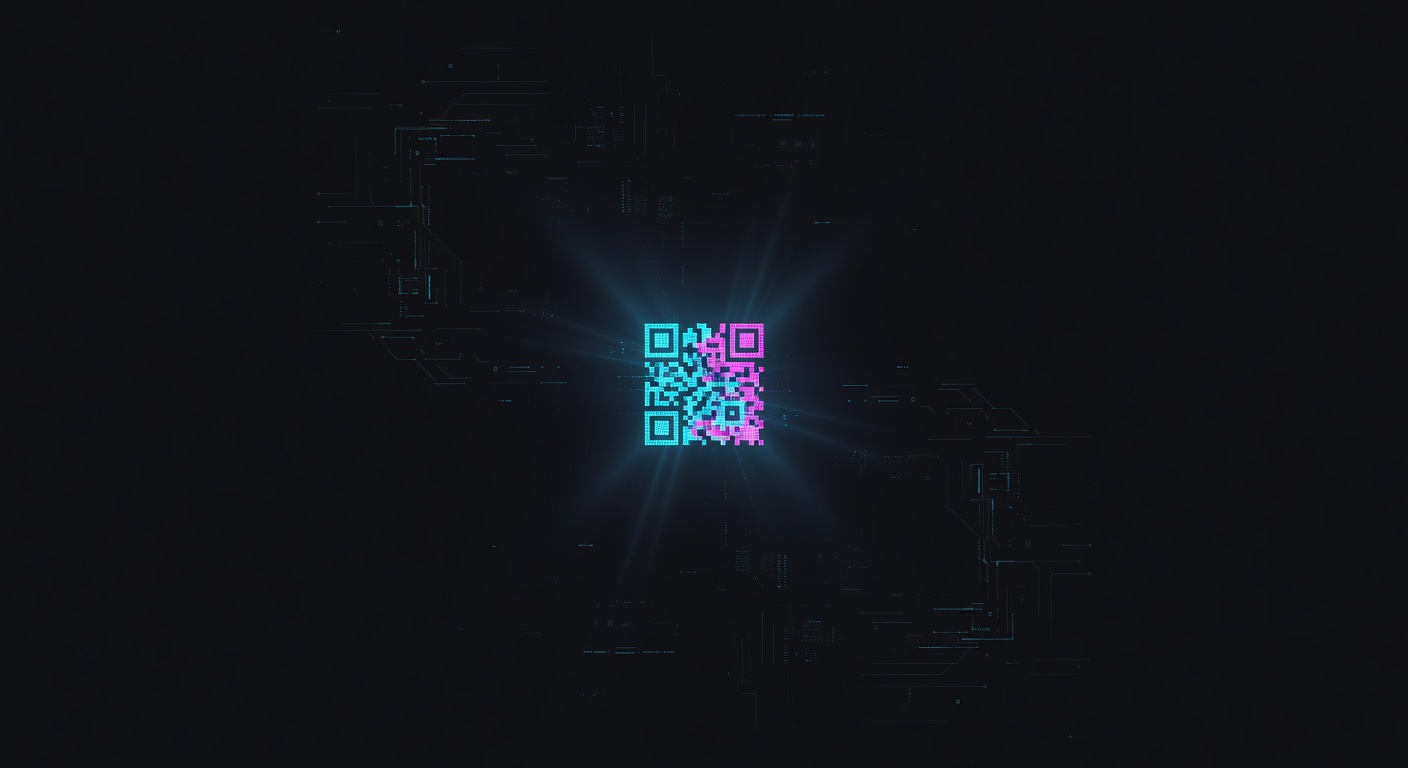
A team of researchers just created a QR code so minuscule that you'd need an electron microscope just to see it. We're talking about something measuring 1.98 square micrometers. To put that in perspective, that's roughly the size of a grain of pollen, except even smaller. And yes, Guinness World Records officially confirmed it. Pretty cool, right?
Why This Actually Matters (Beyond the Wow Factor)
Okay, so we made something tiny. Big deal, you might think. But here's where it gets genuinely interesting: this breakthrough could fundamentally change how we think about data storage forever.
Think about your laptop, your phone, your external hard drive. How long do you think the data on those devices will actually last? The truth is pretty sobering. Traditional storage technology—magnetic drives, flash memory, all that stuff—tends to start degrading within just a few years. Without constant power, cooling, and maintenance, your precious photos and files are basically on borrowed time.
But ceramic storage? That's a completely different animal.
The Ancient Wisdom Approach to Modern Problems
Here's a wild thought: those ancient civilizations that carved their knowledge into stone actually figured something out that we've kind of forgotten. Messages carved into rock from thousands of years ago are still readable today. They didn't need electricity. They didn't need tech support. They just... lasted.
The scientists at TU Wien realized that if you encode information into ceramic materials—the same super-durable stuff used to coat high-performance cutting tools—you could create storage that genuinely could outlast human civilization. We're talking centuries. Possibly millennia.
This isn't some theoretical "maybe it'll work someday" idea either. They've already done it. They've proven it can be read reliably. And it works without needing a single watt of electricity to maintain it.
How They Actually Made This Microscopic Marvel
The technical approach is surprisingly elegant. Using focused ion beams (think of it like a super-precise laser), researchers literally engraved the QR code pattern into a super-thin ceramic layer. Each individual pixel in this code is just 49 nanometers—which is about ten times smaller than the wavelength of visible light.
Translation? You literally cannot see this code with any normal microscope. An electron microscope? Sure. Regular optics? Not a chance.
But here's the clever part: even though it's impossibly small, it's incredibly stable. At microscopic scales, atoms love to move around and shift positions, which usually corrupts data. That's why shrinking storage has been so challenging. But ceramic materials are fundamentally different—they're inert and robust. The data doesn't just get stored; it gets locked into place.
The Storage Numbers Are Kind of Absurd
Want to talk about capacity? You could fit more than 2 terabytes of data on a single sheet of A4 paper using this method.
Two terabytes. On one piece of paper. That's roughly 400,000 hours of Netflix-quality video. It's mind-bending.
This Could Change Everything About How We Archive Knowledge
Let's step back for a second and think about what this means for society. We're living in this wild information age where we're creating data at an unprecedented rate. But we're storing it on these incredibly fragile, power-hungry systems that need constant babysitting.
Data centers around the world use enormous amounts of electricity just to keep our information alive. They need cooling systems, backup power, redundancy, constant maintenance. It's expensive. It's energy-intensive. And it's not even reliable for the long term.
Now imagine a future where the most important human knowledge—medical records, scientific breakthroughs, cultural heritage, historical documents—is preserved on ceramic storage that requires no electricity, no maintenance, and will still be readable in the year 3025.
That's genuinely transformative.
We're Just Getting Started
The researchers are pretty clear that this record is just the beginning. Their next goals include:
- Testing other materials beyond ceramics
- Speeding up the writing process (right now it's a lab-based procedure)
- Developing manufacturing processes that could work at industrial scales
- Creating more complex storage structures beyond simple QR codes
The vision here is that ceramic data storage eventually becomes as accessible and practical as today's conventional storage methods—except without the degradation, energy consumption, and constant replacement cycle.
The Real Takeaway
We live in an age of instant gratification, where everything is supposed to be fast, online, and cloud-based. But this achievement reminds us that sometimes, the smartest solution to a modern problem is thinking like our ancestors: just write it down—permanently—on something that lasts.
The fact that they did it at a scale invisible to the human eye? That's just the cherry on top.