
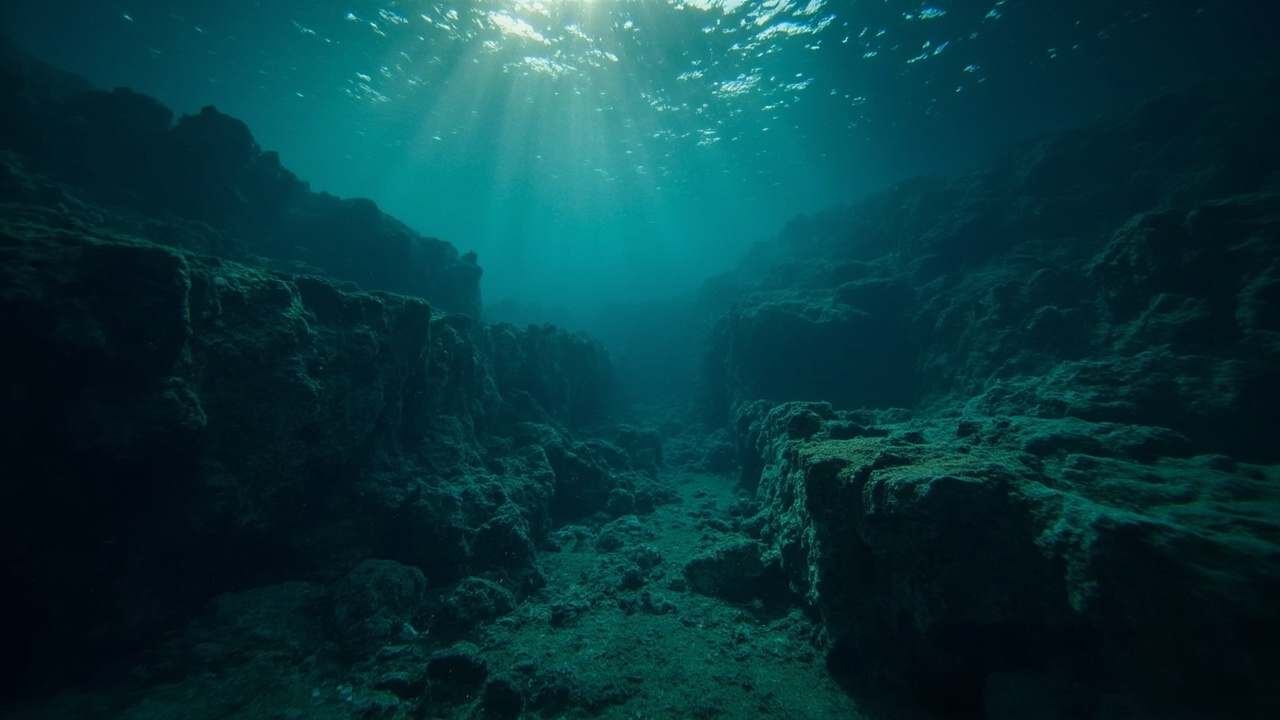
When an Earthquake Erased a City from History
Picture this: You're diving in one of the world's deepest lakes in Kyrgyzstan, and suddenly you spot ancient brick buildings emerging from the murky water. That's what happened recently when underwater archaeologists explored Lake Issyk-Kul and discovered something extraordinary — the remains of Toru-Aygyr, a bustling medieval city that's been hidden since the 1400s.
Here's the wild part: this wasn't some tiny settlement. Experts believe this was actually a major hub on the legendary Silk Road, the ancient network of trade routes that connected China to Europe and the Middle East. And then, around the early 1400s, a massive earthquake essentially hit the reset button on the entire region, shifting water levels and swallowing the city whole.
What They Found Down There Is Incredible
The excavation team didn't just spot a few random artifacts. They discovered entire buildings still standing underwater, complete with walls and structures that give us genuine insight into how people lived back then.
Some of the most revealing finds include:
- Brick buildings that show the city had real architecture and planning
- Stone millstones that hint at the local economy (grinding grain was serious business back then)
- A Muslim burial ground where bodies were carefully positioned facing Mecca, telling us about the religious practices of the community
- Ceramics and intact vessels that somehow survived centuries underwater — archaeology gold, honestly
- A mysterious large decorated building that could have been a mosque, a bathhouse, or even an educational institution
When you find stuff like this, you're not just looking at random objects. You're piecing together evidence of actual human lives, daily routines, and what mattered to these people.
A City Caught Between Two Worlds
What really fascinates me about Toru-Aygyr is how it reflects a major historical transition. The artifacts show the city existed during a period when power was shifting hands and belief systems were changing.
Around the 10th century, a Turkic dynasty called the Karakhanids controlled this area. But over time, Islam spread through Central Asia, especially under the rule of the Golden Horde in the 13th century. The buried city is basically a physical record of that cultural transformation. You can literally see it in the artifacts.
Researchers think the residents might have already abandoned the settlement before the earthquake hit, possibly because they saw the writing on the wall (or the tremors, as it were). But the earthquake essentially made sure no one would be coming back anytime soon.
Why This Matters More Than You'd Think
So why should you care about a submerged medieval city? Because it confirms that trade routes we've only read about in history books were absolutely real and thriving. Chinese sources actually mentioned this region in their records, and now we have physical evidence backing that up.
It's like watching historians' theories come to life underwater. And it reminds us that nature is the ultimate curator — that earthquake preserved this city in a way that above-ground settlements rarely survive. It's a snapshot of medieval Central Asia that would have been lost forever without the lake.
The expedition team is still diving and exploring, so there's probably more to discover. Every time they go down, they're essentially opening the diary of a civilization that disappeared 600 years ago.
Pretty cool when you think about it, right?