
The Universe Has a Secret Infrastructure
Here's something wild that most people don't realize: the universe isn't just scattered galaxies floating around randomly in empty space. There's an entire invisible network connecting everything together — think of it like a cosmic interstate highway system that nobody could actually see until now.
We've known this network exists for decades based on mathematical models and indirect evidence, but actually seeing it in detail? That's brand new. And it just happened.
What Is This Cosmic Web Thing, Anyway?
Let me break this down in the simplest way possible. About 85% of all the matter in the universe is something called dark matter. It's invisible — we can't see it, touch it, or measure it directly — but we know it's there because of how it affects things around it. It's like feeling a breeze and knowing wind exists without actually seeing the air.
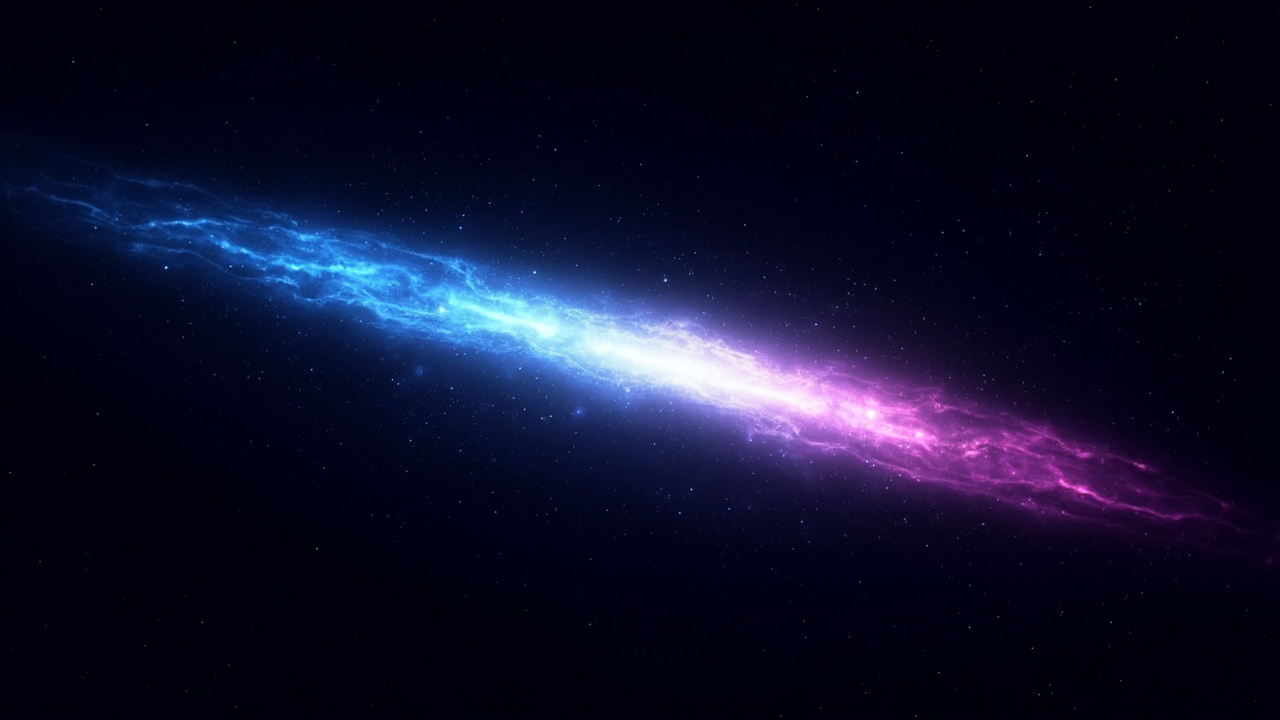
Dark matter forms this enormous web-like structure made of long filaments (think of them as cosmic strings or threads). Wherever these filaments intersect, galaxies tend to form and light up like cosmic cities. Pretty amazing when you think about it.
These Filaments Are Like Cosmic Delivery Systems
Here's the really interesting part: scientists believe these filaments aren't just structure — they're functional. They act like delivery pipes, channeling gas across the universe and feeding it into galaxies. This gas is basically fuel for creating new stars. Without these highways, galaxies would struggle to get the raw materials they need to keep growing.
But here's the problem: detecting this gas has been incredibly difficult. Most intergalactic gas has only been observed indirectly, like when scientists measure how it blocks light from objects behind it (similar to how you'd know smoke is there by seeing it dim a light bulb). The most common element, hydrogen, barely glows at all. It's like trying to photograph a ghost in daylight.
How They Finally Pulled It Off
An international team of researchers decided to tackle this challenge head-on. Using an instrument called MUSE (Multi-Unit Spectroscopic Explorer) attached to the Very Large Telescope in Chile, they spent hundreds of hours staring at the same region of sky. This isn't some quick observation — we're talking about one of the most ambitious observing campaigns ever conducted.
Their patience paid off. They captured an image of a cosmic filament that stretches about 3 million light-years and connects two galaxies that both have supermassive black holes at their centers. The light from this filament traveled nearly 12 billion years to reach us, which means we're looking at the universe when it was just a toddler in cosmic terms (only about 2 billion years old).
The Mind-Blowing Part: Theory Actually Matches Reality
Here's what really got me excited about this discovery: when the researchers compared their observations to supercomputer simulations of how the universe should look according to current cosmological models, they matched up beautifully. This doesn't sound like much until you realize what it means.
We've been building these elaborate theories about how the universe works, and now we finally have high-definition confirmation that we're on the right track. That's huge for science.
Why This Matters More Than You Might Think
This discovery lets us finally trace exactly where galaxies begin and where the cosmic web ends. We can measure the boundaries. We can characterize the shape and behavior of these structures directly instead of inferring them.
More importantly, understanding how gas flows through these cosmic highways is fundamental to understanding how galaxies actually grow and evolve over time. Without knowing what's being delivered through these filaments and where it's going, we're missing a crucial piece of the cosmic puzzle.
What's Next?
One of the lead researchers made a funny comment (in Bavarian German, no less): "One doesn't count." They're basically saying, "Yeah, we captured one filament, but one example doesn't prove the broader pattern." So now they're gathering more data, hunting for additional cosmic filaments to build a comprehensive map of how matter actually flows through the universe.
I love this about science. The moment you make one breakthrough, you immediately realize how much more you need to learn. But that's what makes it fun.
The Big Picture
This is one of those discoveries that won't make headlines the way a new exoplanet or black hole might, but it's arguably more important. We're literally mapping the large-scale structure of reality itself. We're learning how the universe is plumbed at the largest scales.
The cosmic web isn't just a cool theoretical idea anymore. It's something we can now directly observe, measure, and study. And that changes everything about how we understand our universe's architecture.
Pretty incredible when you step back and think about it, right?