
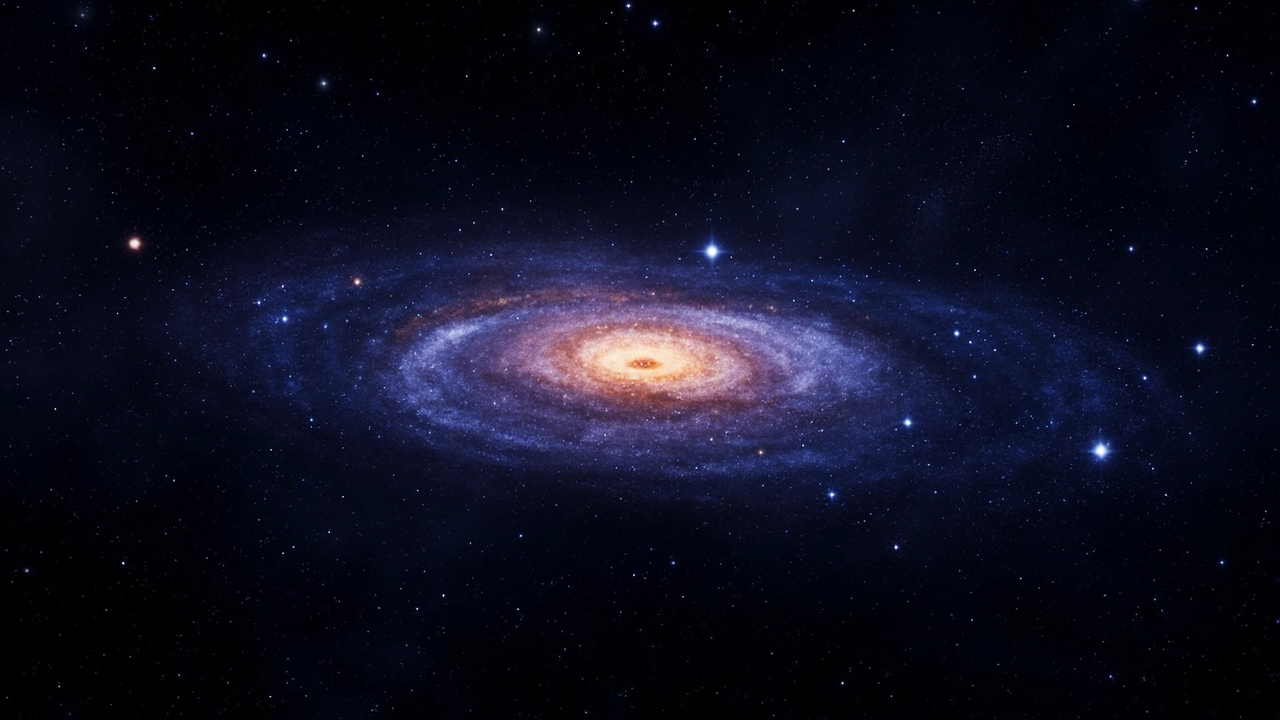
The Universe Just Got a Lot More Visible
Imagine trying to understand how your city is laid out, but you can only see a few blocks at a time. Frustrating, right? That's kind of been humanity's problem with understanding the cosmos—we've been squinting at tiny pieces of the universe when what we really needed was a bird's-eye view.
Well, that's changed. Scientists working on something called the Dark Energy Spectroscopic Instrument (DESI) have just completed observations of over 47 million galaxies and quasars, creating the most detailed 3D map of the universe ever made. To put that in perspective, they captured six times more galaxies than all previous surveys combined. That's not just an upgrade—that's a complete game-changer.
So What's the Big Deal?
Here's where it gets wild: about 70% of the universe is made of something we can't see, can't touch, and barely understand. We call it dark energy. It's basically an invisible force that's pushing everything apart, making the universe expand faster and faster. And honestly? We have almost no idea how it works.
This new map is like finally getting glasses after years of walking around half-blind. With all this data, physicists can now look at how galaxies are distributed across space and time, which gives them clues about how dark energy behaves. It's detective work on a cosmic scale.
A Five-Year Marathon (That Actually Finished Early!)
What's even more impressive? DESI wrapped up this massive project ahead of schedule. For five years, researchers from over 70 institutions and 900 scientists worldwide coordinated observations, recorded data, and analyzed results. That's not just a collaboration—that's an international science squad on a mission.
The effort even survived a pretty serious curveball. In 2022, a wildfire knocked out power and internet to the observatory for months. But the team got creative, found workarounds, and kept pushing forward. That kind of resilience is honestly what makes science cool.
What Happens Next?
Here's the thing—we're not even done yet. The researchers are still processing all this data. The first official results from the complete five-year survey won't come out until 2027. Plus, DESI will keep observing through 2028, filling in harder-to-reach regions of the sky.
When those results drop, they could fundamentally change how we understand the universe's past, present, and future. We might finally crack the mystery of dark energy, or we might discover that everything we thought we knew was wrong. Either way, it's going to be fascinating.
Why This Matters Beyond Just Scientists
I know cosmic maps might sound abstract, but here's why it's worth caring about: understanding dark energy isn't just academic trivia. It's about understanding the fate of the universe itself. Will it expand forever? Will it eventually collapse? Will something unexpected happen? These questions have real philosophical implications for what it all means.
Plus, the technologies developed for DESI often find practical uses in everyday life. The same precision instruments and data processing techniques that map galaxies have applications in medicine, engineering, and technology.
The Real Takeaway
What I love about this story is that it shows what happens when thousands of brilliant people from different countries decide to work together on something bigger than themselves. No drama, no competition—just scientists united by curiosity about how the universe works.
We've got a better map of the cosmos than we've ever had. Now comes the hard part: figuring out what it all means. But based on the track record, I'm betting the discoveries ahead will blow our minds.
Source: https://www.sciencedaily.com/releases/2026/04/260427050604.htm