
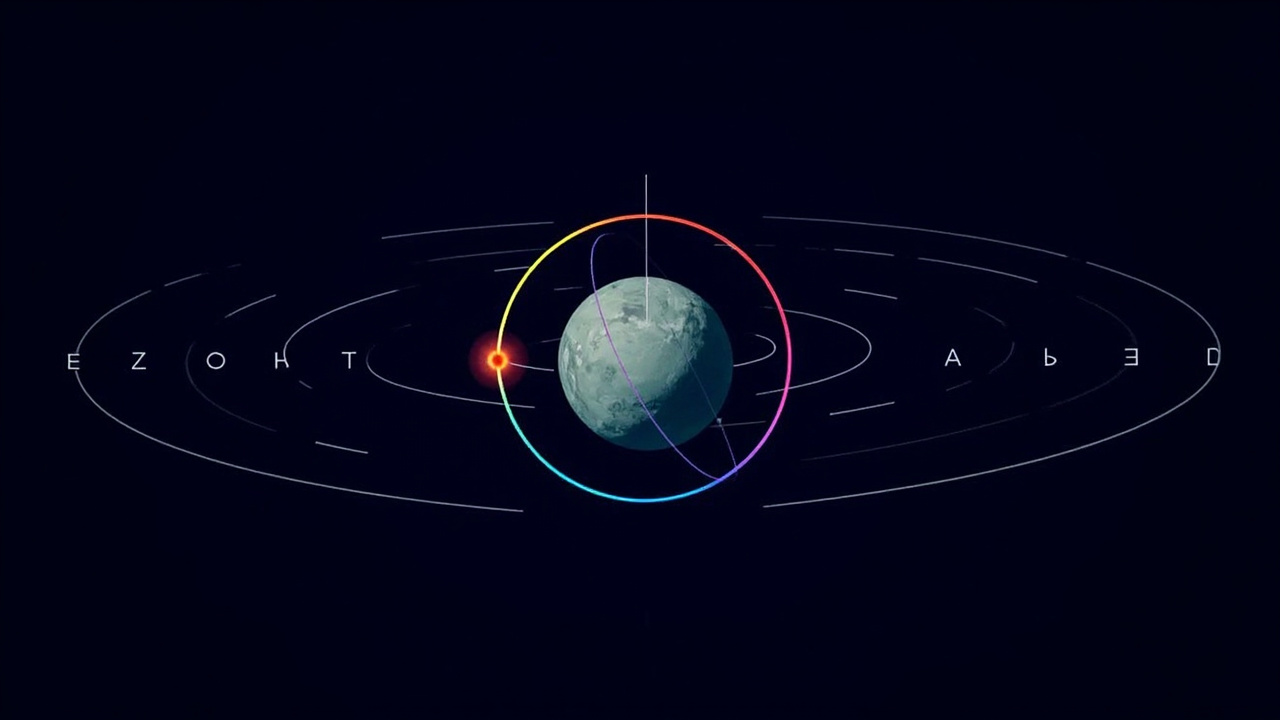
Okay, I need you to sit down for this one. Ready? The way we humans pump groundwater is literally changing how Earth spins in space.
I know, I know—your brain is probably doing the same thing mine did when I first read this. "Surely that's an exaggeration." But here's the thing: it's not. Researchers have actually measured this.
Here's what happened: between 1993 and 2010, we pumped out so much groundwater for irrigation, cities, and general human use that we shifted a staggering 2,150 gigatons of water. That's a lot of zeros. That water eventually made its way to the oceans, and when you move that much mass around, physics does its thing.
The result? Earth's rotational pole moved about 31.5 inches. Just let that number sink in for a second.
Now, before you start worrying that we're going to knock ourselves into the sun or something, let me reassure you: this is tiny on a planetary scale. Earth is massive, and 31.5 inches is... well, it's still significant enough that scientists can measure it, but it's not going to mess up our seasons or anything like that.
What's actually fascinating is how they figured this out. A research team, led by Ki-Weon Seo from Seoul National University, was studying how Earth's axis drifts and wobbles over time. You see, our planet isn't just spinning nicely like a perfectly balanced top—it's constantly wobbling and shifting as mass moves around (ice melts, water cycles, all that good stuff).
When they added the groundwater depletion data to their models, suddenly everything clicked. The numbers matched what they were actually observing. It was like finding a missing puzzle piece.
And here's what really got me: Seo himself said he's both excited and concerned. "As a resident of Earth and a father," he noted, "I'm concerned and surprised to see that pumping groundwater is another source of sea-level rise." That hit me hard, honestly. This isn't just some abstract scientific curiosity—this connects directly to rising oceans and the communities dealing with them.
The groundwater we pump doesn't just vanish, by the way. It flows from underground aquifers, gets used for agriculture and drinking water, and eventually drains into rivers and oceans. So every liter we pull up contributes a tiny bit to sea level rise—about 0.24 inches globally from this period alone.
What makes this story even more interesting is that different regions matter more than others. Western North America and northwestern India showed up as particularly important in the research. Moving water from the midlatitudes has an outsized effect on how the planet wobbles. Who knew that what happens in the American West and the Indian subcontinent could literally affect Earth's spin?
Scientists are getting better at studying this too. New tools like TWSTORE and ML-TWiX are helping researchers reconstruct water storage patterns going back to the 1980s, which gives us a longer view of what's been happening.
Is this the smoking gun for climate change? No. But it does show us, in a very tangible and measurable way, how human activity is reshaping our planet in ways we never even considered. We're not just changing the chemistry of the atmosphere—we're literally shifting Earth's rotation.
That's both humbling and a little bit terrifying, if you ask me. But hey, at least now we know. And knowledge, as they say, is the first step toward doing something about it.
Source: https://www.popularmechanics.com/science/environment/a71495673/why-has-earth-tilted-science