
When Outsiders Weren't Welcome: What Neanderthal Bones Tell Us
You know that feeling when you hear about something disturbing from ancient history and can't stop thinking about it? Well, buckle up, because researchers just published findings that'll make you see our prehistoric cousins in a whole new light.
Scientists studying bones from a Belgian cave have found evidence suggesting that Neanderthals didn't just survive on woolly rhinos and cave bears—they may have also targeted outsiders from other groups for food. And honestly? It's a sobering reminder that humans (and our close relatives) have always been complicated creatures.
The Discovery That Started It All
So here's where this gets interesting. Researchers were examining a collection of bones stored at the Royal Belgian Institute of Natural Sciences in Brussels. These bones came from Goyet Cave in Belgium and dated back somewhere between 41,000 and 45,000 years ago.
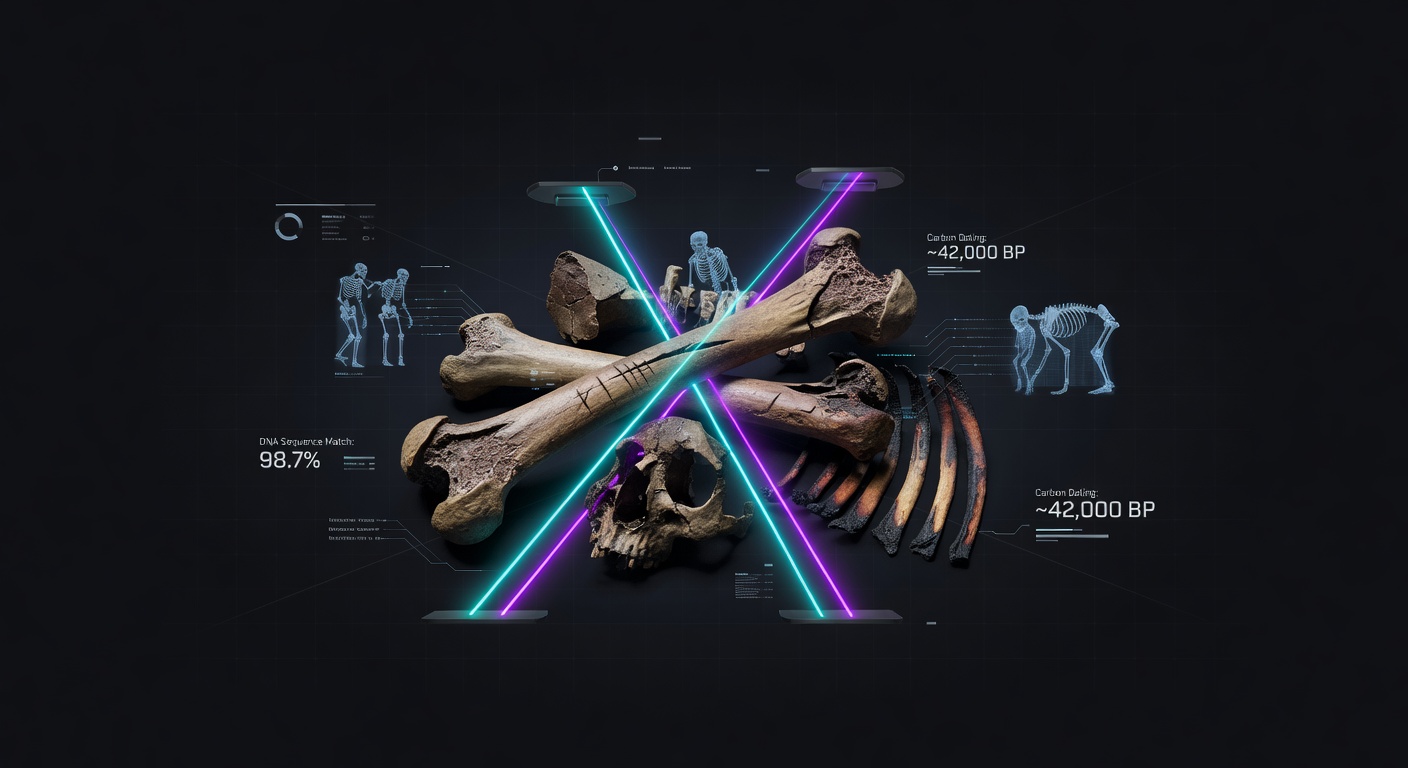
But here's the thing—these weren't just any bones lying around. Careful analysis revealed something striking: the remains showed clear signs of being processed and consumed, much like you'd prepare an animal carcass. The lower limbs were specifically targeted, and bones were deliberately broken open to get at the nutrient-rich marrow inside.
Outsiders in a Hostile World
What makes this study particularly fascinating (and yes, unsettling) is that researchers could figure out something remarkable: these individuals didn't belong to the local Neanderthal community. Through DNA analysis and isotopic measurements that basically tell scientists where someone ate and lived, they determined these people were brought to the cave from elsewhere.
We're talking about adult women and children—individuals from rival groups who ended up meeting a grim fate.
Now, before we jump to conclusions, let me be clear: this wasn't some ritualistic or ceremonial practice. The bone evidence tells a different story. The processing techniques were identical to how Neanderthals butchered animals for food. There's no evidence of special treatment or spiritual significance. This appears to have been straightforward nutrition, however shocking that sounds to modern ears.
A Snapshot of a Tense Time
Here's some important context: the late Middle Paleolithic (roughly 300,000 to 40,000 years ago) was a wild period in human history. Neanderthal groups were spreading across Northern Europe, displaying all sorts of different cultural behaviors. Meanwhile, early modern humans were starting to appear on the scene.
This wasn't a peaceful era. Resources were scarce. Competition was fierce. And apparently, when groups encountered each other, things sometimes turned violent.
The targeted nature of this cannibalism—focusing on outsiders—suggests researchers might be onto something about territorial conflicts. Were Neanderthals protecting their hunting grounds? Fighting over access to resources? The bones don't tell us the complete story, but they hint at serious tensions between communities.
How Scientists Cracked This Ancient Mystery
I'm genuinely impressed by the detective work here. Researchers spent over a decade revisiting these remains using tools that simply didn't exist when the bones were first discovered.
Digital reconstruction helped them piece together fragmented bones. Radiocarbon dating pinpointed exactly when these individuals died. DNA analysis revealed their relationships (or lack thereof) to the local population. Isotopic measurements acted like a geographical fingerprint, showing where these people came from.
It's like solving a cold case from 45,000 years ago. Pretty wild when you think about it.
What This Really Tells Us About Neanderthals
Here's what gets me about this research: it demolishes the old stereotype of Neanderthals as simple, brutish creatures operating on pure instinct. The evidence shows something far more nuanced and complex.
These weren't mindless beings. They were strategic. They could identify outsiders, plan attacks, and execute sophisticated butchering techniques. They understood resources. They recognized territorial boundaries. They had social structures complex enough to distinguish between "us" and "them."
Sure, it's disturbing to contemplate. But it's also evidence of a sophisticated cognitive and social life. Neanderthals weren't running on autopilot—they were thinking, strategizing, and making deliberate choices, even when those choices involved violence.
The Bigger Picture
As researchers continue investigating sites like Goyet, we're learning that Neanderthal behavior was shaped by the same pressures that shaped early modern humans: competition for resources, territorial conflicts, group dynamics, and interactions with neighboring populations.
We like to tell ourselves that our ancestors were noble hunters and peaceful people. The reality was messier. But understanding that darkness in our past—understanding that our own species has similar capacity for violence—might actually make us wiser today.
Pretty profound stuff hidden in some old bones, right?