
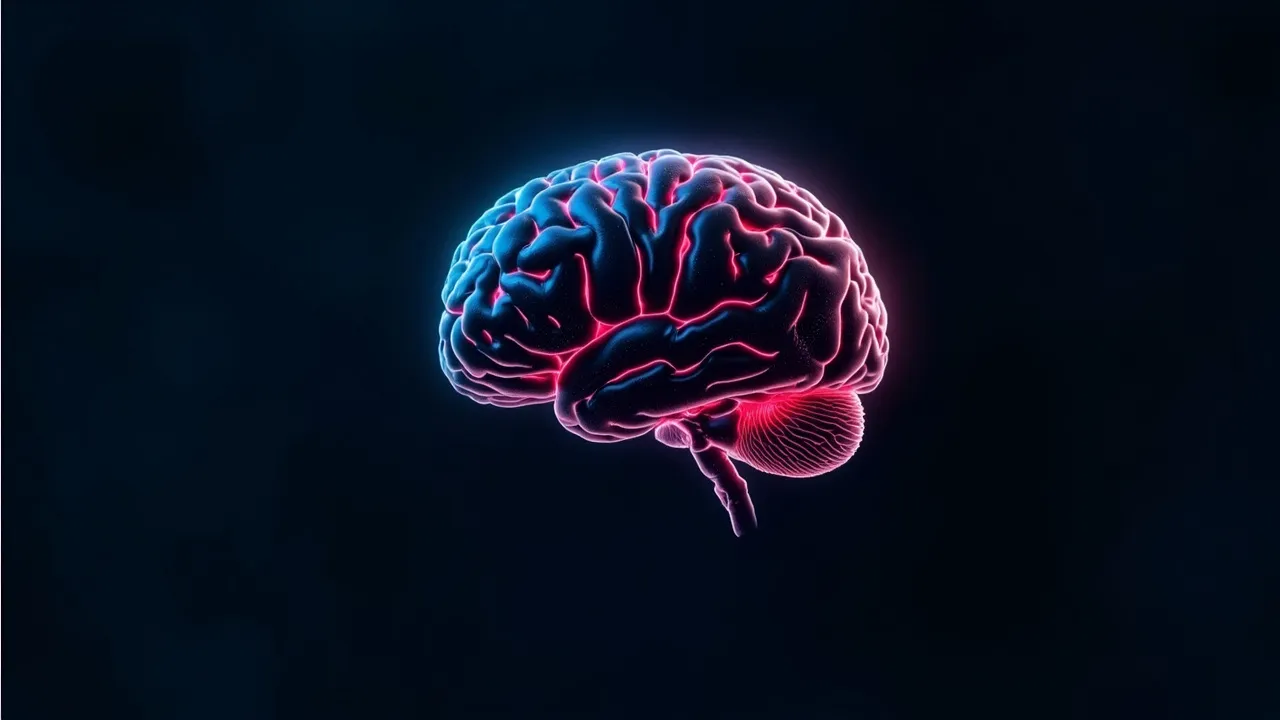
So here's something wild to think about next time you're just... standing there. That feeling of being grounded? Your brain is working really hard to maintain it. Gravity isn't just something we push against—it's something our entire nervous system has built itself around.
This comes from some fascinating research I stumbled across recently, and honestly, it made me look at my morning commute very differently.
Our Brains Are Basically Gravity Addicts
According to researchers at Birkbeck, University of London, gravity has been so consistently present throughout human evolution that our brains have essentially incorporated it into their operating system. Think of it like software that was coded with a specific expectation baked in—except the "software" is your neural networks and the "expectation" is that there's always going to be a "down" pulling at you.
The brain uses gravity as a reference point for everything from knowing where your limbs are to predicting how objects will move when you drop them. It's doing constant calculations we're never consciously aware of.
But what happens when you rip that foundation away?
Space Messes With You in Unexpected Ways
Let's talk about Scott Kelly for a second. You remember him—the NASA astronaut who spent a whole year on the International Space Station while his twin brother Mark stayed on Earth. Scientists basically had a built-in comparison experiment.
The findings were... interesting. Some of Kelly's telomeres—those little protective caps on your chromosomes that are linked to aging—actually lengthened while he was in orbit. They shortened again once he returned, but still. That's not nothing.
His gene expression also went through some significant changes. The way his genes were "turned on" or "off" shifted in ways researchers are still trying to fully understand.
But here's where it gets really thought-provoking: a recent paper in Frontiers in Psychology suggests that the long-term effects might go beyond biology and touch something even more fundamental—our consciousness itself.
Could We Actually Evolve in Space?
The theory goes like this: when your brain suddenly has to operate without gravity, it encounters what researchers call "very different sensory statistics." All those internal models it built over a lifetime suddenly don't apply anymore.
The researchers propose that over extended periods—think months or years in microgravity—the brain might recalibrate its predictions about how the world works. This could potentially alter aspects of consciousness itself.
One researcher drew an analogy (though she was careful to note it's just an analogy) with psychedelic states. Not that space is anything like taking psychedelics, but both might involve the brain's predictions becoming more flexible, more adaptable.
I'm going to be honest—my first thought was that this sounds a little out there. And honestly, the researchers themselves are careful to say this is theoretical. It needs more experimental backing, more data, more actual evidence from extended space missions.
But it also feels like one of those ideas that's strange enough to be worth taking seriously.
The Vomit Comet Reality Check
On the more practical side, researchers have studied what happens during brief exposures to microgravity—like those "vomit comet" airplane rides that plunge down to create about 30 seconds of weightlessness. People definitely experience disorientation. Coordinating movements becomes harder. Your brain is basically glitching for a moment before it adapts.
One researcher I read about mentioned personally experiencing hundreds of these parabolas and never feeling anything resembling a psychedelic state. Fair point. Brief trips and permanent life in orbit are very different things.
Still, when you think about it, our brains are remarkably adaptable. Lose your eyesight, and other senses often become sharper as the brain rewires itself to make the most of what it has. Maybe living without gravity would trigger something similar—a fundamental restructuring of how we process reality.
What This Means for Space Travel
Here's why I'm personally fascinated by this line of research: if humanity ever becomes a truly spacefaring species, we're not just talking about adapting to new environments physically. We might be talking about our descendants perceiving and experiencing reality in ways we literally cannot imagine.
That's kind of profound when you sit with it.
Of course, we're not there yet. We don't have multi-generational space populations to study. We're still in the early stages of understanding how even short missions affect human biology and cognition.
But isn't it amazing to think about? The one constant that's shaped us since we were single-celled organisms floating in ancient oceans—gravity—might eventually release its grip on our species entirely. And what emerges from that release might be something entirely new.
Maybe one day, future humans born in space will read this article and chuckle at how limited our "Earth-bound consciousness" was. Or maybe they'll thank us for pioneering the research that helped them understand themselves.
Either way, count me as someone who's paying very close attention to where this goes.
Source: https://www.popularmechanics.com/science/a73672750/gravity-and-space-travel-affect-consciousness