
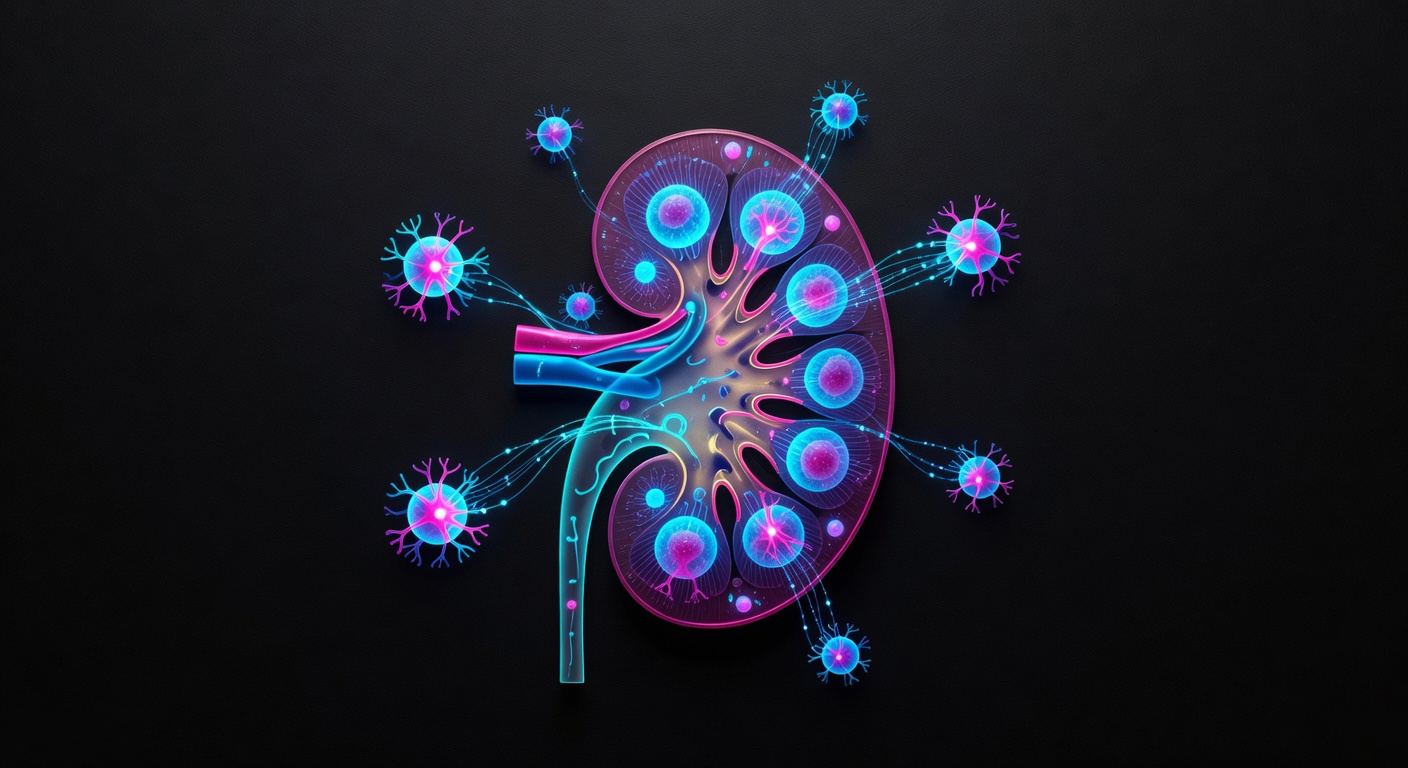
What If Every Cell in Your Body Has Its Own Memory? The Mind-Blowing Discovery That's Changing Biology
Hey there, science enthusiasts! I just came across research that completely blew my mind, and I had to share it with you. We've all heard about muscle memory, right? But what if I told you that your kidney cells—yes, your kidney cells—can actually form memories too?
Buckle up, because this discovery is about to change how you think about your entire body.
The Study That Started It All
Researchers at NYU were studying sea slugs (stay with me here!) when they stumbled onto something incredible. They knew that brain cells learn better when information comes in small, spaced-out chunks rather than all at once—think studying a little each day versus cramming the night before an exam.
But here's where it gets wild: they wondered if other cells in the body might work the same way.
Your Cells Are Secret Scholars
So the team decided to test this theory on kidney and nerve cells. They exposed these cells to chemical signals in two different patterns: one big blast versus several smaller, timed pulses. To track what happened, they used glowing molecules that would light up if the cells "remembered" the pattern.
The results? Your cells are apparently better students than most college kids.
When cells received information in spaced intervals, they glowed brighter and longer—meaning they formed stronger, more lasting memories. The cramming approach? Not so much. The cells' glow faded quickly when hit with everything at once.
But here's the part that made me do a double-take: adjusting the timing by just a few minutes could make cellular memories last for days. We're talking about cells being sensitive to differences as small as three minutes!
This Could Change Everything About Health
As a tech blogger, I'm always looking for the practical applications of cool discoveries. This one has huge potential for medicine.
Think about it: if cells throughout your body can form memories based on patterns, this could revolutionize how we approach treatment. Maybe chemotherapy could be more effective with different timing. Perhaps the way we space out exercise or meals could have longer-lasting effects on our health than we ever imagined.
The lead researcher, Nikolay Kukushkin, put it perfectly: "Minute-scale differences in how you exercise or what foods you eat... might have effects that last much longer than just this immediate thing."
Mind. Blown.
The Consciousness Question
Now, here's where things get really philosophical (and a bit controversial). Some scientists are looking at this cellular memory and asking: Could all our cells be conscious?
I know, I know—it sounds like science fiction. But researcher Frantisek Baluska argues that cells have been making decisions and forming memories for billions of years. His theory suggests that consciousness isn't just a brain thing—it's a fundamental property of all living cells.
Think about it: each cell is enclosed in its own membrane, creating its own little world separate from everything else. It processes information, makes decisions, and remembers experiences. Sound familiar?
The Skeptics (Including Me) Weigh In
Look, I find this cellular consciousness idea fascinating, but I'm with the researchers who remain skeptical. Sure, cells are incredibly sophisticated—they're like tiny biological computers processing information constantly. But consciousness? That feels like a whole different level of complexity.
The NYU team prefers to call it "cognitive" rather than "conscious"—meaning cells can process information intelligently without necessarily being aware of it. Kind of like how your smartphone can recognize your face without actually knowing it's you.
What This Means for You
Whether or not your kidney cells are having deep thoughts about their existence, this discovery opens up incredible possibilities:
- Better treatment timing: Understanding cellular memory could help doctors optimize when and how they deliver medications
- Smarter lifestyle choices: The timing of your daily habits might matter more than you think
- New understanding of disease: If cells can remember patterns, diseases might too—and we could potentially disrupt those patterns
The Bottom Line
This research reminds me why I love science so much. Just when you think you understand how something works, researchers come along and flip everything on its head.
Your body isn't just a collection of parts doing their jobs—it's a community of information-processing units, each capable of learning and remembering. Whether that makes them conscious is still up for debate, but one thing's for sure: we're only beginning to understand how incredibly sophisticated life really is.
What do you think? Are you ready to start thanking your kidney cells for their hard work and good memory? Let me know in the comments—I'd love to hear your thoughts on this wild discovery!