
What If We're All Carrying Superpowers We Don't Know About?
Okay, I need to share something that genuinely blew my mind this week, and I promise it's the kind of science story that makes you look at your own body in a completely different way.
For as long as anyone can remember, we've accepted a fundamental truth: humans heal. Salamanders regenerate entire limbs. We form ugly scars and call it a day. That's just how it is, right?
Well, maybe not.
A team of researchers at Texas A&M's College of Veterinary Medicine just published findings in Nature Communications that challenge this assumption at its core. And honestly? Their work makes me wonder if we've been asking the wrong question all along.
The Question That Started Everything
Dr. Ken Muneoka has spent his career trying to answer what he calls "a big question that has been asked since Aristotle": Why can some animals regenerate lost body parts while others—especially humans—apparently cannot?
But here's the thing about that question: it assumes the answer is "we can't." What if we're wrong?
That's exactly what Muneoka and his colleagues started wondering. What if regenerative abilities aren't missing from mammals at all? What if they're just... hiding?
The Two-Step Discovery
The research team developed what they're calling a two-step treatment, and I love how elegant it is. It's not some crazy high-tech solution involving gene editing or cloning. Instead, they worked with something the body already produces naturally: growth factors.
Step one: After a wound has already healed over, they apply fibroblast growth factor 2 (FGF2).
Step two: Several days later, they apply bone morphogenetic protein 2 (BMP2).
That's it. Two treatments, applied in sequence.
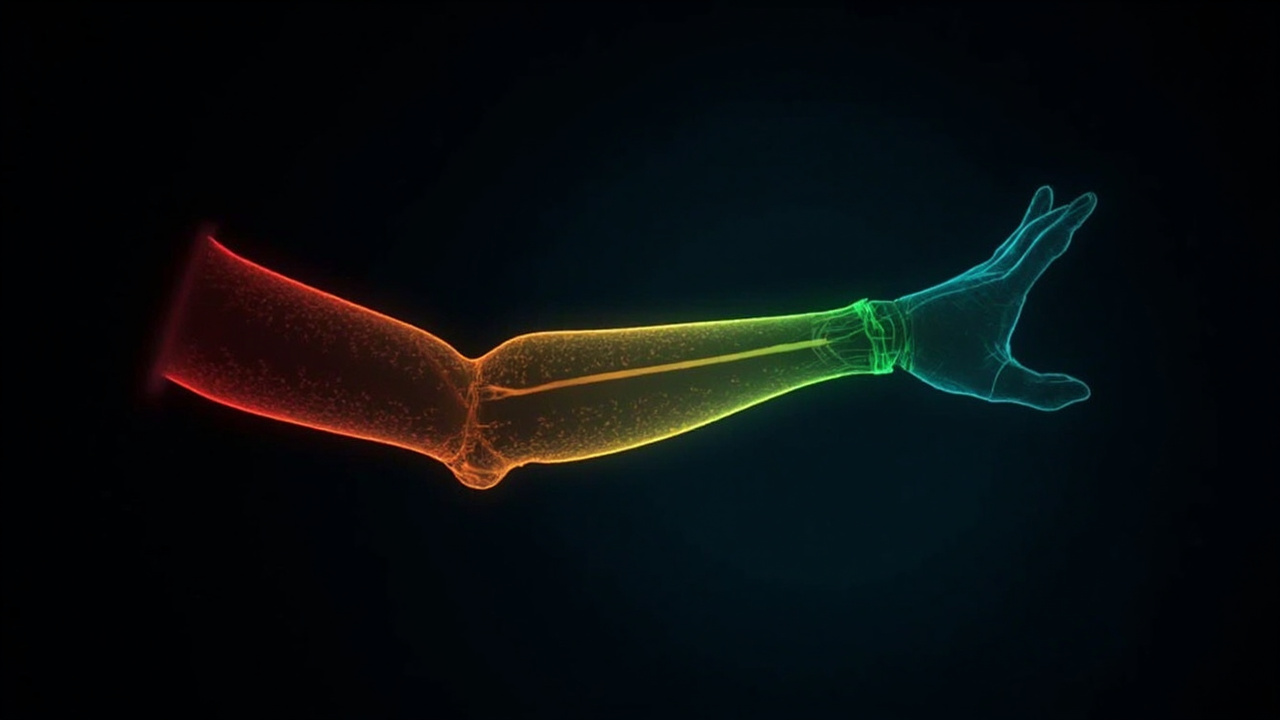
But here's what happened: the researchers got bone, joint structures, tendons, and ligaments to regenerate after amputation. Not perfectly—not identical to the originals—but all the major structures grew back.
Here's Where It Gets Really Interesting
The team discovered something that challenges a major assumption in regenerative medicine. For years, scientists have explored stem cell therapies as the key to regeneration—harvesting stem cells, manipulating them, and transplanting them back into patients.
Muneoka's team found something different.
"You don't have to actually get stem cells and put them back in," he explained. "They're already there—you just need to learn how to get them to behave the way you want."
Let me say that again because it's kind of amazing: the cells you need for regeneration are already hanging out at the injury site. They just need to be told what to do.
Scar Tissue vs. Regeneration: A Choice Our Bodies Make
Here's what I find absolutely fascinating about this research. When you get injured, your body's cells face a fork in the road. They can:
- Close the wound quickly and create scar tissue (the human approach)
- Form a blastema and rebuild what's lost (the salamander approach)
It's essentially the same cells responding differently based on instructions.
" It's as if these cells can move in two different directions," Muneoka said. "They could either make a scar or make a blastema."
The FGF2 treatment essentially redirects those cells away from scarring. Then BMP2 tells them what to build. It's like giving your body's existing repair machinery a completely different set of instructions.
Why This Changes the Conversation
Dr. Larry Suva, another researcher on the project, put it in a way that really stuck with me: "The cells that we thought to be unprogrammable, in fact, are. The capacity is not absent—it's just obscured."
Think about what that means for medicine.
We haven't been failing to regenerate because we're broken. We've been failing because we haven't figured out the right combination of signals to flip the switch. This research suggests the switch exists—it's just that no one knew where to find it.
What This Could Mean for the Future
Now, I want to be careful here because this is early-stage research. The team worked with animal models, and we're probably years away from human applications. But even in the near term, this approach could help reduce scarring and improve how our bodies repair damage.
And if the long-term potential holds true? We're talking about a fundamental shift in how we approach injuries, amputations, and tissue damage.
Imagine a future where someone loses a finger and, with the right treatment, it grows back. Where joint injuries heal completely instead of leading to arthritis. Where our bodies can do what salamanders have been doing for millions of years.
The Bigger Picture
Here's what really gets me about this research: it's a reminder that nature doesn't always work the way we assume it does. We spent centuries believing mammals simply couldn't regenerate the way some animals can.
But "cannot" and "have not yet learned to" are very different things.
This research suggests we're not as limited as we thought. We're not missing magical salamander DNA. We're just not speaking the right biological language yet.
And now? We're starting to learn the words.