
The Energy Crisis Nobody Talks About (But Should)
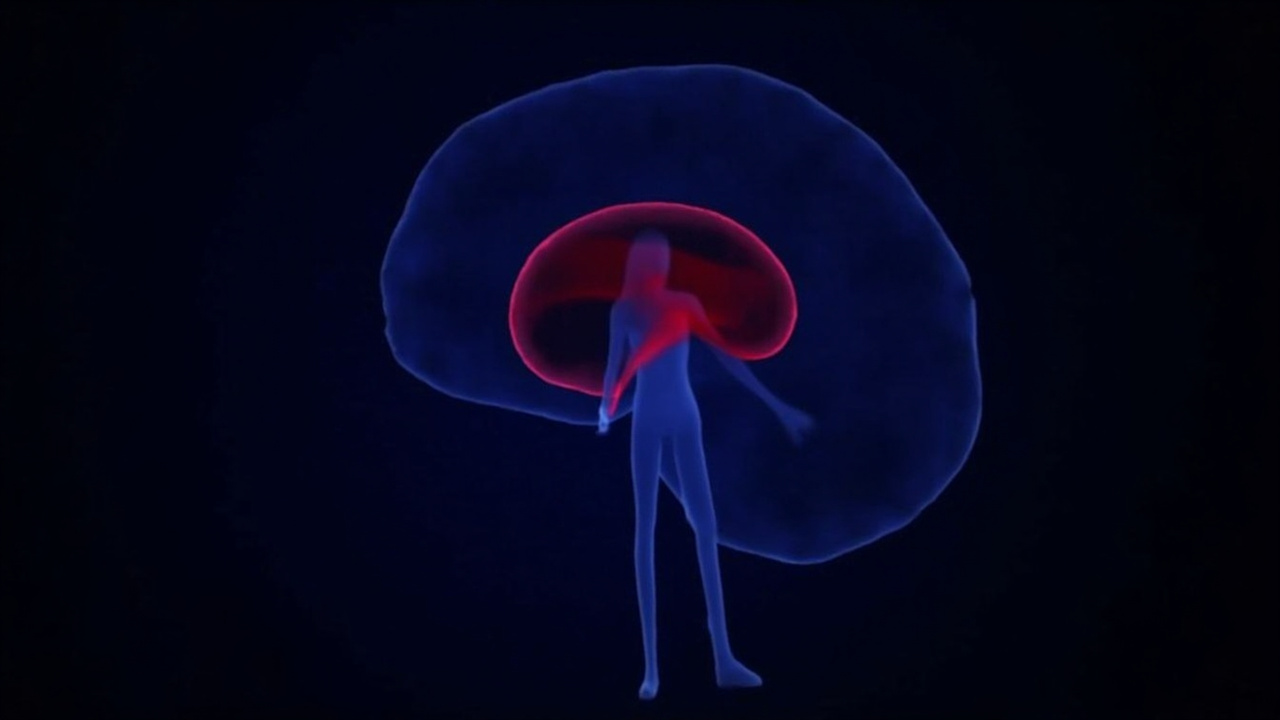
Here's something that keeps me up at night: your smartphone is more powerful than computers from the 1980s, yet it's still hilariously less efficient than your actual brain. In fact, artificial intelligence is a total energy hog—we're talking about a million times more power consumption than what happens inside your head right now as you're reading this.
Every time you use ChatGPT, watch a Netflix recommendation load, or let your phone's camera recognize your face, it's guzzling electricity like there's no tomorrow. And as AI gets smarter, it just demands more and more power. At some point, you have to ask: is there a better way?
Turns out, there might be. And it's delightfully weird.
Meet the Bio-Computer Revolution
A team of researchers from Princeton University had a wild idea: what if instead of trying to mimic the brain electronically, we just... used actual brain cells?
I know, I know—it sounds like science fiction. But stay with me, because this is genuinely clever.
The problem with previous attempts was that living neurons are kind of fussy. When scientists tried growing them in flat 2D cultures (like a microscopic sheet), the neurons got confused. They didn't interact normally, their genes acted weird, and they'd just die after a while. It's like trying to raise a fish in a petri dish—technically possible, but deeply unhappy.
Organoids (tiny blobs of engineered brain tissue) were better but still problematic. They're inconsistent, they run out of oxygen, and parts of them just... die. Not ideal when you're trying to build the foundation of future computing.
The Origami Solution (Yes, Really)
This is where the Princeton team got creative. They basically said, "What if we gave neurons a proper 3D home with built-in electronics?"
Here's what they did:
They created a flexible 3D scaffold made of polymer mesh—think of it like a microscopic cage made of tiny wires and electronic sensors. To make it, they actually folded it like origami. Started in 2D, added precise electronic sensors in just the right spots, then folded it into a 3D structure. It's like giving neurons their own apartment complex with smart home technology built in.
They called their creation 3D-MIND (3D Micro-Instrumented Neural network Device), and honestly, that's a pretty cool name for a tiny brain.
Building the Biological Neural Network
Once they had the scaffold ready, the researchers coated it with a protective gel full of proteins. Then came the main event: they took neurons from rat hippocampuses (the brain region responsible for learning and memory) and let them grow on this scaffold.
And here's the beautiful part—the neurons figured it out themselves.
Without being told what to do, the neurons naturally arranged themselves in 3D space and started forming connections. The electronic sensors embedded in the scaffold could track everything: how the neurons positioned themselves, how they developed, and the electrical signals they sent to communicate with each other. It worked. The neurons were stable, functional, and could be monitored for extended periods.
Why This Actually Matters
Okay, so we can grow neurons on a fancy scaffold. Cool. But why should you care?
Because this could fundamentally change how we compute. Living neural networks are absurdly efficient. Your brain runs on about 20 watts of power—that's less than a standard lightbulb. Current AI systems require millions of watts. That's not just wasteful; it's unsustainable.
If biological neural networks can be scaled up and integrated with electronics, you're looking at computing systems that could be:
- Energy-efficient enough to change the world (seriously, the power savings could be enormous)
- More versatile than traditional AI networks
- Better at mimicking actual human cognition because, well, they're literally using brain cells
Plus, this research gives us insights into how our brains actually work. Every experiment teaches us something about human neurology and how we learn.
The Reality Check
Now, the researchers are honest about the challenges. This technology is still in early stages. Scaling it up from a few thousand neurons to something practically useful is going to be hard. And so far, they've only tested with rat neurons—human neurons are more complex and come with ethical considerations.
But that's how breakthroughs work. You start small, prove the concept works, and build from there.
The Bottom Line
We're living in an age where our computers are choking on their own power requirements, and our planet is feeling the consequences. The idea that the answer might be literally growing computers from living cells? That's the kind of thinking we need.
It's weird. It's ambitious. And it might just be the future.
Source: https://www.popularmechanics.com/science/a71336896/ai-network-live-neurons