
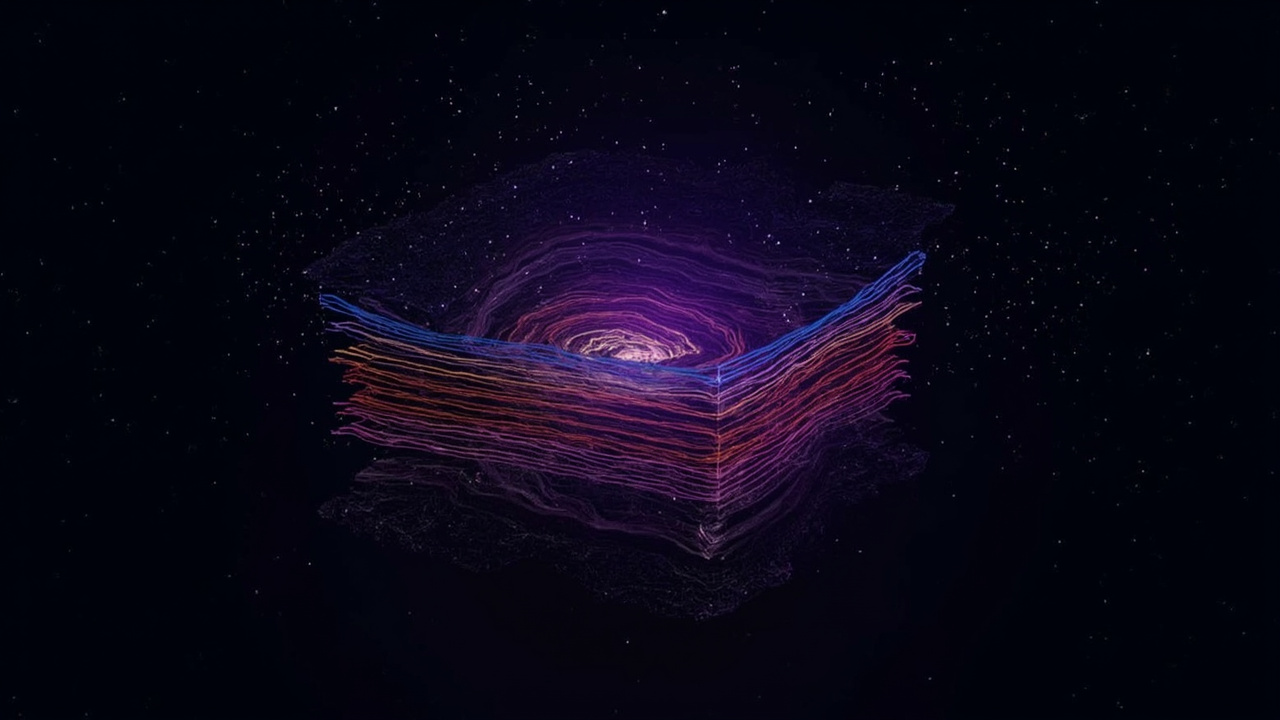
The Deep Earth's Secret Drama
You know that feeling when you're looking at Earth from space and thinking "wow, what a stable, solid rock"? Yeah, throw that idea out the window. Beneath your feet—and beneath about 1,800 miles of rock—something wild is happening right now.
Scientists have just discovered that nearly 3,000 kilometers down, where the mantle meets Earth's iron core, ancient pieces of the planet's crust are slowly sinking and stretching the heck out of everything around them. And honestly? We didn't really see it clearly until now.
The Breakthrough Nobody Expected
Here's the cool part: researchers from UC Berkeley led by Jonathan Wolf assembled what might be the biggest earthquake dataset ever created. We're talking about 16 million seismograms gathered from 24 data centers around the world. That's not just a lot of data—that's basically looking at Earth through millions of different windows at once.
When earthquakes happen, they don't just shake the ground above you. The seismic waves they create travel deep into the planet, bouncing off the core, and coming back up. Scientists can actually read these waves like a medical ultrasound, and the results told them something fascinating: the deepest part of Earth's mantle is seriously deformed.
How Do You See Deformation From 1,800 Miles Away?
The magic word here is anisotropy. (Don't worry, it's actually simple.)
When seismic waves pass through rock, they travel at different speeds depending on which direction they're going and what the rock is doing down there. If rock has been stretched and bent in one direction, the waves will move faster that way. It's like the difference between running with the wind versus against it.
By mapping these speed differences across the entire lowest mantle, the scientists could create a picture of where things are getting pushed, pulled, and warped. And what they found was remarkable: about two-thirds of the areas they studied showed clear signs of deformation.
The Culprit? Ancient Sinking Plates
Here's where it gets genuinely interesting. The deformation wasn't random. It appeared in specific spots—exactly where scientists predicted ancient tectonic plates would be sinking into the deep mantle.
You know how tectonic plates slowly collide and slide under each other? Those pieces don't just disappear. They descend into the mantle over millions of years, pushing and squeezing everything around them. The pressure and heat down there are so extreme that they actually reshape the minerals inside these sinking slabs, creating that "anisotropic fabric" scientists can detect.
It's like watching a slow-motion car crash that's been happening for millions of years.
What Scientists Still Don't Know
Wolf is refreshingly honest about the limitations here. Just because they didn't detect deformation in certain areas doesn't mean it isn't happening. The signal might be too faint to pick up with current technology—like trying to hear a whisper in a noisy room.
He also admits they're still puzzled about some details. The sinking slabs might be carrying old deformation patterns from when they were closer to the surface ("fossil anisotropy," which is a awesome name for old geological scars). Or the intense conditions at depth could be creating entirely new patterns. Probably both.
Why This Matters More Than You'd Think
Look, mapping Earth's interior might sound like abstract geophysics that only matters to PhD students. But understanding how material flows in the deepest mantle actually tells us about:
- How plate tectonics works on a global scale
- How Earth's magnetic field is generated
- How heat is distributed through the planet
- Whether we're missing entire processes that shape our world
Right now, scientists understand upper mantle convection pretty well because the moving plates on the surface drag it around like they're pulling a blanket. But the deep mantle? That's been almost invisible. This new map is like finally turning on the lights in a room you've been stumbling around in for decades.
The Treasure Trove of Future Discovery
What I find most exciting is Wolf's comment about the dataset being a "treasure trove" that researchers will keep mining for years. This isn't a one-off study. This is infrastructure. Thousands of future papers could build on what they've just created.
He dreams of a future where we have enough information to truly understand the flow patterns happening in the lowermost mantle—not just where deformation happens, but how it moves, what direction it goes, and how it all connects. We're not there yet, but we're closer than we've ever been.
The Bottom Line
Every time an earthquake shakes, it's basically Earth taking a picture of itself. Scientists are getting better and better at reading those pictures. And what they're seeing is that deep down, our planet is constantly reshaping itself in ways we're only just beginning to understand.
Pretty wild when you think about it—while you're sitting here reading this, ancient pieces of Earth are sinking deeper, stretching the mantle around them, and warping the deepest parts of the planet. It's not dramatic or visible, but it's real, it's happening, and we finally have the map to prove it.