
The Power of Asking Questions: How One Student Revealed an Ancient Secret
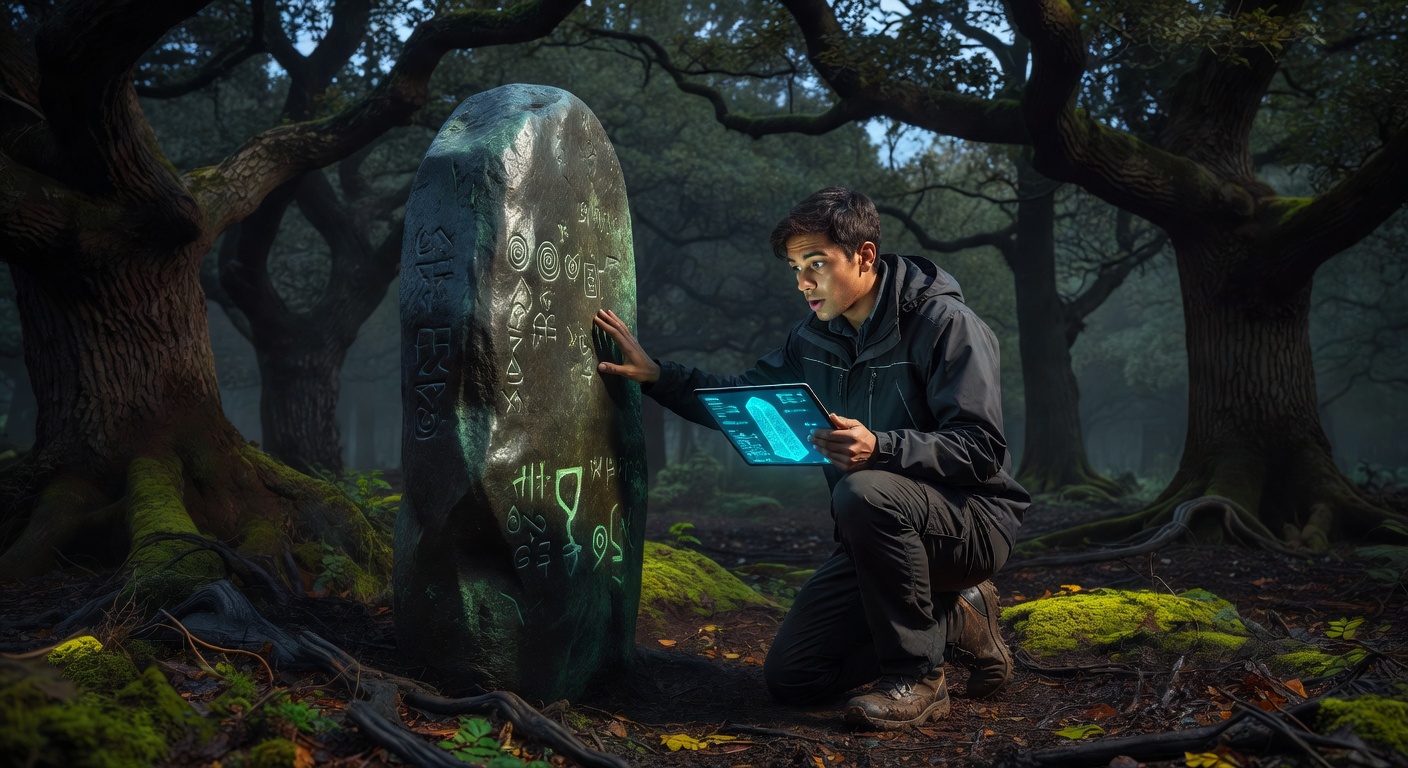
You know that feeling when you notice something and you just know there's more to the story? That's exactly what happened to George Bird, a young archaeology enthusiast from Derbyshire, England. He kept walking past this six-foot-tall standing stone called the Farley Moor stone, and something about it nagged at him. Everyone else had accepted it as a single, isolated monument. But Bird wondered: what if it wasn't alone?
A Hunch Worth Following
Here's the thing about archaeology that doesn't always make it into the movies—a lot of it comes down to curiosity and willingness to look deeper. Bird started asking around, documenting what he observed, and eventually sent his observations to the right people. It sounds simple, but that one step of actually doing something about his hunch changed everything.
His message caught the attention of Forestry England and the TV show Time Team, and they decided it was worth investigating. Fast forward to 2024, and Bird's instinct was completely vindicated.
What They Actually Found
The excavation revealed something genuinely mind-blowing. That lone standing stone wasn't alone at all—it was part of a massive ceremonial complex that dated back to around 1700 BCE. Archaeologists uncovered evidence of a stone platform that had been deliberately positioned above a natural spring. And here's where it gets really interesting: five additional stones were likely arranged in an oval pattern measuring roughly 82 by 75 feet.
Think about that for a second. Imagine someone in 1700 BCE deciding to build this ritual space, choosing the location specifically because of the freshwater spring. That wasn't random. That was intentional. That was meaningful.
Why Water Mattered in the Bronze Age
The spring feeding into Bentley Brook, which eventually flows into the Derwent River, reveals something important about how Bronze Age communities thought about their world. Water wasn't just practical—it was sacred. The careful placement of this ceremonial platform above that spring shows us that ancient peoples understood the spiritual significance of natural features in ways we're still learning to appreciate today.
Lawrence Shaw, from Forestry England, put it beautifully: this wasn't just about one standing stone. It was evidence of "a much more complex ceremonial landscape" with layers of ritual use spanning hundreds of years.
It's Not About Stonehenge
Here's something that really stuck with me: we tend to focus on the famous archaeological sites like Stonehenge, but this discovery reminds us that Bronze Age ritual life was way more widespread and complex than those headline-grabbing monuments. Stone circles existed all across the landscape, and most of them were probably serving similar spiritual and community purposes.
Derek Pitman from Bournemouth University made a great point—this find shows us that there's probably tons of archaeology still hidden in England's forests, just waiting for someone curious enough to ask questions about them.
The Real Story Here
What I love most about this story isn't just the ancient stone circle (though that's awesome). It's that a 24-year-old guy dragged his friends on long walks, got teased about always finding stone circles, and then actually did something about his observations. He didn't just keep it to himself. He documented it. He shared it. He persisted.
And when archaeologists got involved, they didn't patronize him or push him aside. They brought him into the excavation team as a full member. Shaw said it clearly: "We were never going to do anything without George. It was his idea."
That's the message here that matters beyond the archaeology. Curiosity combined with actually acting on that curiosity? That's how discoveries happen. Whether you're exploring your local woods or investigating something in your own field, questioning the obvious and pushing deeper reveals worlds we didn't know existed.
What's Next?
The team plans to return in summer to investigate further, looking into those newly identified stones and trying to understand exactly how large this ritual complex was. Forestry England is now protecting the site, which means future generations will be able to study it too.
I'm genuinely excited to see what else they find. And honestly? I'm betting there are more discoveries waiting in those English forests for the next curious person brave enough to ask "what if?"