
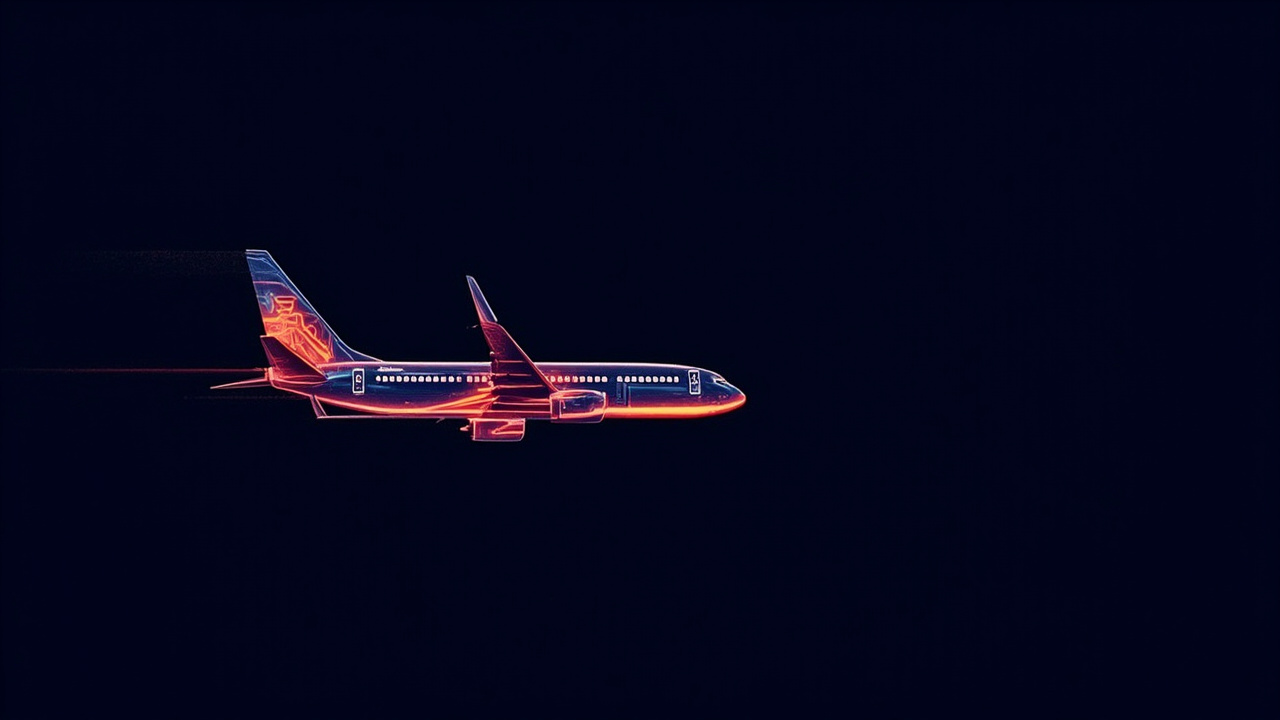
The Day a Plane Became a Ghost Ship
Imagine this: it's mid-morning, and a commercial airplane is cruising over Athens, Greece. Everything seems normal from the outside. But inside? The pilot is unconscious in his seat. The co-pilot is slumped over. Nearly everyone on board is passed out cold. And somehow, the plane keeps flying perfectly on its own.
This sounds like a Hollywood thriller, but it actually happened on August 14, 2005, when Helios Airways Flight 522 experienced something I can only describe as aviation's most eerie nightmare.
A Mystery in the Sky
Around 11 a.m., Greek Air Force fighters were scrambled to investigate what officials feared might be a terrorist hijacking. The F-16 pilots pulled up alongside the Boeing 737 and peered through the windows expecting... well, who knows what they expected. What they found was haunting: rows of passengers slumped in their seats, all wearing oxygen masks. The cockpit was the same—both pilots unconscious.
For over an hour, air traffic control had been trying to radio the crew with no response. The plane just kept circling Athens in a holding pattern, guided only by its autopilot. It was like watching a mechanical ghost.
One Man's Desperate Struggle
There was one person still awake: Andreas Prodromou, a flight attendant who'd been carrying a portable oxygen bottle. While he had a pilot's license for smaller aircraft, he had zero experience flying a massive commercial jet. But he was all that stood between 121 people and disaster.
The F-16 pilots watched as Prodromou made his way to the cockpit and waved at them from the window. He tried shaking the pilots awake. He even sent out mayday messages, his voice desperate across the radio. But he was fighting against something he couldn't overcome—and time was running out.
The engines flamed out. The autopilot could only do so much. As the plane lost altitude and started its final descent, there was nothing left to do. The aircraft crashed into the hills near the village of Grammatiko. There were no survivors.
How It All Went Wrong
Here's where the story gets frustrating—because this whole tragedy came down to a really simple mistake.
When the plane arrived in Cyprus from London that morning, ground crew found a problem with one of the cabin doors. To fix it without restarting the massive engines, they switched the cabin pressurization system from "automatic" to "manual" mode. Totally logical for maintenance work.
But then they forgot to switch it back.
The flight crew doing their preflight checks missed it too. So when the plane took off and climbed to altitude, the cabin wasn't pressurizing properly. Five minutes into the flight, the cabin altitude warning system went off—basically screaming "Something's wrong with the air pressure up here!"
But here's the tragedy within the tragedy: the pilots mistook it for a different warning that sounds almost identical—the "takeoff configuration warning." This warning usually only happens on the ground, so they dismissed it as a false alarm and turned it off.
As the plane climbed higher without proper pressurization, the air inside became thinner and thinner. Passengers and crew started losing consciousness from hypoxia (basically, not enough oxygen). One by one, everyone on board—except Prodromou—passed out.
The Real Lesson
You know what amazes me? Aviation is arguably the safest form of transportation today, but it got that way because of lessons learned from disasters. The industry doesn't improve through lucky breaks—it improves through tragedy.
After Flight 522, the FAA made several crucial changes:
- Boeing 737s got new warning lights that actually look different so pilots can't confuse pressurization warnings with takeoff warnings
- Flight crews got better training on recognizing hypoxia symptoms
- New protocols were established for cockpit checks
Helios Airways itself, which already had a sketchy safety reputation, shut down in 2006.
The Human Cost
But here's what haunts me about this story: all those safety improvements exist today because 121 people died. Including Andreas Prodromou, the brave flight attendant who did everything right and still couldn't save them.
In a 2007 documentary, his father Konstantinos said something that really stuck with me: "His dream was to become a professional pilot. He left a very big gap. We will never get over it."
That quote puts the whole thing in perspective. These weren't just accident statistics. They were people with dreams, families, and futures that were erased by a combination of human oversight and bad luck.
The next time you fly and the safety announcements seem tedious, remember: every rule, every warning light, every checklist item exists because someone learned it the hard way. Sometimes through heartbreak.