
The Day Everything Almost Ended
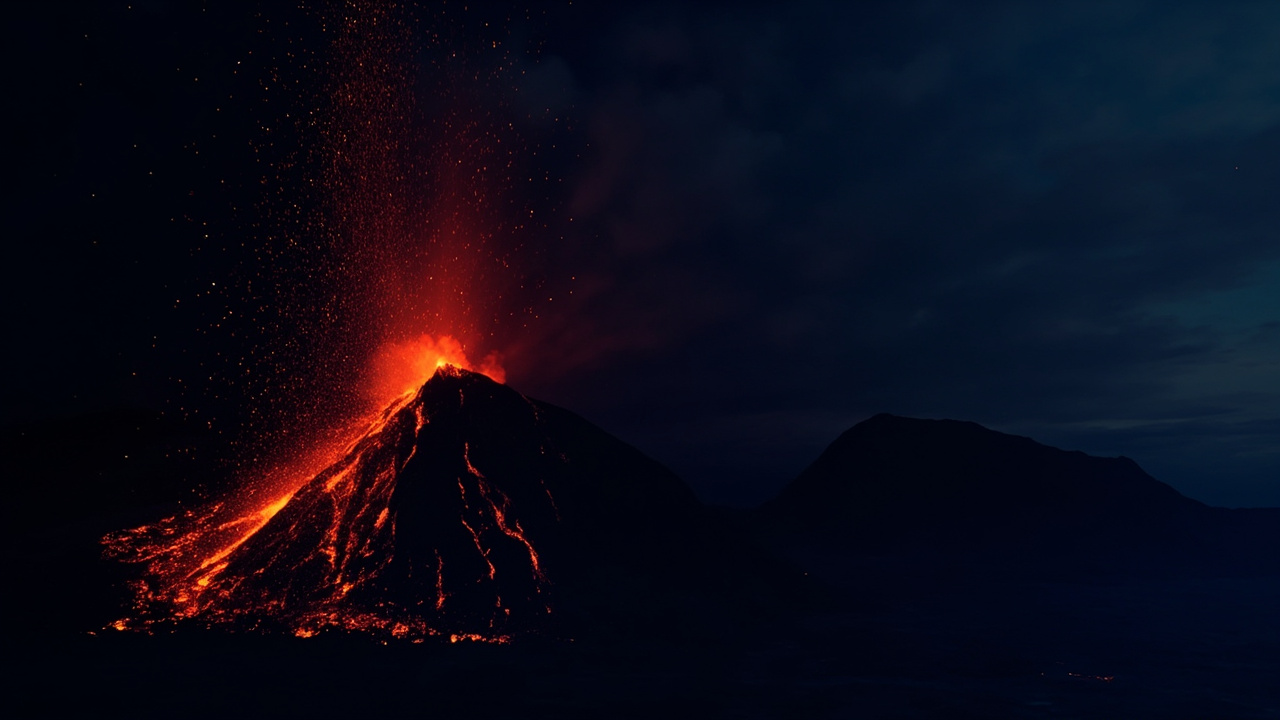
Imagine waking up one morning and the sky just... stops being blue. Not gradually—like, immediately stops. That's essentially what happened 74,000 years ago when the Toba volcano in Indonesia unleashed one of the most devastating eruptions in human history.
We're not talking about a big volcano. We're talking about an unfathomably massive volcano. The eruption was over 10,000 times more powerful than Mount St. Helens in 1980, and that eruption was literally one of the biggest disasters of the 20th century. Let that sink in for a second.
The sheer scale is almost impossible to wrap your head around. The explosion shot over 672 cubic kilometers of ash into the atmosphere—that's enough material to blanket entire continents. For years afterward, sunlight probably couldn't reach Earth's surface properly. Acid rain would've poisoned water supplies. Plants and animals everywhere would've been buried under layers of toxic ash. It was basically the apocalypse.
So... How Didn't We Die?
This is where it gets interesting. For decades, scientists had a theory called the "Toba catastrophe hypothesis." The idea was that this eruption came dangerously close to ending humanity. According to this theory, the global human population got squeezed down to fewer than 10,000 people—basically a genetic near-extinction event.
The evidence seemed solid too. When scientists studied human DNA, they found something called a "genetic bottleneck"—basically a moment in history where our species went through a drastic population crash, leaving us with less genetic diversity than we might've had otherwise. The timing seemed to line up with Toba.
But here's the thing: science evolves. Researchers started digging deeper, and the story got more complicated. Maybe Toba was responsible for that population decline. Or maybe something else caused it. The truth is, we don't have a crystal-clear answer yet.
Archaeological Detectives and Microscopic Clues
This is where the detective work gets really cool. Scientists couldn't just ask survivors what happened—they had to look for physical evidence. And what they found was... volcanic glass. Tiny, invisible-to-the-naked-eye fragments of volcanic glass called "cryptotephra."
Here's why that matters: every volcano has its own chemical fingerprint. When scientists analyze the composition of these microscopic glass shards, they can actually determine which eruption produced them. So researchers can confirm whether ash at an ancient human site really came from Toba.
But finding these tiny fragments? It's genuinely like searching for a needle in a haystack. Archaeologists have to carefully sift through dirt samples and use specialized tools called micromanipulators to isolate individual shards. The process can take months for just one archaeological site. It's painstaking work, but absolutely necessary.
The Plot Twist: Humans Actually Thrived
Here's where the story gets inspiring. After all that detective work, researchers found something unexpected at multiple archaeological sites around the world.
At a place called Pinnacle Point 5-6 in South Africa, scientists discovered evidence that humans were living there before the Toba eruption, during it, and after it. Not only did they survive—they actually increased their population afterward and developed new tools and technologies. The site shows continuous human habitation through the entire catastrophe.
Similar patterns showed up in Ethiopia and other locations. The evidence tells a surprising story: humans didn't collapse under the pressure. They adapted.
The Real Lesson Here
What really gets me about this is how it challenges our assumptions about human fragility. We like to think of ourselves as technically advanced, but our stone-age ancestors had something that technology can't replicate: genuine adaptability and resilience.
These humans didn't have weather forecasts, emergency shelters, or food storage technology. What they had was ingenuity. They figured out new food sources. They followed seasonal rivers. They developed better tools. They basically looked at one of the worst disasters imaginable and went, "Okay, we're going to survive this anyway."
The Toba eruption reminds us that our species has faced extinction-level events before and came out the other side not just intact, but innovating. That's pretty remarkable when you really think about it.
The scientific debate about Toba continues, and researchers are still piecing together exactly what happened. But one thing's clear: our ancestors were made of tougher stuff than we sometimes give them credit for.