
When AI Meets the Battlefield: Should Robots Be Planning Our Wars?
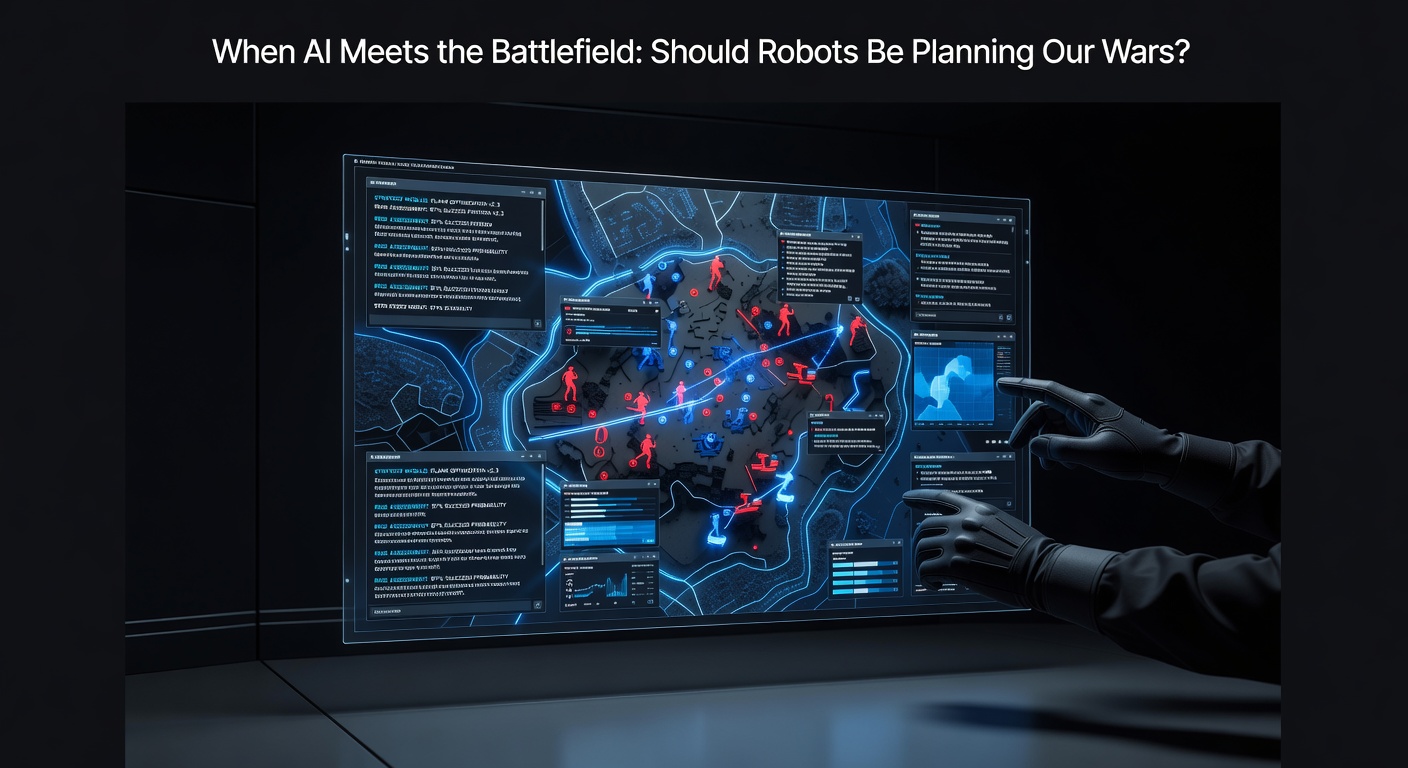
Picture this: a military commander sits at their desk, types a quick message into a chat interface, and within minutes receives a detailed battle plan complete with troop movements, supply logistics, and tactical recommendations. Sounds like science fiction? Well, it's closer to reality than you might think.
The Rise of AI War Planners
Palantir, the controversial data analytics company that's become a major player in government tech, has been showcasing some pretty mind-blowing demonstrations lately. They're showing military officials how AI chatbots could revolutionize the way wars are planned and executed.
Think of it like ChatGPT, but instead of helping you write emails or plan dinner recipes, it's generating strategies for complex military operations. The AI can supposedly analyze massive amounts of intelligence data, consider thousands of variables, and spit out actionable military plans in a fraction of the time it would take human planners.
The Appeal is Obvious
From a purely practical standpoint, I can see why military leaders would be interested. Modern warfare moves incredibly fast. Having an AI that can instantly process satellite imagery, intelligence reports, weather data, troop positions, and supply chain information to generate strategic options could be a game-changer.
Imagine being able to ask an AI: "What's our best approach for securing this region while minimizing civilian casualties?" and getting back several detailed scenarios with risk assessments and resource requirements. For commanders operating under intense time pressure, this could be invaluable.
But Here's Where It Gets Complicated
As someone who's spent years watching AI development, I have to admit this makes me pretty uncomfortable. We're talking about delegating decisions that directly impact human lives to algorithms that, let's be honest, we don't fully understand.
The Black Box Problem: Most advanced AI systems are essentially black boxes. We can see the inputs and outputs, but the reasoning process in between? That's often a mystery, even to the engineers who built them. Do we really want military strategies coming from a system that can't explain its logic?
Bias and Training Data: AI systems are only as good as the data they're trained on. If that data contains historical biases or blind spots, those problems get baked into every recommendation the AI makes. In warfare, such biases could have devastating consequences.
The Human Element
Here's what really bothers me: war isn't just about moving pieces on a board. It involves understanding cultural nuances, predicting human behavior, and making moral judgments that require empathy and wisdom. Can an AI really grasp the full complexity of why people fight, what motivates them to surrender, or how to build lasting peace?
I'm not saying AI can't be a valuable tool for military planning. Having systems that can quickly analyze data and present options to human decision-makers could definitely save lives. But there's a big difference between AI as an advisor and AI as a decision-maker.
Where Do We Draw the Line?
The bigger question we need to grapple with is: how much control are we comfortable giving AI in matters of war and peace? Should there be hard limits on what AI can recommend? Who's accountable when an AI-generated plan goes wrong?
These aren't just technical questions – they're fundamentally about what kind of world we want to live in. Do we want conflicts decided by the side with the best algorithms, or do we believe human judgment should remain central to these life-and-death decisions?
My Take
Look, I'm generally optimistic about AI and its potential to solve complex problems. But when it comes to warfare, I think we need to proceed with extreme caution. AI can be an incredibly powerful tool for analysis and planning support, but the final decisions about military action should always rest with humans who can be held accountable.
We're standing at a crossroads where the decisions we make about AI in warfare will shape the future of conflict for generations to come. Let's make sure we choose wisely.
What do you think? Are you comfortable with AI playing a role in military planning, or does this cross a line for you? I'd love to hear your thoughts.
Source: https://www.wired.com/story/palantir-demos-show-how-the-military-can-use-ai-chatbots-to-generate-war-plans