
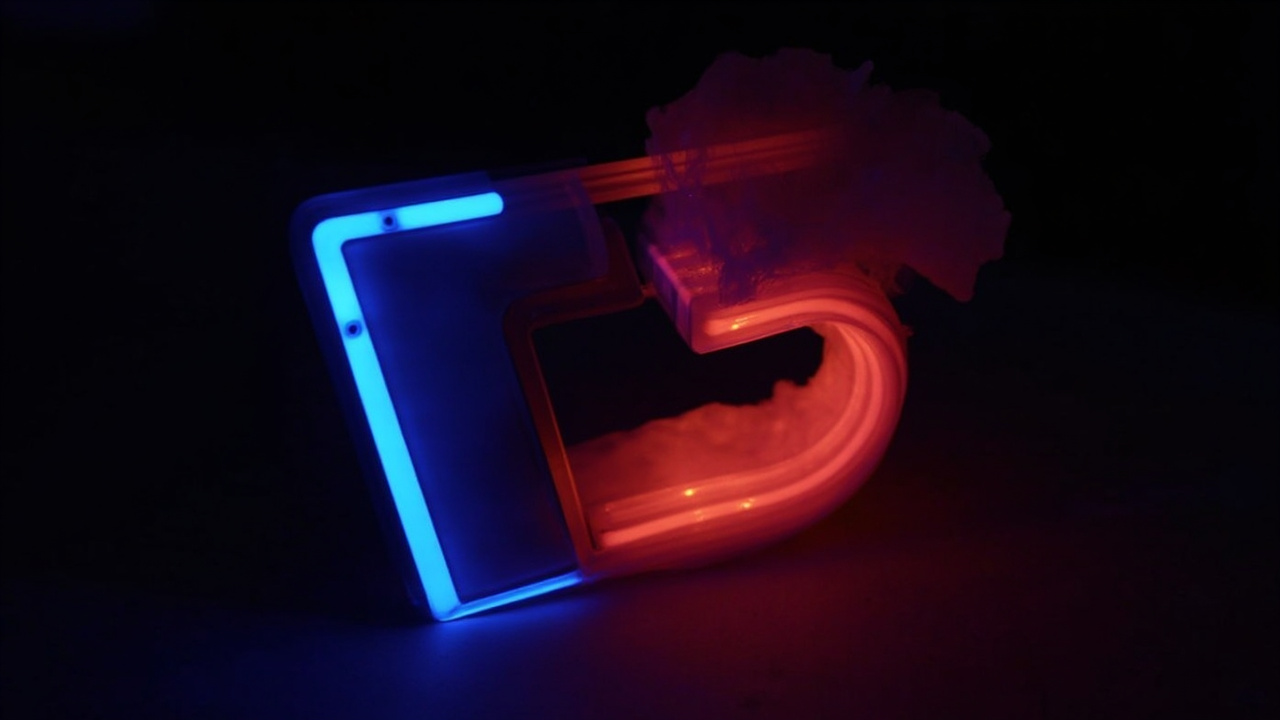
A Forgotten Dream from the Age of Enlightenment
Picture this: it's 1775, and Sir William Hamilton—the British ambassador hanging out in Naples—is absolutely obsessed with volcanoes. Not in a casual way, but the kind of obsession that makes you think, "You know what would be cool? A machine that looks like a volcano erupting." So he sketches out this wild idea for a mechanical device that would use light and movement to recreate the terrifying beauty of Mount Vesuvius blowing its top.
Here's the thing though—nobody knows if he ever actually built the darn thing. The sketch just sat there in the Bordeaux Municipal Library, gathering dust like so many brilliant ideas do.
Fast Forward to 2025: Engineering Students Save the Day
Flash forward two and a half centuries, and two grad students at the University of Melbourne are like, "Hey, we have lasers now. Let's make this happen."
Xinyu Xu (who goes by Jasmine) and Yuji Zeng (Andy to his friends) took that ancient sketch and decided to reverse-engineer Hamilton's vision using all the cool tools available in 2025. We're talking laser-cut timber, programmable LED lights, acrylic panels, and electronic control systems—basically the kind of stuff that would've blown Hamilton's 18th-century mind.
They spent three months in their university workshop basically playing mechanical archaeologist, trying to figure out what Hamilton was thinking and how to make it actually work with modern materials.
The Challenge: Making Magic Look Effortless
Here's where it gets interesting. The students discovered they were wrestling with the same problem Hamilton had faced 250 years earlier: how do you make the light and movement look magical without letting people see all the boring mechanical bits behind the curtain?
"The light had to be designed and balanced so the mechanisms were hidden from view," Jasmine explained. It sounds simple, but apparently making invisible engineering look intentional is way harder than you'd think.
Andy, who studied mechanical engineering, got a real education in problem-solving. "We still faced some of the challenges that Hamilton faced," he said. Translation: even with modern technology, engineering is still engineering. You still have to think things through, test them, adjust them, and sometimes just accept that the human mind hasn't changed that much in 250 years.
More Than Just a Cool Project
What's really sweet about this whole thing is that it wasn't just about checking off a box on an assignment sheet. These students actually learned something substantial. Jasmine picked up programming, soldering, and had to apply physics in practical ways. Andy built hands-on problem-solving muscles that will serve him for the rest of his career.
Their supervisor, Andrew Kogios, summed it up perfectly: "Experiences like these... position them well for their future endeavors." Translation: they're going to kill it in their careers because they actually made something real.
Why This Matters More Than You Think
Before you roll your eyes and think "okay, so some students built a light show," consider this: Hamilton's volcano device is actually a brilliant piece of science communication. Humans have always been fascinated by volcanoes—they're powerful, mysterious, and terrifying all at once. Having a physical device that lets you see and understand that power is genuinely valuable.
Plus, there's something beautifully poetic about resurrecting a 250-year-old idea using technology that Hamilton couldn't have imagined. It's a bridge between centuries, a conversation across time between the curious minds of the past and the problem-solvers of today.
You Can Actually See This Thing
If you happen to be near Melbourne, the recreated Vesuvius device is now on display at the Baillieu Library as part of "The Grand Tour" exhibition. It'll be there until June 28, 2026, so you've got plenty of time to go check out what a quarter-millennium of waiting looks like when it finally happens.
It's a good reminder that sometimes the best ideas are worth the wait—and that with enough creativity and modern tools, we can bring history back to life in ways that teach us something new.