
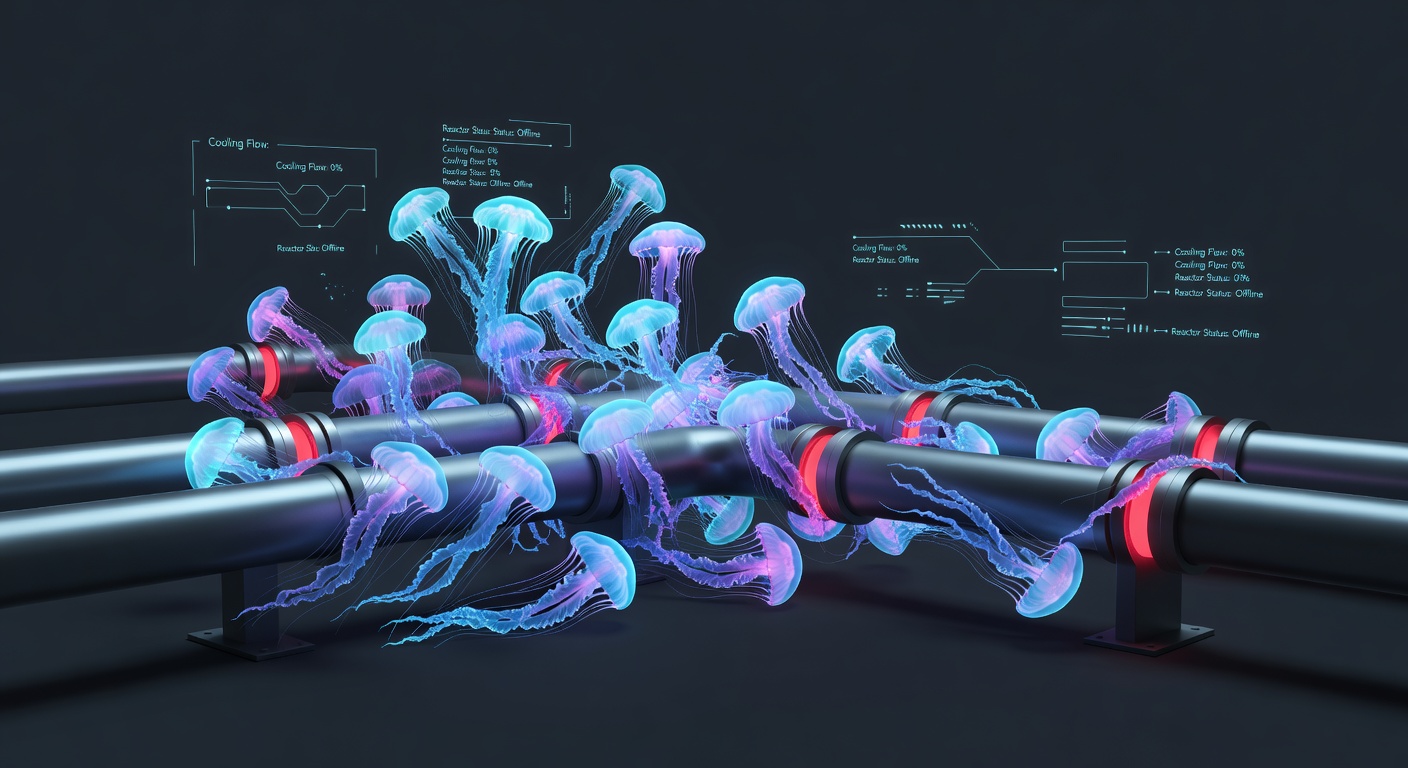
The Day Jellyfish Beat Nuclear Technology
Picture this: You're running one of the world's most sophisticated nuclear power facilities, managing reactors that provide electricity to millions of people. Everything's humming along perfectly when suddenly—boom—your systems start shutting down. The culprit? A bunch of wobbly, translucent blobs with no brains whatsoever.
That's exactly what happened at France's Gravelines nuclear plant last August. Four out of six reactors had to shut down temporarily because jellyfish had invaded their cooling systems. I have to admit, there's something both hilarious and terrifying about the fact that creatures that have been floating around mindlessly for over 500 million years can bring our most advanced technology to its knees.
How Did This Even Happen?
Nuclear plants need massive amounts of water to stay cool—we're talking about controlling reactions that generate incredible heat. Coastal plants like Gravelines often use seawater because it's abundant and effective at carrying away that waste heat.
The problem is that jellyfish apparently didn't get the memo about staying away from industrial infrastructure. They swarmed into the plant's water intake filters, essentially creating a gelatinous traffic jam that blocked the cooling system. And here's the really gross part—when jellyfish die, they basically turn into jelly soup, which can slip through filters and cause even more chaos downstream.
The good news? The safety systems worked exactly as designed. No radiation leaks, no environmental damage, no injured workers. The bad news? Those jellyfish definitely didn't make it out alive.
This Isn't Just a French Problem
Before you start thinking this is some weird one-off incident, let me burst that bubble. Jellyfish have been causing nuclear headaches around the world—Japan, Scotland, Sweden, you name it. It's like these creatures have declared war on our power grid, except they don't even know they're doing it because, well, no brains.
What really gets me is how perfectly adapted jellyfish are for this chaos. They don't need oxygen-rich water like fish do, they can handle warmer temperatures just fine, and they reproduce like there's no tomorrow when conditions are right.
The Climate Change Connection
Here's where things get serious. We're not just dealing with random jellyfish invasions—we're seeing more of them because we've fundamentally changed their environment.
Warmer oceans? Jellyfish love it. Agricultural runoff creating oxygen-dead zones that kill off other marine life? No problem for creatures that don't need much oxygen anyway. We've essentially created jellyfish paradise while making life harder for their natural competitors and predators.
It's one of those environmental ironies that would be funny if it wasn't so concerning. We're trying to transition to cleaner nuclear energy to fight climate change, but climate change is sending jellyfish armies to shut down our nuclear plants.
What Can We Actually Do?
Some places are trying to turn jellyfish into the next big food trend. Hey, if you can't beat them, eat them, right? But let's be real—that's not going to solve the underlying problem.
The real solutions are the same ones we keep coming back to: reduce carbon emissions to slow ocean warming and crack down on agricultural runoff that creates these oxygen-depleted dead zones. It's not glamorous, but it's what needs to happen.
The Bigger Picture
I find it oddly humbling that these ancient, simple creatures are forcing us to confront the consequences of how we've changed our planet. Jellyfish were here long before dinosaurs, survived multiple mass extinctions, and now they're inadvertently holding our energy infrastructure hostage.
Maybe there's a lesson in there somewhere about respecting the systems we depend on—both the technological ones we've built and the natural ones we're still learning to understand.