
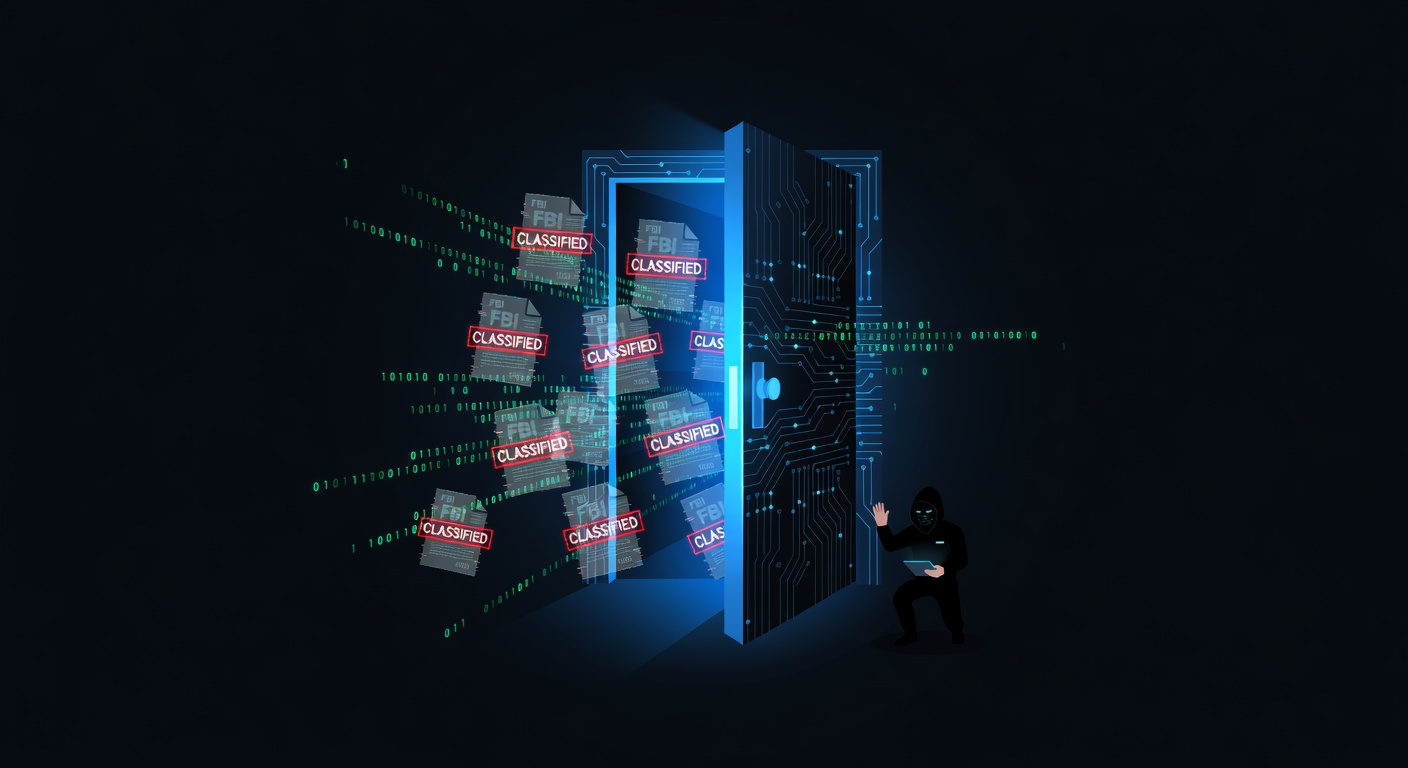
The Digital Equivalent of Walking Into the Wrong Room
Picture this: you're exploring a building, trying different doors, when suddenly one opens to reveal something you absolutely shouldn't be seeing. That's essentially what happened when a hacker accidentally accessed FBI files related to the Jeffrey Epstein investigation.
It's like the digital equivalent of that awkward moment when you walk into the wrong conference room during a top-secret meeting – except instead of quickly backing out and pretending it never happened, this involves federal law enforcement files.
Why "Accidental" Hacking Is More Common Than You Think
Here's the thing about cybersecurity that most people don't realize: a lot of major breaches happen because someone was just poking around out of curiosity, not because they're master criminals with elaborate plans.
Think of hackers like digital explorers. They're testing doors (websites, databases, systems) to see what opens. Most of the time, they hit locked doors or dead ends. But occasionally, they find an unlocked door to somewhere they definitely shouldn't be.
This isn't necessarily because the hacker is particularly skilled – sometimes it's just because someone forgot to lock the digital equivalent of the back door.
The Human Side of Digital Security
What fascinates me about stories like this is how they reveal the very human nature of cybersecurity failures. Behind every "impenetrable" government database are real people who:
- Set up the security systems
- Maintain the servers
- Update the passwords
- Configure the access controls
And people, well, people make mistakes. They use weak passwords, forget to update security patches, or misconfigure access permissions. It's not malicious – it's just human nature.
What This Means for the Rest of Us
Before you start panicking about your own digital security, remember that if the FBI can have accidental security lapses, it puts things in perspective for the rest of us. Here are some practical takeaways:
For individuals: Use strong, unique passwords and enable two-factor authentication wherever possible. But don't lose sleep over perfect security – even the professionals struggle with it.
For organizations: Regular security audits aren't just paperwork exercises. They're essential for catching those "oops" moments before they become headlines.
The Bigger Picture
Stories like this highlight a fundamental truth about our digital world: absolute security is impossible when humans are involved in the equation. The goal isn't perfection – it's building systems robust enough to handle inevitable human error.
What's particularly interesting is that this "accidental" discovery probably revealed more about FBI cybersecurity practices than any intentional investigation could. Sometimes the most valuable insights come from the most unexpected places.
The silver lining? Every accidental breach teaches us something new about digital security. And hopefully, it leads to better protections for everyone.
What do you think about accidental hacking? Have you ever stumbled into something online you weren't supposed to see? Share your thoughts in the comments below.
Source: https://www.wired.com/story/security-news-this-week-a-hacker-accidentally-broke-into-the-fbis-epstein-files