
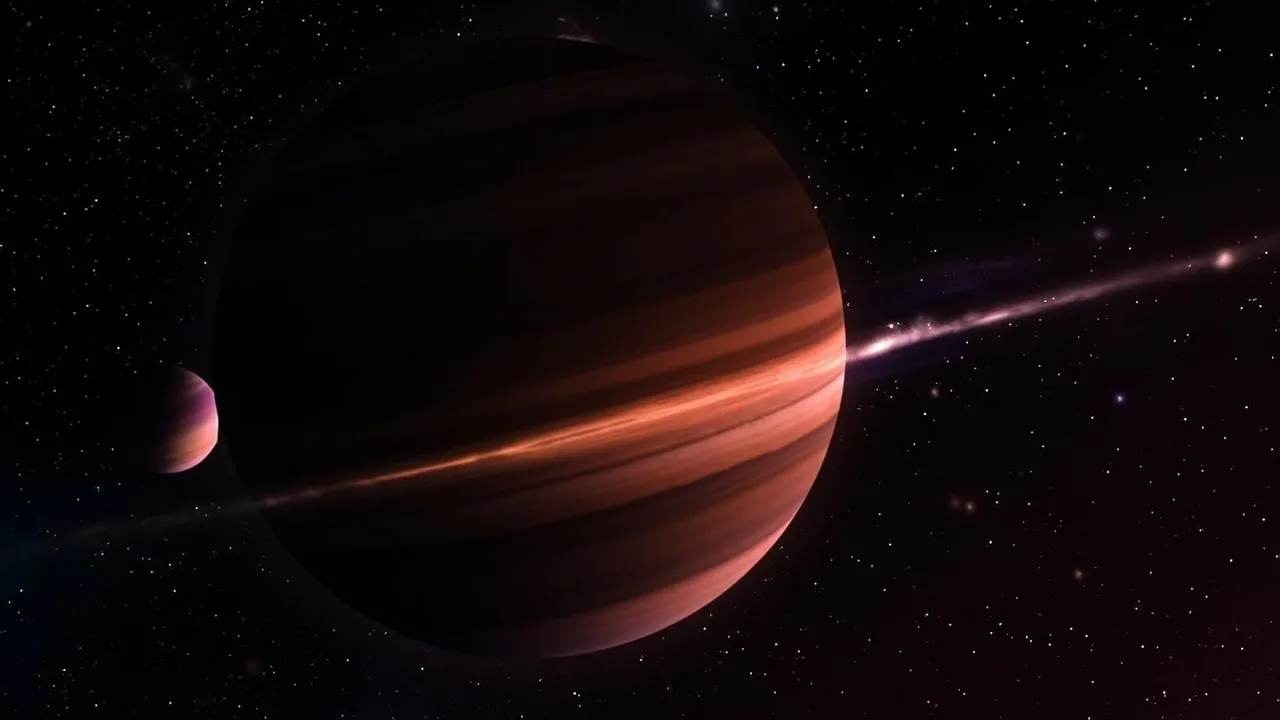
Picture This: Two Planets Colliding
Imagine two worlds, each about the size of Mars, hurtling through space at thousands of miles per hour. Then — BOOM — they slam into each other with so much energy that enormous amounts of rock literally turn to vapor. Debris flies everywhere. It's chaos on a cosmic scale.
That's exactly what astronomers think they're seeing with NASA's James Webb Space Telescope, and honestly? It's both terrifying and absolutely fascinating.
Our Own Origin Story
Here's where things get personal. Scientists believe something very similar happened to Earth billions of years ago. A Mars-sized object nicknamed "Theia" likely crashed into our young planet, and that catastrophic impact probably created the Moon. We've been sending humans back there with NASA's Artemis program, preparing for eventual missions to Mars.
But understanding that ancient event has been tricky. We're studying the aftermath of something that happened 4.5 billion years ago, which means looking backwards through an impossibly long and blurry timeline.
That's where Webb comes in.
Webb to the Rescue
The James Webb Space Telescope is basically the superhero of astronomical instruments. It can detect infrared light that older telescopes couldn't see clearly, and it has incredible sensitivity.
A team led by Kate Su from the Space Science Institute in Boulder, Colorado, used Webb to study what's called "extreme debris disks" — systems with unusually huge amounts of warm dust floating extremely close to their stars. Think of these as the cosmic equivalent of a crime scene that's still smoking.
What makes these disks special? They're located in roughly the same region where rocky planets like Earth orbit in our own solar system. So studying them is like peeking at what our solar neighborhood might have looked like during its chaotic teenage years.
Here's the Really Cool Part
By analyzing the light these dust clouds produce, scientists can figure out what the debris is made of. And that's when things got interesting.
The researchers discovered two distinct types of collisions:
The Silica-Rich Crashes: About one-third of the systems showed evidence of extremely energetic impacts — the kind that would come from Mars-sized bodies smashing together. These collisions were so violent they vaporized significant amounts of rocky material. Think of it like the cosmic equivalent of throwing a rock into a volcano and watching it explode into airborne glass.
The Gentler Bumps: The remaining two-thirds showed signs of lower-energy collisions, probably between Moon-sized objects. These were more like glancing blows than head-on collisions.
Why Does Any of This Matter?
I'm glad you asked. Understanding these collisions helps us piece together how our own solar system formed. We now have direct evidence of the kinds of catastrophic events that shaped rocky planets like Earth.
There's also a fascinating age pattern. The silica-rich, ultra-violent collisions only happened around stars younger than 300 million years. After that, things seemed to calm down. Meanwhile, the gentler collisions occurred across a much wider range of ages.
This suggests our solar system went through its own violent phase and eventually settled into more stable conditions — conditions that eventually allowed life to flourish on Earth.
Looking Forward
I don't know about you, but I find this stuff genuinely humbling. We're living on a planet that formed through cosmic violence, surrounded by evidence of other worlds that went through similar — and perhaps even more extreme — experiences.
The fact that Webb can detect these distant collisions and actually analyze what they're made of is remarkable. It's like being able to study the aftermath of car accidents happening in different cities just by looking at the debris scattered on the highway.
And here's what really gets me: We might be living in one of the calmer neighborhoods of the universe. These extreme debris disks are surprisingly rare — maybe only about 1% of young star systems show signs of this phase. Our solar system may have passed through this chaotic stage billions of years ago, and we're now reaping the benefits of that stability.
The next time you look up at the Moon — that beautiful byproduct of cosmic destruction — remember that similar events are happening right now in other star systems, millions of light-years away. Space is both beautiful and violent, and Webb is helping us understand just how wild our universe really is.