
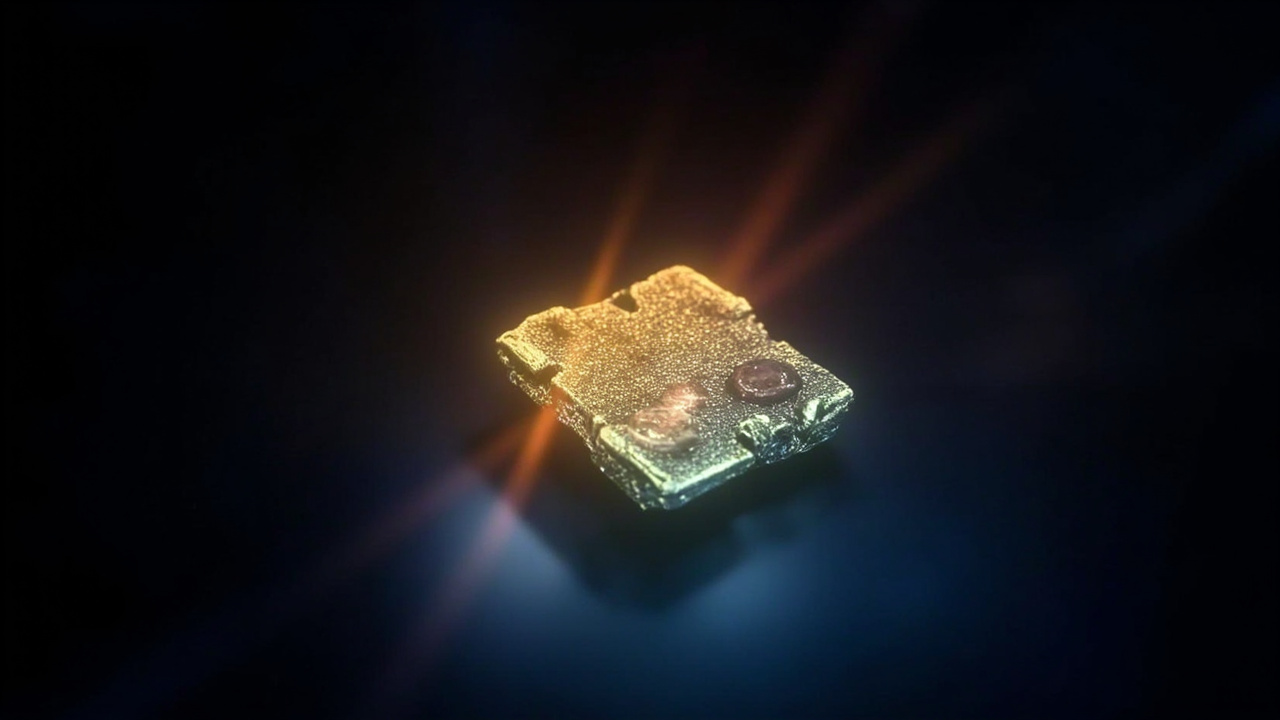
The Metal Scrap That Wouldn't Go Away
Let me set the scene: July 2, 1937. Amelia Earhart, the trailblazing aviator who'd already done the impossible multiple times, is somewhere over the Pacific Ocean with her navigator Fred Noonan. They're supposed to land on Howland Island, a tiny speck of land roughly the size of a few city blocks.
They never showed up.
Eighty-plus years later, we still don't know what happened. And honestly? That uncertainty has given birth to basically every conspiracy theory, hoax, and wild speculation imaginable. Skeletons. Eyewitness accounts. Mysterious signals. The whole nine yards.
Enter: One Suspicious Hunk of Metal
Fast forward to 1991. An enthusiast named Ric Gillespie finds a weathered, corroded piece of metal about 300 miles from Howland Island. In the vastness of the Pacific, that's basically next door. Could this be from Earhart's Lockheed Electra? Maybe. Maybe not. But it was interesting enough to keep the rumor mill spinning for decades.
By 2021, people were so curious about this thing that Penn State University decided to bring out the heavy equipment. And I mean heavy—we're talking about a nuclear reactor.
The "X-Ray Vision" Approach
Here's where it gets cool. The Penn State team, led by Daniel Beck, didn't just want to eyeball the corroded panel. They wanted to see what underneath the rust could tell them.
They used something called neutron radiography—think of it like an X-ray, but way more detailed. The process is pretty clever: you put the metal sample in front of a neutron beam, position a special imaging plate behind it, and let the neutrons pass straight through. Any hidden details—faint paint marks, stamped serial numbers, mysterious engravings—suddenly become visible.
It's the kind of thing that sounds like science fiction, but it's real, practical detective work.
The Mystery Deepens (And Then Doesn't)
The team kept digging. They looked for hidden markings that might identify which plane this came from. After months of analysis, they found possible stamps that looked like "D24" and "335" (or maybe "385"—the corrosion made it tricky).
Promising, right?
Not really. The meaning of those marks remained a complete mystery. The neutron imaging didn't solve Earhart's disappearance, and it didn't definitively prove where the panel came from.
But here's the thing—that's not actually a failure.
The Plot Twist Nobody Expected
Fast forward to late 2023. Gillespie examined rivet patterns on similar aircraft and made a discovery: the metal panel probably came from a Douglas C-47 cargo plane, not Earhart's Electra. He acknowledged this publicly in 2024.
So the metal scrap that had fueled speculation for three decades? It wasn't even part of the mystery.
Why "Failure" Actually Matters
This is the part that gets me, as someone who loves good science storytelling.
A lot of people think investigations work like this: you find a clue, you test it, and boom—case solved. But real detective work is messier. Sometimes the clue that seemed promising turns out to be nothing. Sometimes that "nothing" is actually crucial information, because it narrows down the possibilities.
In this case, proving the panel didn't belong to Earhart's plane was genuinely valuable. It meant searchers could look elsewhere. It meant the mystery didn't get muddied by a dead-end lead.
Plus, the Penn State team didn't waste their time. The neutron-imaging techniques they refined while studying this panel? They later applied them to completely different research on microplastics. That's how science works—you solve one mystery poorly, but the tools you build help you solve something else entirely.
The Bigger Picture
Earhart's disappearance remains one of aviation's greatest unsolved mysteries. There are still expeditions happening (one was scheduled for the island of Nikumaroro in 2026), new sonar images keep appearing, and people keep digging.
But what I appreciate about the Penn State collaboration is that it shows us how modern science tackles old mysteries. Not with drama or wild speculation, but with precision tools and honest results—even when those results are "we still don't know."
Sometimes the most important discovery is ruling something out. And if a nuclear reactor helps us get there, even better.