
The Perfect Storm of Serendipity
There's something magical about those moments when you're not looking for anything special and stumble upon something genuinely remarkable. John Smith was just having a normal day walking his dog through the Forest of Dean in Gloucestershire, England. His pup, doing what dogs do best, wandered off the path to explore. When Smith went to retrieve his furry friend, he glanced down at the tangled tree roots nearby and saw something that stopped him in his tracks: a flash of brilliant green metal catching the light.
"It just sparkled the most beautiful green color," Smith told the BBC, and honestly, I can picture the moment perfectly. He pulled it out from its hiding spot and had no idea he was holding something that had been lost to history for over 3,000 years.
Meet the Bronze Age MVP
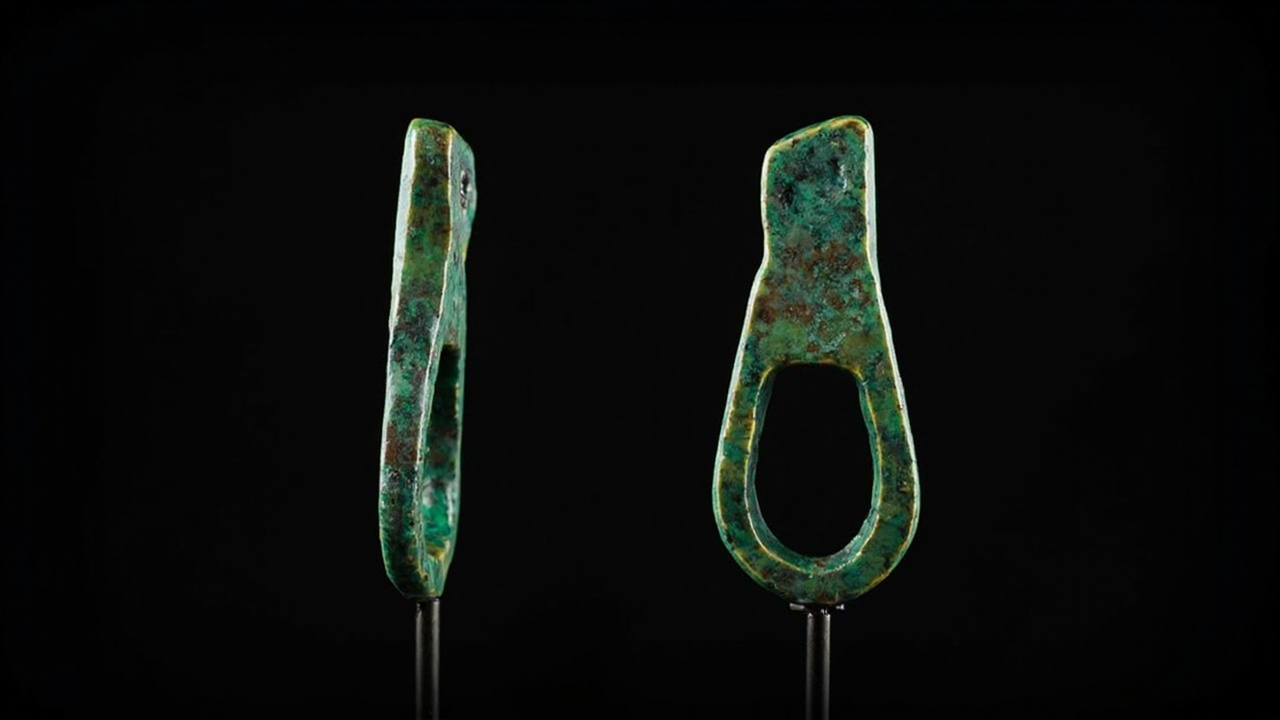
So what exactly did Smith find? An ax head from somewhere between 1400 and 1275 B.C.E.—that's the Middle Bronze Age, folks. We're talking about a tool that was forged when ancient Egyptians were still ruling the Nile and nobody in Europe had even heard of iron yet. The whole thing is only five inches long, but it's packed with fascinating details.
The ax head is made in what's called the "palstave" style—think of it as the iPhone of Bronze Age tools. It was cast in a two-part mold, which was actually pretty sophisticated technology for the time. The craftsmanship shows a narrow rib running down the middle, perfectly symmetrical sides that curve gently from the blade to the base, and a blunt (but functional) cutting edge. There's even a small loop on one side where ancient users could tie a cord to attach it securely to a wooden handle.
Why Is It So Green?
Here's the part that helped Smith know immediately he'd found something ancient: that stunning verdigris color. You know that greenish patina you see on old copper pennies or vintage statues? That's what happens when copper—the main ingredient in this bronze alloy (about 90% copper, 10% tin)—gets exposed to air and moisture for literally thousands of years. The oxidation basically creates a protective layer, which is actually one of the reasons this ax survived so well. Nature's preservation system is pretty clever.
The Mystery Deepens
Now here's where it gets intriguing. Nobody actually knows why this ax ended up wedged in tree roots. The Forest of Dean has been home to humans since the Stone Age, and Bronze Age folks definitely lived and worked there. They might have dropped it while clearing land for farming—tools get lost all the time, even now. Or maybe it was intentionally buried as part of a ritual or placed in someone's grave as a burial offering, which was actually a common practice back then.
The experts at Cotswold Archaeology, who studied the piece, basically shrugged and said, "Your guess is as good as ours." That ambiguity is what makes it so captivating, honestly. Every artifact tells a story, but sometimes we only get to see the ending without knowing what came before.
From Forest Floor to Museum Display
Smith did the right thing by handing his discovery over to the authorities. The ax now lives at the Dean Heritage Centre, where Kayleigh Spring, the center's objects conservator, has studied it thoroughly. It's on display for the public to see—which is pretty cool when you think about it. Something that was hidden from view for 3,400 years is now helping modern visitors understand what life was like in Bronze Age Britain.
What This Really Means
Leoni Dawson from Forestry England said something that really stuck with me: "It's incredible to think that tools like this have survived for thousands of years, hidden beneath our feet." That's the thing about archaeology that gets me every time—the idea that our landscapes are basically living museums. Every forest, every field, every riverbank could be holding stories we haven't discovered yet.
Smith's dog didn't find treasure in the way pirates do, but stumbling upon a window into the distant past? That's actually way cooler. And it's a good reminder that sometimes the best discoveries happen when we're not even trying—just out for a walk with our furry friends, paying attention to the world around us.