
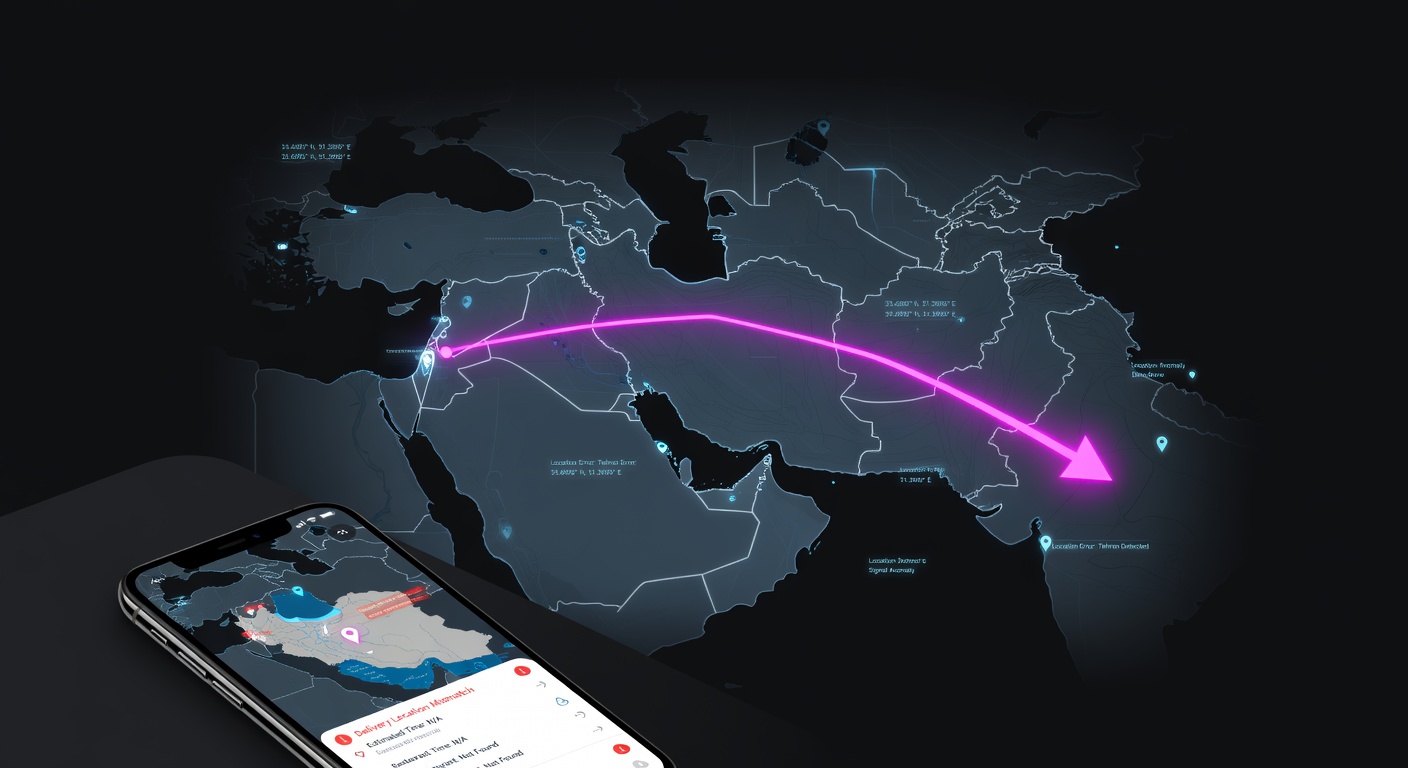
The Day GPS Lost Its Mind
Picture this: you're sitting in your living room in Dubai, trying to order some pizza through your favorite delivery app. You open the app, and suddenly it's convinced you've teleported to Tehran. Your Uber thinks you're in Iran. Your Google Maps is pointing you toward Persian landmarks you've never seen.
If this sounds like science fiction, well, it's been the very real experience for countless people across the Middle East lately. And the story behind it is absolutely fascinating.
What's Really Going On Here?
GPS jamming and spoofing attacks have been wreaking absolute havoc near Iranian airspace, and the effects are rippling out way beyond what anyone expected. These aren't your garden-variety technical glitches—we're talking about deliberate interference with satellite signals that's throwing our entire digital world into chaos.
Think about how much we rely on GPS every single day. It's not just for navigation anymore. Your food delivery apps use it. Your fitness tracker uses it. Even your phone's camera uses GPS data to tag your photos. When that system gets confused, everything else follows suit.
The Ripple Effect is Wild
Here's what really gets me about this situation: we've become so dependent on precise location services that when they go haywire, it's like watching dominoes fall. Delivery drivers can't find addresses. Ride-sharing apps quote impossible pickup times. Some apps straight-up crash because they can't make sense of the conflicting location data.
I've been following technology for years, and this perfectly illustrates something I keep harping on—our digital infrastructure is way more fragile than most people realize. We've built these amazing, interconnected systems, but they all rely on the same basic building blocks. Mess with GPS, and you mess with everything.
The Human Side of Digital Warfare
What strikes me most about this story isn't the technical complexity—it's how it affects regular people just trying to get through their day. A mom trying to order groceries suddenly can't because the app thinks she's in a different country. A businessman misses meetings because his navigation is completely bonkers.
This is modern digital warfare spilling over into civilian life in ways that previous generations could never have imagined. Your grandfather's radio might have gotten some static during wartime, but his pizza delivery never got confused about which continent he was on.
What This Means for Our Connected Future
Looking ahead, incidents like this are probably going to become more common, not less. As our world becomes increasingly connected and location-dependent, these systems become bigger targets for disruption.
The solution isn't to go back to paper maps (though maybe keeping one in your glove compartment isn't the worst idea). Instead, we need to build more resilient systems with better backup plans. Multiple positioning systems, better error detection, and maybe some good old-fashioned human oversight wouldn't hurt either.
The Bigger Picture
This Iranian GPS situation is like a stress test we never asked for, revealing just how interconnected and vulnerable our digital lives have become. It's simultaneously impressive and terrifying how one disrupted signal can cascade through so many aspects of daily life.
Next time your GPS acts up, you might want to think twice before assuming it's just a software glitch. In our hyper-connected world, there might be more to the story than meets the eye.
Source: https://www.wired.com/story/gps-attacks-near-iran-are-wreaking-havoc-on-delivery-and-mapping-apps