
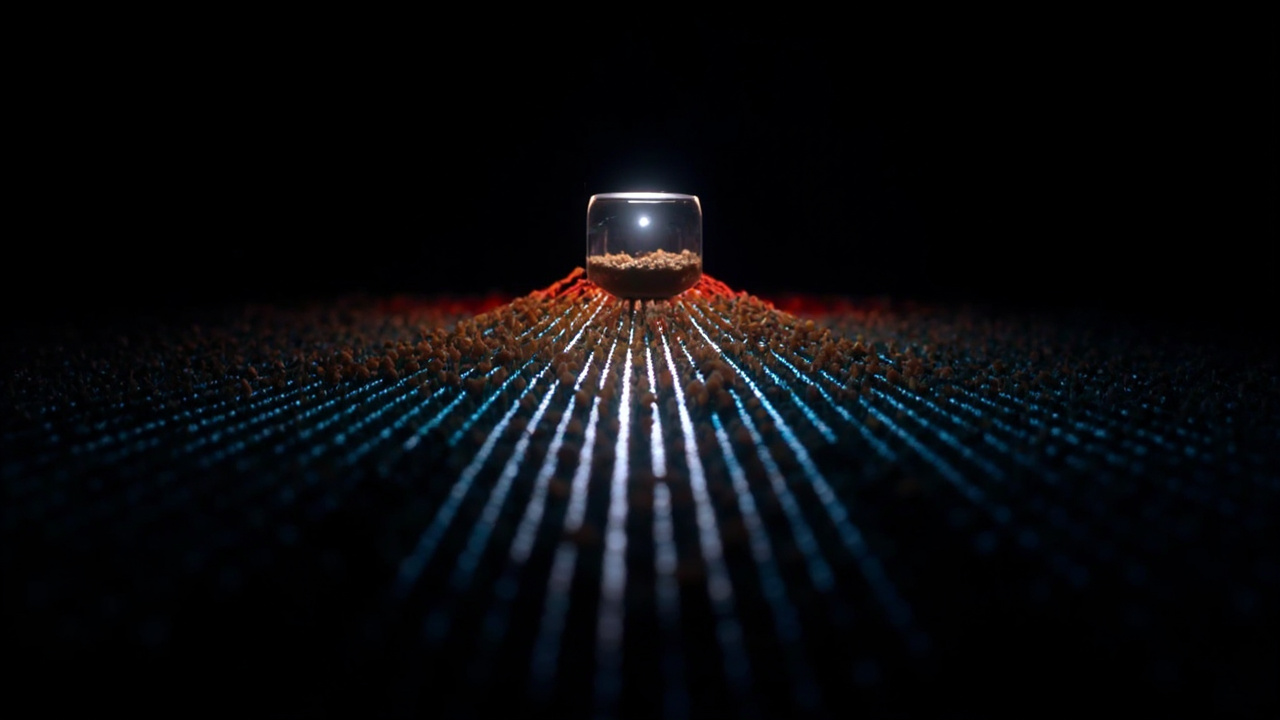
Okay, I have to admit — when I first heard about this research, I had to read it twice. Scientists discovered something weird about rice. And I don't mean they found a new way to make it fluffy. I mean they found that rice grains have a genuinely strange, almost counterintuitive behavior under pressure. And now they want to use that quirk to build robots.
Yep. Robots. Made partly of rice.
The Rice Reveal
Here's what's wild: if you pack rice grains together and slowly press down on them, they hold up pretty well. But if you suddenly slam something onto them? They collapse more easily. That's the opposite of what you'd expect, right?
Most materials get stronger when you apply force quickly — think of how a seatbelt locks up during a crash. But rice? Rice does the opposite. Scientists call this "rate softening," and it's actually pretty rare in nature.
The reason is all about friction. When you apply pressure slowly, the tiny grains have time to grip each other, creating an internal network of forces that holds everything together. But slam something down fast, and that friction drops dramatically. The grains basically slip past each other before they can form that supportive structure.
From Kitchen Staple to Engineering Material
Now here's where it gets exciting. The research team at the University of Birmingham didn't just document this quirk and move on. They thought: what if we actually use this?
They created what's called a granular metamaterial — basically engineered structures built from these rice-based units combined with other materials (like sand) that behave differently. The result is something that can respond intelligently to different situations without any electronics, sensors, or power source.
Think about that for a second. No batteries. No wiring. No microchips telling it what to do. Just physics doing its thing.
Dr. Mingchao Liu, one of the researchers, put it perfectly: "Instead of telling a structure how to respond, we let physics decide."
Why This Actually Matters
You might be thinking, "That's neat, but so what?" Here's where it gets practical.
This kind of material could revolutionize soft robotics. Traditional robots are often stiff, heavy, and potentially dangerous if they bump into someone. But imagine robots built with materials that automatically adjust — becoming more flexible in gentle situations and stiffer when they need to provide support or protection.
Picture a robot assisting with surgery. It could be soft and gentle around delicate tissues, but instantly become more rigid when it needs precision. Or imagine protective gear that absorbs energy differently depending on how hard and fast an impact hits. That could mean better helmets, better padding, better safety equipment all around.
And the best part? All of this happens automatically. The material itself adapts. No electronics to fail, no batteries to charge, no sensors to calibrate. Just smart design doing the work.
The Bigger Picture
What really got me about this research is the philosophy behind it. These scientists looked at something common — something we've been eating for thousands of years — and saw potential that everyone else missed. They didn't fight against rice's unusual properties; they embraced them as a design feature.
That's a reminder that sometimes the most innovative solutions come from understanding and working with nature, rather than trying to force materials into behaving the way we expect them to.
So next time you're scooping rice into a pot, maybe give a little nod to its hidden talents. Turns out that humble grain might be doing a lot more for humanity than just filling our bellies.