
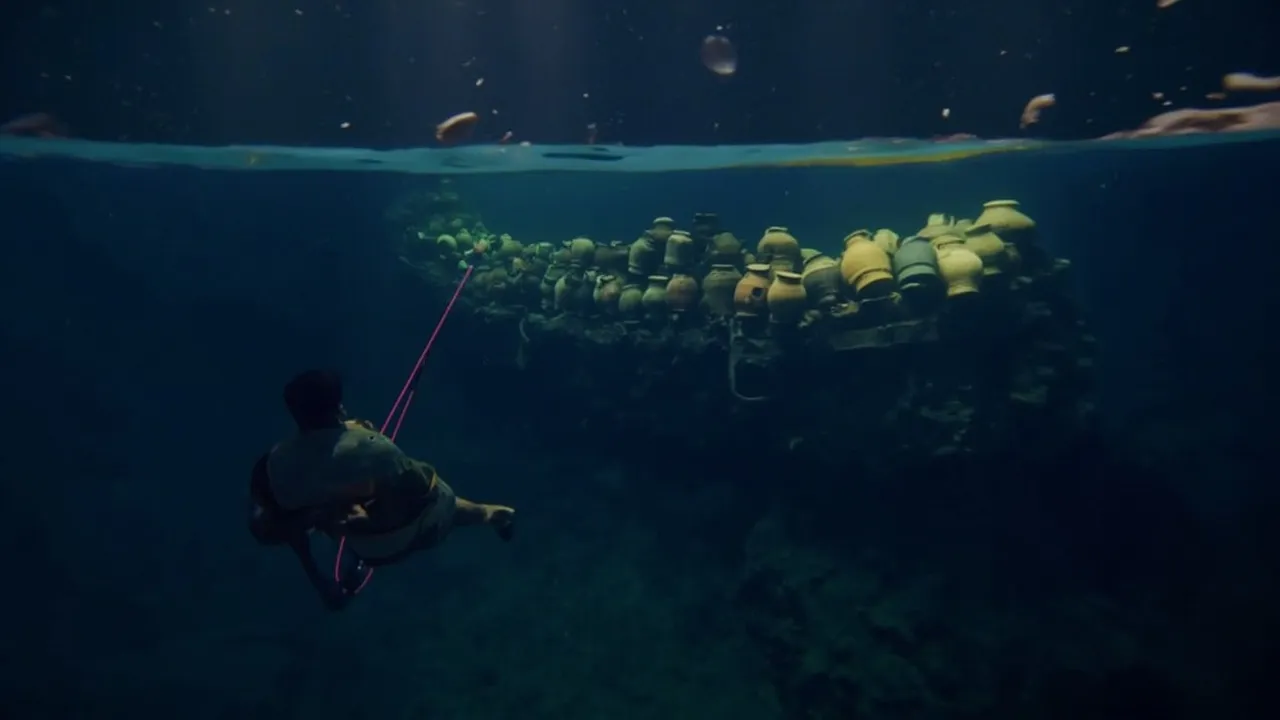
Okay, I've got to share this story with you because it's genuinely one of those "real life is stranger than fiction" moments.
Picture this: You're a spearfisherman off the coast of Sicily. You spot what looks like a big rock about 150 feet down. No big deal, right? Just another underwater landmark to check out. So you swim on over to take a peek...
And then your heart literally stops because that "rock" is actually a 2,000-year-old Roman shipwreck. 🤯
That's exactly what happened to Giacomo De Mola, and honestly, I can't stop thinking about it.
The Moment Everything Changed
According to what De Mola shared on Instagram (in a translated post), he described it like this: "I moved closer. And my heart stopped. It wasn't a rock... This is, without a doubt, the most incredible discovery of my life."
Can you even imagine that feeling? You're just doing your thing, living your life, and then suddenly you become one of the first humans in nearly twenty centuries to lay eyes on something extraordinary.
After he surfaced, De Mola told his fishing partner what he'd seen. But he said he could barely describe it — it was just too unbelievable. So they did what any reasonable people would do: they reported it to the authorities, and the Carabinieri Command for the Protection of Cultural Heritage got involved.
What They Found
The ship itself is about 69 feet long and 20 feet wide — roughly the size of a small school bus, but horizontal and filled with treasure (archaeological treasure, I mean, not gold doubloons).
The real stars of the show are the hundreds of clay containers called amphorae. If you're not familiar, these are basically ancient versions of those giant jars you'd see at an olive oil festival — tall, narrow-necked vessels with two handles on each side. Romans used them to transport everything from wine to olive oil across the Mediterranean.
Here's where it gets really interesting: these aren't just random containers. The archaeologists identified several types:
- Dressel 1As — the most common type found at the site, a popular style among Romans
- Lamboglia 2s — specifically used for wine shipping
- Some jugs that came from North Africa
- Even older Neo-Punic examples (those are from the Carthaginian/Phoenician tradition)
The collection is so densely packed that the amphorae stack nearly seven feet high in some areas! That's like an underwater jar mountain stretching across a 60-foot area.
Why This Matters
The Italian Minister of Culture, Alessandro Giuli, called this "one of the most significant underwater archaeological discoveries of recent years." And you know what? I think he's right.
Here's the thing that gets me: the Mediterranean Sea isn't just a body of water. It's essentially the original superhighway of civilization. Ships like this one connected Greece, Italy, North Africa, the Middle East — everyone traded with everyone through these ancient shipping routes.
This particular ship dates to the 1st or 2nd century BCE, a time when Rome was expanding its reach across the known world. Those amphorae filled with wine and olive oil? They weren't just products — they were the economic lifeblood of an empire.
And get this: De Mola mentioned that the old amphorae are now home to a thriving community of marine life. After two thousand years on the seafloor, these ancient containers have become part of a living underwater ecosystem. There's something almost poetic about that, isn't there?
What's Next?
Right now, officials have protected the site, but there's no plan to raise the entire shipwreck. Some artifacts might be brought up for study, and it could eventually become a diving site for lucky visitors. But archaeologists want to take their time and study the wreck in place first.
De Mola summed it up perfectly when he said, "This time we didn't just find a wreck, we found a piece of our history."
And honestly? That's the beautiful thing about discoveries like this. The ocean isn't just hiding weird fish and lost car keys — it's preserving entire chapters of human history, just waiting for someone curious enough to look.
So the next time you're at the beach staring out at the water, remember: there's an awful lot we still don't know about what's hiding down there.
Source: Popular Mechanics