
The Dinosaur Trick That Only Works When You're Young
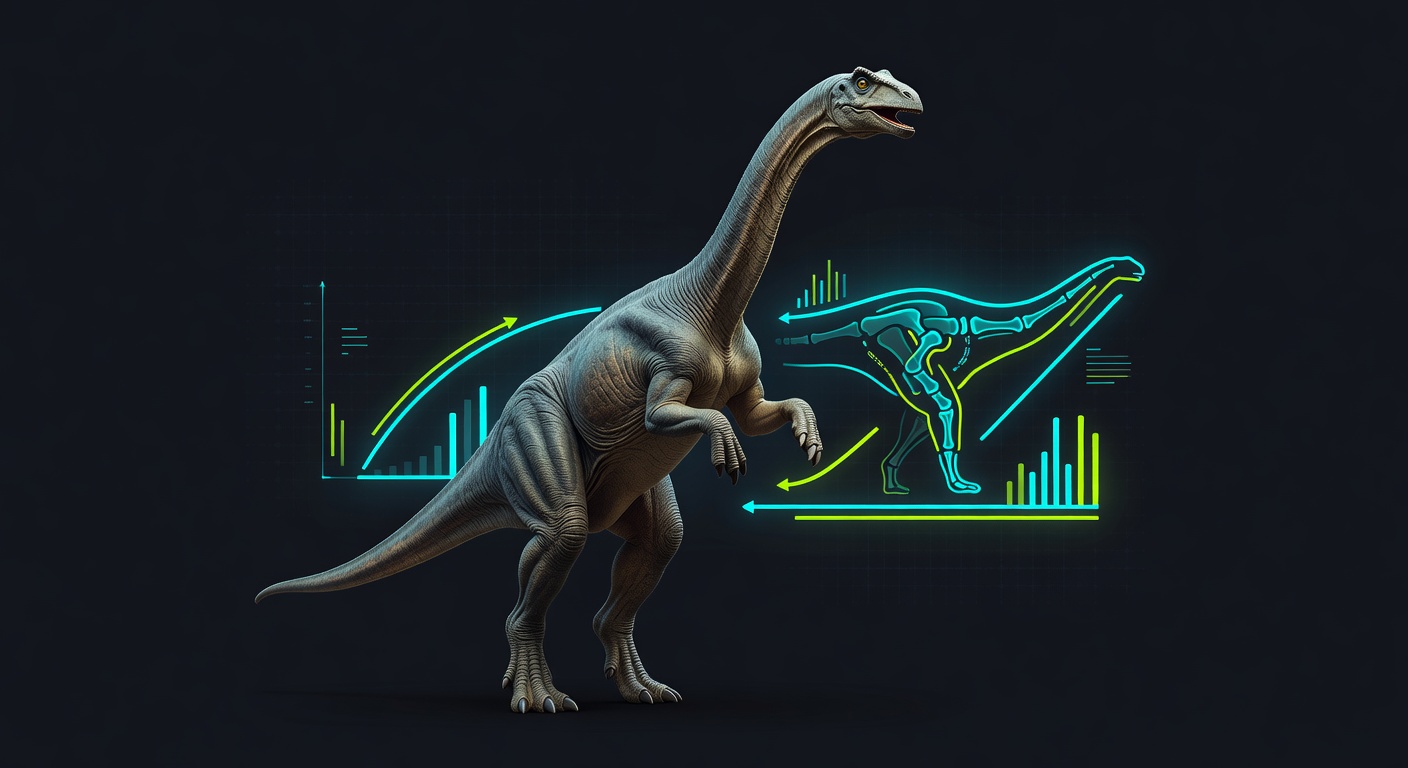
Picture this: a young dinosaur, about the size of an elephant, suddenly rises up on its back legs like it's auditioning for a Godzilla movie. It holds the pose for a solid stretch of time, scanning the treetops for the juiciest leaves. Then, a few years later, when that same dinosaur has grown to its full adult size? Forget about it. Standing upright becomes about as comfortable as wearing shoes two sizes too small.
This isn't science fiction—it's what paleontologists just figured out happened millions of years ago with certain long-necked dinosaurs in South America.
The Dynamic Duo: Meet Uberabatitan and Neuquensaurus
Two sauropods from the Late Cretaceous period (around 66 million years ago) are the stars of this story. One was called Uberabatitan, found in Brazil, and the other Neuquensaurus, discovered in Argentina.
Now, I know what you're thinking: "But aren't sauropods those massive, thundering creatures we see in documentaries?" Well, yes and no. These two were actually the small sauropods of their day—imagine being called "small" when you're still 26 meters (about 85 feet) long. That's roughly the length of two city buses parked end to end. Yet compared to their mega-sauropod cousins, they were almost dainty.
Here's the wild part: when these dinosaurs were young, they could pull off this impressive upright balancing act with relative ease. But as they packed on the pounds and grew into adulthood? The physics just didn't work anymore.
How Scientists Basically Put Dinosaurs in a Computer
This is where the research gets really cool. Instead of just guessing or looking at fossil bones and shrugging, scientists used something called finite element analysis (FEA)—a fancy computer technique that engineers use to figure out if bridges will collapse or buildings will survive earthquakes.
The researchers took digital scans of dinosaur thigh bones (femurs) from seven different sauropod species and recreated them in 3D. Then they ran computer simulations to figure out how much stress and strain each bone experienced when the dinosaur stood on its hind legs.
Think of it like this: you're testing a video game character trying to balance on one foot while carrying increasingly heavy backpacks. The computer tracks exactly where the stress concentrates and how likely the character is to topple over. Same idea, just with prehistoric reptiles.
The Physics of Getting Too Thicc
What did the simulations reveal? The younger, smaller versions of Uberabatitan and Neuquensaurus had bones and muscles that were basically made for standing upright. Their femurs were built in just the right way to distribute weight and stress efficiently. They could hold that pose and stay relatively comfortable—relatively being the key word.
The bigger sauropods? Not so much. Now, here's the thing that surprised me: bigger dinosaurs could still stand up. But doing so would've been like holding a plank position for hours while your trainer yells at you. Technically possible, but absolutely miserable.
"They probably chose the best time to do so, because it must have been an uncomfortable position," explained one of the lead researchers. In other words, adult sauropods probably used upright posture as a special occasion move—maybe when they were desperately hungry or needed to impress a mate—rather than a regular daily habit.
Why Bother Standing Up at All?
You might wonder: if it's so uncomfortable, why did these dinosaurs do it? Scientists think there were several reasons:
The snack upgrade: Standing upright gave herbivorous sauropods access to leaves and branches way higher up in trees than they could reach on all fours. It's like discovering that the really good cookies are on the top shelf—suddenly that awkward stretch is worth it.
The intimidation factor: Rearing up makes you look bigger. A lot bigger. If you're a young dinosaur trying to scare off predators, looking like a two-story building probably helped.
Romance: Some researchers think this posture may have played a role in mating displays or behavior. It's basically dinosaur body language saying, "Hey, look how impressive I am!"
The Limitations (and What They're Missing)
Here's where honest science gets interesting: the researchers are pretty upfront about what their study didn't include. They didn't account for cartilage in the joints, which in living animals helps absorb stress and impact. They also didn't factor in the role of the tail, which could've acted like a tripod leg, giving dinosaurs extra stability when balanced upright.
So the reality is probably somewhere in between their calculations and pure speculation. Cartilage might have made upright posture less stressful than the models suggest. The tail might have made it more stable. But even accounting for those unknowns, the basic finding still holds: young sauropods had an easier time standing up than their elders.
The Bigger Picture
What fascinates me about this research is how it shows that evolution isn't always a straight line of "getting better at something." These dinosaurs were better at bipedal standing when they were small—a skill that became less practical as they grew. It's a reminder that bodies change with age, and animals adapt their behavior accordingly. A teenage gorilla can do backflips that an adult gorilla would never attempt.
It's also a great example of how modern technology lets us ask detailed questions about extinct creatures that we never could have answered before. We're not just looking at old bones anymore; we're running sophisticated physics simulations to understand how those bones actually worked.
Pretty cool stuff for animals that have been dead for 66 million years.