
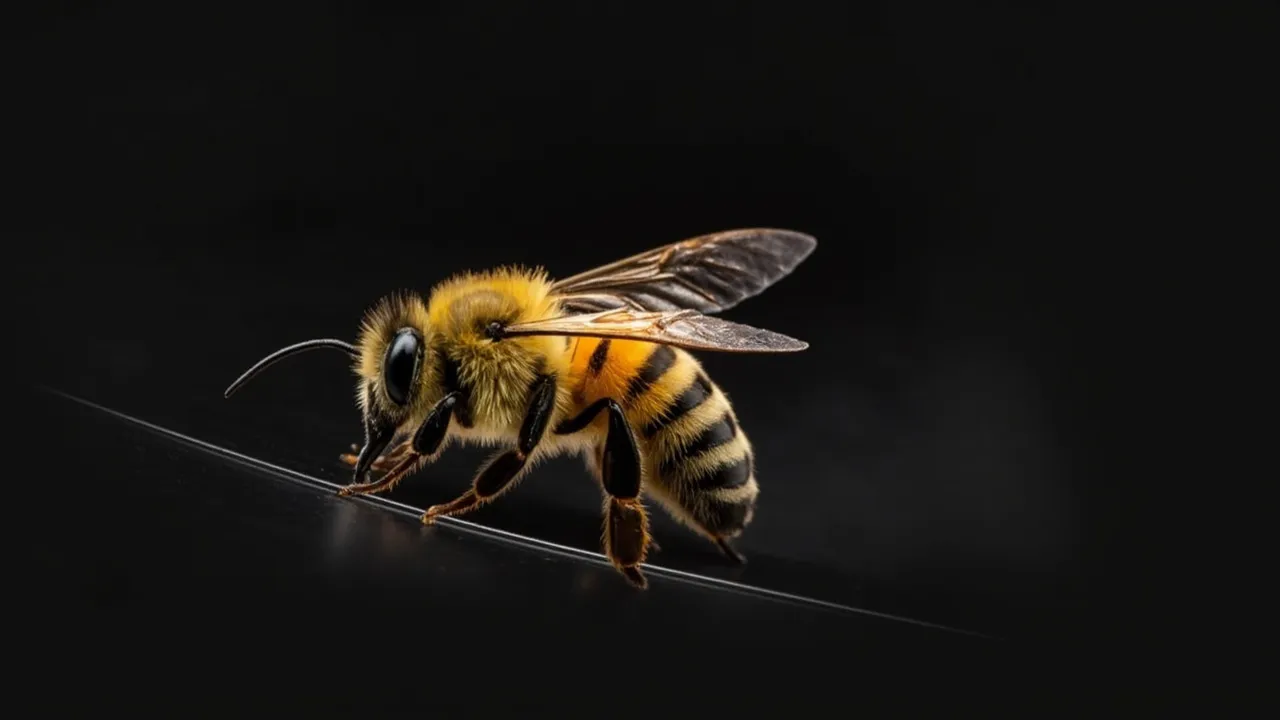
Okay, confession time: I always thought pollen was basically bee junk food — nutritionally perfect, nature's ultimate power bar for our fuzzy little pollinator friends. Turns out? I was completely wrong.
University of Oxford researchers just published findings in Current Biology that completely upended my understanding of bee nutrition. And honestly, it makes total sense once you think about it.
Pollen Wasn't Made for Bees — And That's a Big Deal
Here's something wild: pollen isn't actually food for pollinators. Shocking, right? Pollen is the male reproductive material of plants. It's basically plant sperm. (Cue awkward pause.)
Plants evolved pollen to fertilize other plants, not to feed bees. So while we've been assuming pollen is this perfectly calibrated superfood that nature designed specifically for bees, the reality is much messier. Plants couldn't care less about bee nutrition — they just want their genetic material to spread.
This creates what researchers call a "conflict of interest between the plant and the pollinator." And honestly, I love that scientists are finally naming this tension. It's like they caught plants being selfish, and bees just have to deal with it.
The Amino Acid Problem Nobody Expected
The research team did something fascinating: they compared the essential amino acids in honeybee tissues with pollen from 99 different UK flowering plant species across 26 plant families. (That's a LOT of pollen analysis, for those keeping track.)
What they found? Most pollen is actually a pretty poor match for what bees actually need. Essential amino acids are the building blocks of protein, and bees can't produce these on their own — they have to get them from food.
When researchers fed bees artificial food that more closely matched their own tissue composition (rather than typical pollen), something interesting happened. The bees ate more, gained more body mass, and actually chose foods with more protein. Basically, when they got food that made biological sense to them, they wanted more of it.
The Histidine Twist
Here's where it gets really interesting.
The researchers suspected one amino acid might be acting like a built-in stop sign: histidine. Bees only need tiny amounts of histidine, so when there's too much of it relative to other amino acids, something cool happens.
When bees encountered food with relatively high histidine levels, they pulled back. They ate less overall — both less protein AND less carbohydrate. It's like their bodies have a sensor that says "okay, this ratio is off, maybe we should slow down on the eating."
The researchers think this might work through post-digestive feedback. In rats, excess histidine converts to histamine, which activates brain receptors that control appetite. Bees might have something similar going on.
I find this absolutely fascinating. Instead of just blindly eating more pollen to get what they need, bees have evolved to actually reduce intake when something's out of whack. That's surprisingly sophisticated behavior for such tiny creatures.
Bees Have a Secret Kitchen (Sort Of)
But here's what really blew my mind: adult honeybees don't just eat pollen and pass it straight to their babies.
Worker bees gather pollen from lots of different flowers and store it in the hive as "bee bread." Nurse bees then eat this material and process it through their bodies, creating glandular secretions — including the famous royal jelly — that they feed to developing larvae.
The researchers discovered that bee bread has a more balanced amino acid profile than most individual pollen sources. And royal jelly? It matches bee tissue composition even more closely.
This means honeybees have essentially evolved a workaround for the nutritional mismatch problem. They gather pollen from many sources (diversifying their nutrient intake), then process it through their own bodies to create something specifically designed for their offspring.
Professor Geraldine Wright from Oxford put it beautifully: "We predict that honeybees have evolved to create glandular secretions which are the perfect food for their larvae, providing them with the ratios of essential amino acids that maximize growth."
That's basically nature's way of saying "if you can't get perfect ingredients, at least cook it properly."
The Real Problem: Wild Bees Are Left Out
Here's where my inner conservationist gets a little worried.
This whole nutritional processing system? Only honeybees have it. Bumblebees, solitary bees, and other wild species feed pollen directly to their offspring without that intermediate processing step.
So in habitats with limited flower variety, wild bees might genuinely struggle to get the right amino acid balance for their developing young. They're stuck with whatever pollen is available, no matter how mismatched it might be.
This has big implications for conservation. If we want healthy wild bee populations, we probably need to think about not just the quantity of flowers, but the diversity. Different plants provide different nutritional profiles, so a variety-rich meadow might literally mean the difference between thriving bee populations and struggling ones.
What This Means for Your Garden
Here's something you can actually do with this knowledge: plant diverse flowers.
If you garden, or if you're making decisions about what to plant on farmland or public spaces, variety matters enormously. A wildflower strip with 30 different species is going to support bee nutrition way better than a monoculture of a single plant, no matter how pretty that plant is.
This research gives us a scientific basis for something conservationists have been saying for years: biodiversity isn't just nice to have, it's actually essential for wildlife nutrition.
Bees have evolved remarkable adaptations to cope with imperfect food sources. But they're fighting an uphill battle when we've simplified our landscapes so dramatically. Maybe it's time we gave them a hand — or at least a more diverse garden.
Source: University of Oxford research published in Current Biology https://www.sciencedaily.com/releases/2026/08/260819041237.htm