
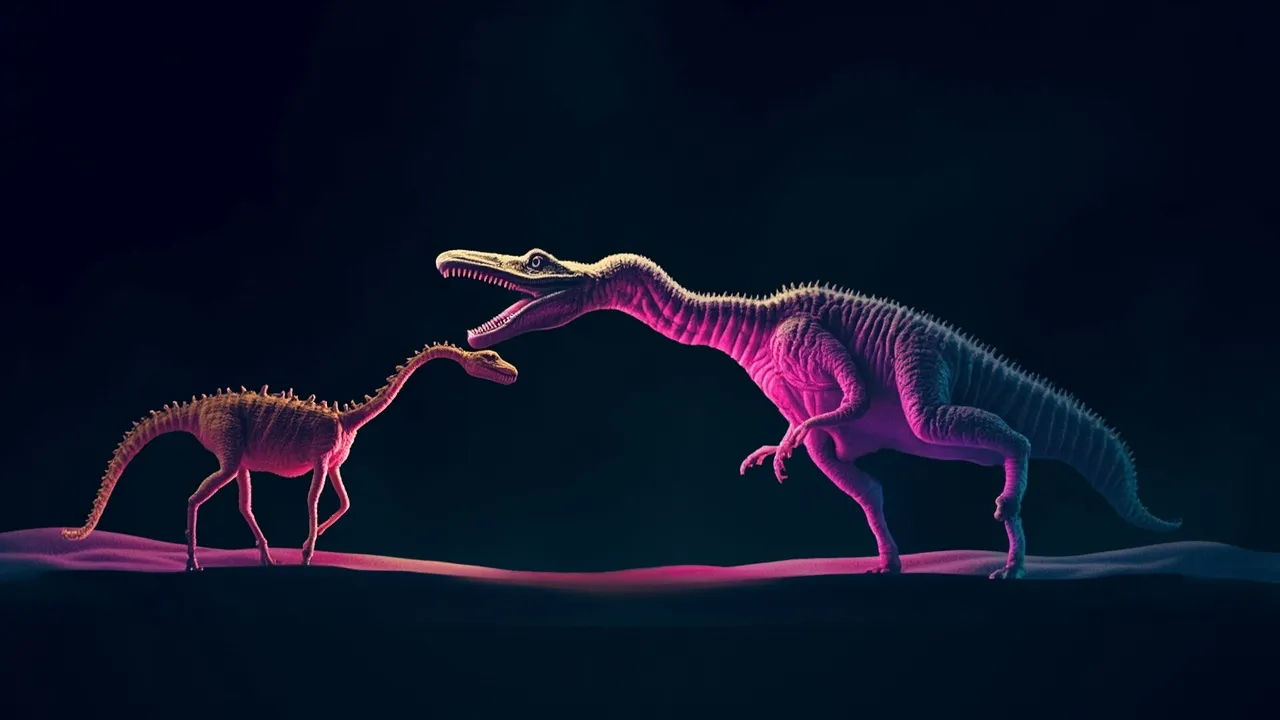
Okay, I have to admit—this is one of those questions that, once you hear it, you can't stop thinking about.
We all know dinosaurs were enormous. Like, genuinely, absurdly enormous. The mighty T. rex, the impossibly long-necked Apatosaurus, creatures that made "big" feel like an understatement. But here's what's been bothering scientists lately: why didn't dinosaurs ever go the other direction? Why didn't we have dinosaur versions of hamsters, or teeny-tiny dinos the size of sparrows running around the Cretaceous?
I mean, think about it. Today's world is absolutely dominated by small creatures. About 75% of all mammal species are tiny—you know, mice, shrews, those little guys. Nearly 90% of bird species? Also itty-bitty. The bee hummingbird, which is basically a flying sugar cube at just 1.75 grams, is the smallest bird alive. Meanwhile, the smallest non-avian dinosaur we know about weighed around 450 grams—roughly the size of a large rabbit.
That's a difference of more than 200 times.
The researchers call this a "lower size limit," and honestly, I love that framing. We always talk about how dinosaurs got so ginormous, but nobody really asked about the floor. Was there something keeping dinosaurs from shrinking?
The Fossil Gap Nobody Expected
Now, here's where it gets interesting. You might think, "Well, maybe teeny-tiny dinosaurs existed but we just haven't found them yet." It's a reasonable guess. Small, fragile bones don't fossilize as well as big, sturdy ones. I get it.
But here's the thing—the scientists behind this research (from the American Museum of Natural History and Princeton University) checked the fossil sites, and they found tiny mammals, tiny lizards, tiny amphibians, all sorts of small creatures preserved alongside the dinosaurs. If there had been mouse-sized dinosaurs running around, you'd expect some evidence, right?
The math says no such luck. Or rather, no such fossils.
What the Models Tell Us
The researchers built mathematical models to understand how body size evolves across different animals. The idea is pretty elegant: natural selection should favor body sizes that let animals turn food into babies efficiently. Energy in, offspring out—do the math, and you get certain predictable size ranges.
When they tested this on mammals, birds, and turtles? The models worked beautifully. They could predict the size ranges pretty accurately.
But dinosaurs? Dinosaurs refused to cooperate.
No matter what physiological conditions the researchers tested, the models kept saying, "Hey, dinosaurs should have been able to get much smaller than they did." But they didn't. Something else was going on.
That "something else" seems to be ecology—the complex web of competition, predators, and niche availability that shapes how animals live.
The Mammal Interference Theory
Here's where the story gets really fun (or depending on your perspective, tragic for the dinosaurs).
Early mammals were already small and abundant during the dinosaur era. They were filling those tiny niches—the mouse-sized, insect-eating, seed-nibbling ecological roles. And according to this research, they may have effectively blocked dinosaurs from moving into those spaces.
Think of it like this: imagine you're trying to rent an apartment, but someone else has already signed a lease for every tiny studio in the city. You might have to go bigger.
The researchers put it beautifully: "Dinosaurs prevented mammals from evolving to large sizes... mammals in turn prevented dinosaurs from evolving to small sizes." It's this incredible ecological dance spanning millions of years, and we never really appreciated one half of it until now.
The Exception That Proves the Rule
Of course, there's one group that escaped this constraint entirely: birds.
Birds evolved from dinosaurs, yet today we have hummingbirds that weigh less than a paperclip. How did they break free from the dinosaur size limit?
The researchers suggest that after the mass extinction that wiped out the non-avian dinosaurs, birds had the freedom to experiment with tinier sizes. With all those niches suddenly vacant, birds diversified wildly, eventually producing the astonishing range of sizes we see today—from humble sparrows to wandering albatrosses with wingspans wider than a basketball player is tall.
Why This Matters
Honestly, I find this stuff fascinating because it reminds us that evolution isn't just about individual traits getting bigger or smaller. It's about ecosystems, competition, and constraints we might never have considered.
We look at dinosaur fossils and see giants. But the real story might be in the spaces they couldn't fill—the tiny creatures they never became. The absence of something can be just as telling as its presence.
So the next time you see a tiny lizard scurrying across a sidewalk, or watch a hummingbird hover outside your window, take a moment to appreciate what might have been. In another world, those tiny ecological niches might have been filled by miniature dinosaurs.
Nature, it turns out, had other plans.