
The Universe's Luckiest Planet?
You know that feeling when everything just clicks into place? Like you're in exactly the right place at the right time, and if even one tiny thing had been different, the whole situation would've fallen apart?
That's basically Earth's entire origin story.
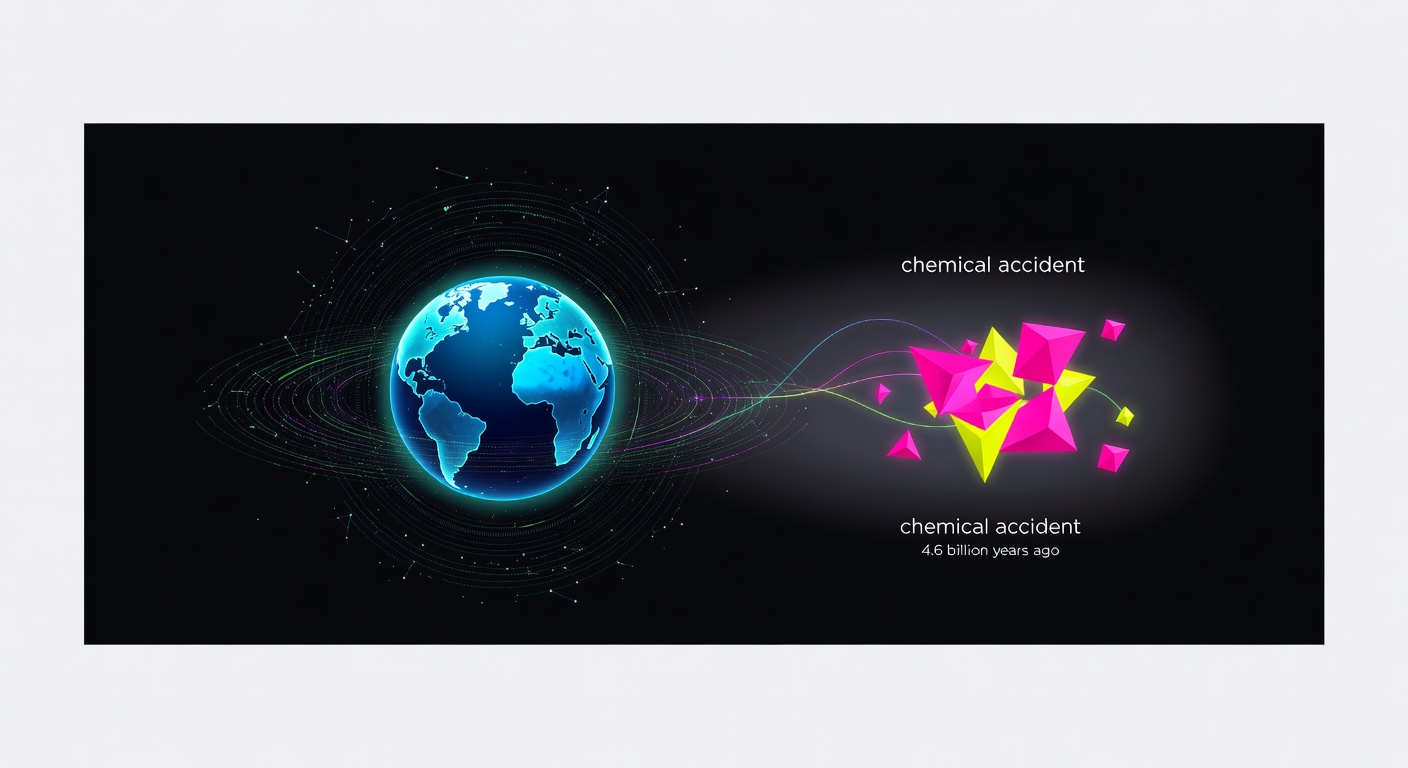
Scientists have discovered that our planet didn't just randomly become habitable—it actually won what might be the universe's most important lottery ticket. And the odds? Absolutely brutal.
The Building Blocks of Life (And Why We Almost Didn't Get Them)
Let me break down something that probably sounds boring but is actually mind-blowing: phosphorus and nitrogen.
These two elements might not sound like celebrities, but they're the VIP guests at the life party. Phosphorus is basically the construction crew for DNA and RNA—it's what helps build the instruction manuals for all living things. It's also the energy manager of your cells, making sure everything has the fuel it needs. Nitrogen? It's the primary ingredient in proteins, which means without it, you literally cannot build cells or keep them running.
Here's the problem: these elements don't just magically stick around on a planet. A lot depends on what happens when a planet is first forming.
The Chaotic Birth of Planets
Picture Earth as a newborn baby—except the nursery is absolutely chaotic and everything is made of molten rock.
When planets form, they're basically cosmic mixers on overdrive. Heavy stuff sinks down (like iron and nickel), while lighter material floats up. Over time, this creates layers: a dense iron core at the center, then the mantle, and eventually the crust we walk on today.
But here's where it gets tricky: oxygen levels during this early stage are everything.
Think about it like Goldilocks and the three bowls of porridge. If there's too little oxygen, phosphorus gets grabbed by heavy metals and dragged down into the core. Once it's down there in the planet's basement? It's basically gone forever. Life can't reach it, can't use it, can't build anything with it.
But if there's too much oxygen, you get the opposite problem. Phosphorus stays put, sure—but nitrogen gets excited and flies off into the atmosphere, drifting away into space like a runaway balloon at a kid's birthday party.
We Hit the Exact Sweet Spot
Here's the absolutely bonkers part: Earth formed with just the right amount of oxygen.
Research led by Craig Walton at ETH Zurich shows that phosphorus and nitrogen both stuck around in the mantle—the layer where they could eventually become available for life—only within an incredibly narrow window of oxygen conditions. We're talking Goldilocks Zone, but for chemistry.
Walton and his team ran extensive computer models and found something startling: if Earth had formed with just slightly more or slightly less oxygen, we wouldn't have enough of either phosphorus or nitrogen. And without those? Life as we know it simply wouldn't have had the raw materials to even get started.
"This is the cosmic equivalent of catching a ball in a hurricane," I'd say.
The math is sobering: we're precisely within that range. It's like the universe rolled a million-sided die and we landed on the exact number we needed.
Mars Got Dealt a Bad Hand
Want to know what happened to Mars?
Mars formed under completely different oxygen conditions. As a result, it actually has more phosphorus in its mantle than Earth does. But it has significantly less nitrogen. So even though Mars has some of the building blocks, it's missing critical pieces of the puzzle. It's like having all the ingredients for a cake except the eggs and sugar—technically you have something, but you can't make what you need.
This actually tells us something important: having the right elements available isn't just one factor among many. It's absolutely foundational.
This Changes Everything About Looking for Alien Life
For years, scientists searching for potentially habitable planets have been pretty laser-focused on one question: Does it have water?
Water is important, don't get me wrong. But the research from Walton and ETH Zurich professor Maria Schönbäuchler suggests we've been looking at only part of the picture.
A planet could have oceans, clear skies, and a perfect temperature range—and still be chemically dead from birth. If the oxygen levels were wrong during its core formation, that planet never accumulated enough phosphorus and nitrogen in the accessible parts of the world. It's like having a beautiful mansion with no electricity or plumbing.
This means the search for extraterrestrial life just got a lot more specific. Scientists can't just look for "water worlds" anymore. They need to look for planets that formed under the right chemical conditions.
The Sun Matters More Than You'd Think
Here's a clever insight: the oxygen available when a planet forms depends directly on what its parent star is made of.
Since planets form mostly from the same cosmic material as their host star, the star's composition fundamentally shapes the entire planetary system's chemistry. It's like how kids tend to resemble their parents—except on a galactic scale.
This means solar systems that look dramatically different from ours? Probably not great places to hunt for life. The chemistry just wouldn't be right from day one.
So when astronomers point their telescopes at distant stars looking for potential life-bearing planets, they should probably focus on stars that resemble our Sun. Not because our Sun is special exactly, but because stars like it create planetary systems with the right chemical foundation.
What This Really Means
Honestly, this research is humbling in the best way possible.
It shows that Earth's habitability wasn't just good luck—it was improbable luck. The kind of luck that makes you realize how genuinely rare our situation is. We didn't just randomly end up with a planet that could support life. We inherited a planetary chemistry that was set up perfectly billions of years before the first cell ever divided.
Every time someone finds a potentially habitable exoplanet, this research adds an important footnote: "But what was the oxygen level like during its formation?"
The universe is probably teeming with planets. But planets that hit this narrow chemical sweet spot? Those might be far rarer than we thought. And that might actually be why we haven't found any obvious signs of alien life yet—not because it doesn't exist, but because the initial conditions for it are genuinely hard to come by.
Pretty wild to think about the next time you're looking up at the stars.