
markdown formatted blog content with headings and short paragraphs
The Moment I Knew I Needed an Upgrade
Okay, confession time: I used to use the cheapest stud finder I could find at the hardware store. You know the kind—basically just a magnet on a stick. It "worked" in that sometimes it would stick to the wall when there was a nail, and I assumed that meant I found a stud.
Spoiler alert: that's not how any of this works.
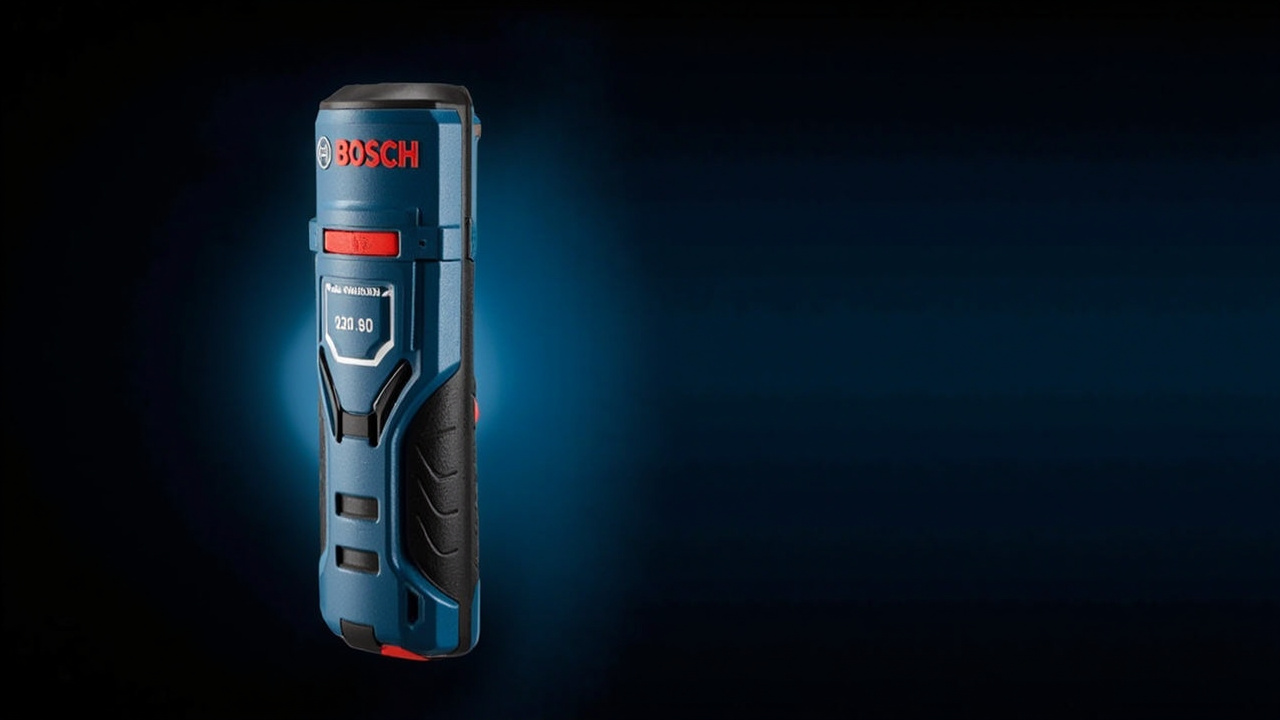
Last month, I was hanging a heavy shelf in my garage. I'd marked what I thought was a stud, grabbed my drill, and was about to make a hole when something made me pause. I don't know—maybe it was divine intervention, maybe it was the voice in my head that occasionally says "hey, maybe don't do that." Either way, I decided to scan the area first with a borrowed Bosch Professional Wall Scanner.
That's when I saw it: a bright red warning on the screen indicating a live wire exactly where I was about to drill.
Y'all. I nearly made a very expensive and potentially dangerous mistake.
This Little Gadget Does So Much More Than Finding Studs
Here's the thing about the Bosch that impressed me from the first use: it's not just a stud finder. It's basically an X-ray machine for your walls.
The main event is definitely wood stud detection, and the Bosch nails this with a really intuitive interface. The center ring lights up green when you're ready to scan, then turns red as you glide over a stud. But here's the cool part—concentric arcs light up as you get closer to the center, and four arrows point inward when you're directly over the stud's center. It's almost impossible to miss.
Compare that to my old magnetic stud finder, which was about as precise as throwing darts blindfolded.
But where the Bosch really shines is in its ability to detect metal and live wires. In metal scan mode, it works the same way—the ring changes color, arrows point to center—but it also tells you whether the metal is ferrous (like steel studs) or non-ferrous (like copper pipes). This was a game-changer for me because my old tool wouldn't have detected my copper plumbing at all.
The live wire detection? That feature alone is worth the price. In older homes especially, wires can be routed in unexpected places. Knowing where they're running before you start drilling is not optional—it's essential.
Is It Overkill for Hanging a Picture?
Honestly? Probably.
If you're just putting up a small frame and you know your wall is standard drywall with no complicated infrastructure behind it, a basic stud sensor will do the job. The Craftsman Hi-Vis is a solid budget pick for simple tasks.
But if you're:
- Installing shelves or cabinets
- Running cables or accessing wiring
- Working on plumbing
- Doing any kind of renovation work
Then the Bosch isn't overkill—it's exactly what you need. The slight learning curve (you'll want to read the manual first) disappears after your first use, and then it's incredibly intuitive.
The Bottom Line
Look, I get it. Another tool in the toolbox feels unnecessary when you're not a full-time contractor. But here's my take: the cost of this scanner is nothing compared to what you'd spend fixing a severed wire or a punctured pipe. Or worse—dealing with the aftermath of hitting a live wire.
This is the kind of tool that sits in the drawer 90% of the time, but when you need it, it's absolutely irreplaceable. I've used mine at least a dozen times since that close call, and every single time, I feel a little burst of relief knowing exactly what's behind my walls before I drill.
If you're serious about DIY projects, home maintenance, or just want some peace of mind the next time you hang something heavy, this is worth every penny.
Now if you'll excuse me, I have some shelving to install—safely this time.