
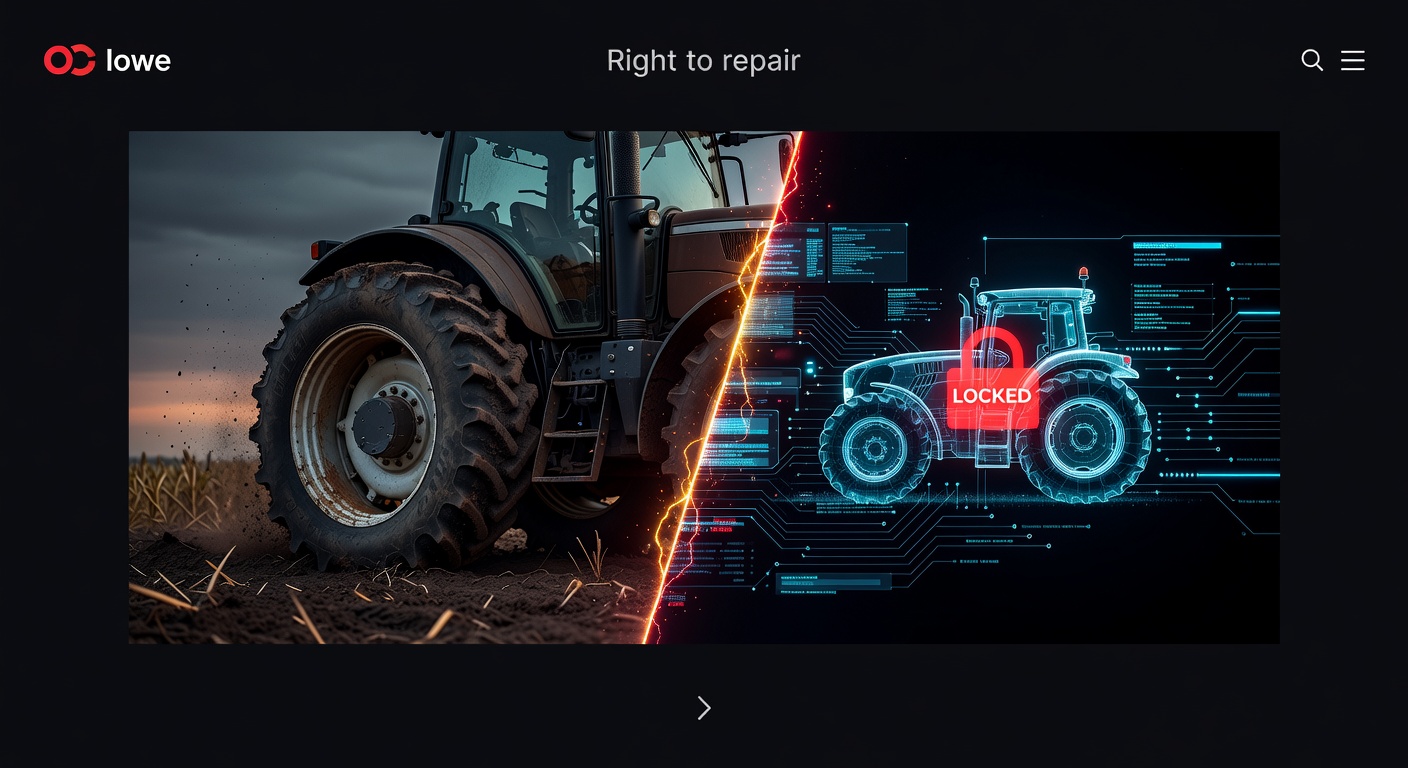
When Your Tractor Becomes a Smartphone on Wheels
Hey there, tech friends! Let's talk about something that might surprise you: some of the most heated debates about technology and repair rights aren't happening in Silicon Valley boardrooms—they're taking place in Iowa farmlands.
Modern farming equipment has gotten incredibly sophisticated. We're talking about tractors that cost more than most people's houses, packed with GPS systems, sensors, and computer chips that would make your smartphone jealous. These machines can practically drive themselves, optimize fuel consumption, and collect data about soil conditions that would blow your mind.
But here's where things get frustrating (and frankly, a bit ridiculous): when these high-tech tractors break down, farmers often can't fix them. Not because they lack the skills—trust me, farmers are some of the most resourceful problem-solvers you'll ever meet—but because the manufacturers have locked them out with software restrictions and proprietary tools.
The Digital Lockdown Problem
Imagine buying a car and being told you can only get it serviced at the dealership. Forever. That's essentially what's happening with modern farm equipment. Companies like John Deere have implemented software locks that prevent independent mechanics—or even the farmers themselves—from diagnosing and repairing their own machines.
This isn't just inconvenient; it's potentially devastating. When your tractor breaks down during planting or harvest season, every day of delay can cost thousands of dollars in lost crops. But instead of being able to call the local mechanic who's been fixing farm equipment for decades, farmers are forced to wait for an authorized technician who might be hundreds of miles away.
Why This Matters Beyond the Farm
You might be thinking, "This is interesting, but I'm not a farmer, so why should I care?" Well, here's the thing: the battle happening in Iowa's fields is really about something much bigger—our fundamental right to own and control the things we buy.
This same "you can't fix what you own" mentality has crept into smartphones, laptops, cars, and even medical devices. When manufacturers control every aspect of repair, they effectively turn ownership into extended rental agreements. You pay full price but never get full control.
The farming industry is just where this fight is most visible because the stakes are so high and the problems so obvious. When a farmer's livelihood depends on equipment that costs half a million dollars, the absurdity of repair restrictions becomes crystal clear.
The Pushback Is Real
Farmers aren't taking this lying down. Across Iowa and other agricultural states, there's been a growing movement demanding "right to repair" legislation. Some farmers have even turned to the gray market, buying diagnostic software and repair tools from overseas or hacking their own equipment to bypass manufacturer restrictions.
There's something beautifully ironic about farmers—people who literally grow the food that feeds us all—having to become tech rebels to maintain their equipment. But that's exactly what's happening, and honestly, I'm here for it.
Finding Common Ground
I get it—manufacturers have legitimate concerns about liability, safety, and protecting their intellectual property. Nobody wants a poorly repaired tractor causing an accident or environmental damage. But there's got to be a middle ground between "anyone can modify anything" and "only we can touch the equipment you bought."
Other industries have figured this out. Auto manufacturers provide diagnostic information and tools to independent mechanics while still maintaining quality standards. There's no reason farm equipment companies can't do the same.
What Comes Next?
The outcome of this battle will likely shape repair rights across all industries. If farmers win the right to repair their equipment, it could pave the way for similar rights with smartphones, laptops, and other devices. If manufacturers successfully defend their repair monopolies in agriculture, expect those restrictions to spread even further.
As someone who believes technology should empower us rather than constrain us, I'm rooting for the farmers. They're not asking for anything unreasonable—just the right to maintain the equipment they own, using the skills and knowledge they've developed over generations.
The Iowa farmlands have become an unlikely front in the fight for our digital freedoms. And honestly? I can't think of better people to have leading that charge than the folks who've been fixing things with ingenuity and determination long before Silicon Valley was even a thing.