
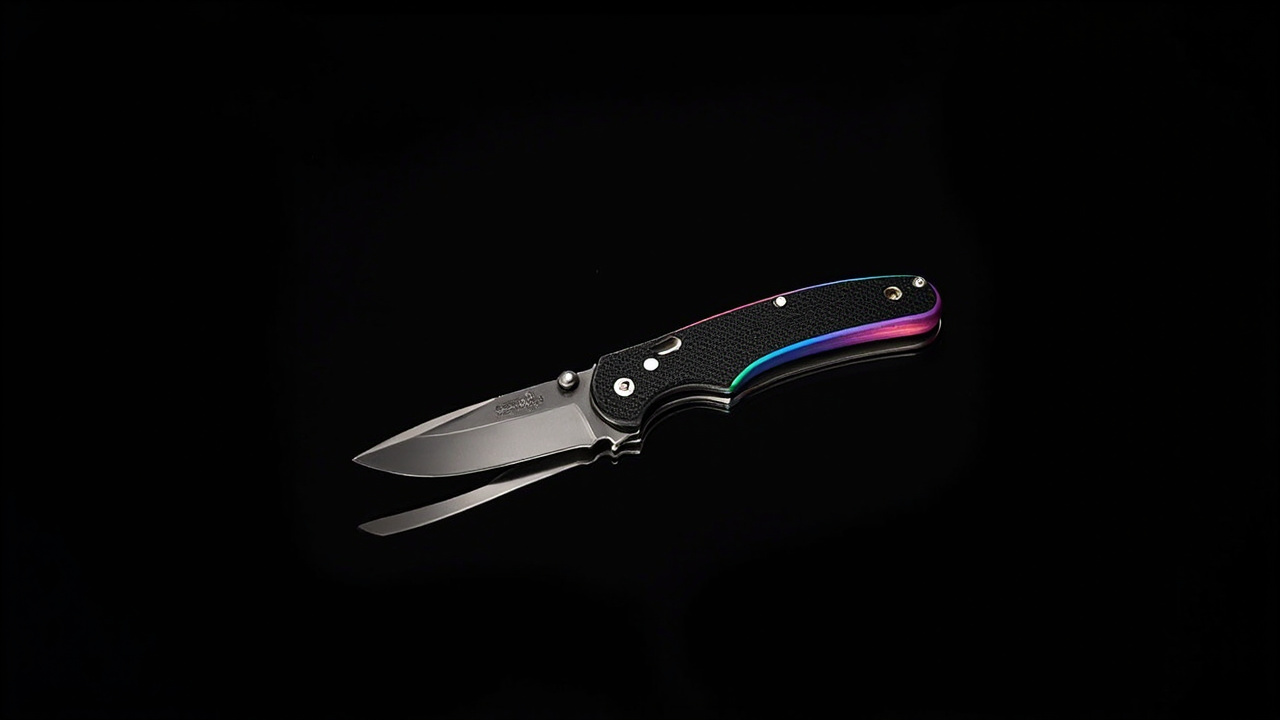
Let me ask you something: have you ever been holding a box of Amazon returns in one hand, a package of cable ties in the other, and thought, "I really need to cut this open RIGHT NOW"? Of course you have. We've all been there.
And if you've ever fumbled with a pocket knife that requires two hands or awkward thumb gymnastics, you know exactly how frustrating it can be. That's where flipper knives come in, and honestly, I think they're one of those things more people should know about.
So What Exactly Is a Flipper Knife?
Think of a flipper knife as the best of both worlds. It's not quite an automatic knife (you know, the kind that springs open with the push of a button), but it's not a manual knife either. Instead, it uses a little stud on the back of the blade that you press with your finger.
When you do? Snap. The blade swings open and locks into place in a fraction of a second. One hand. No fuss. No muss.
The reason flipper knives exist is actually pretty interesting from a legal standpoint. In many places, automatic knives are restricted or outright banned because the spring-loaded mechanism is considered, well, a bit too "quick draw" for lawmakers' comfort. But flipper knives? They often fall into a gray area because technically, you're initiating the opening motion yourself—just like a regular pocket knife.
Meet the Gerber Fastball
Now, if you've been reading about flipper knives, you've probably seen the Gerber Fastball come up. And for good reason. This little knife has a way of growing on you.
The thing that really won me over was how reliable it feels. No half-opened blades that decide to swing shut on your fingers mid-cut. No awkward catching. Just a smooth, satisfying deployment every single time. There's something oddly comforting about a tool that does exactly what you expect it to do.
The blade shape is worth mentioning too. It tapers to a nice sharp point, which makes it perfect for those everyday tasks we all take for granted—opening packages, cutting through plastic, trimming a loose thread. Nothing dramatic, just genuinely useful.
A Quick Note on Blade Steel
The Fastball comes in a couple of versions with different steel types. One uses S30V steel, the other uses a newer stuff called MagnaCut. Without getting too deep into the weeds, newer steel means better corrosion resistance and edge retention, but honestly? For light everyday use, the S30V version is plenty good enough—and it's easier on the wallet too.
The Little Things Matter
Here's what I've come to appreciate: tools that fit comfortably in your hand and don't fight you make a real difference in daily life. I didn't realize how much I relied on my flipper knife until it became my go-to for everything from opening mail to cutting apple slices on a camping trip.
Sure, there are flashier knives out there with fancier mechanisms and premium materials. But sometimes the best tool is the one that simply works, feels good, and stays out of your way until you need it.
If you live in a state where automatics are a no-go and you want that quick one-handed action, the flipper knife world has a lot to offer. The Gerber Fastball is a fantastic place to start—but honestly? Once you try one, you might find yourself wondering how you ever got by without one.
What about you? Anyone else out there a flipper fan? I'd love to hear about your everyday carry setups in the comments.
Source: https://www.popularmechanics.com/adventure/outdoor-gear/a71526640/gerber-fastball-pocket-knife