
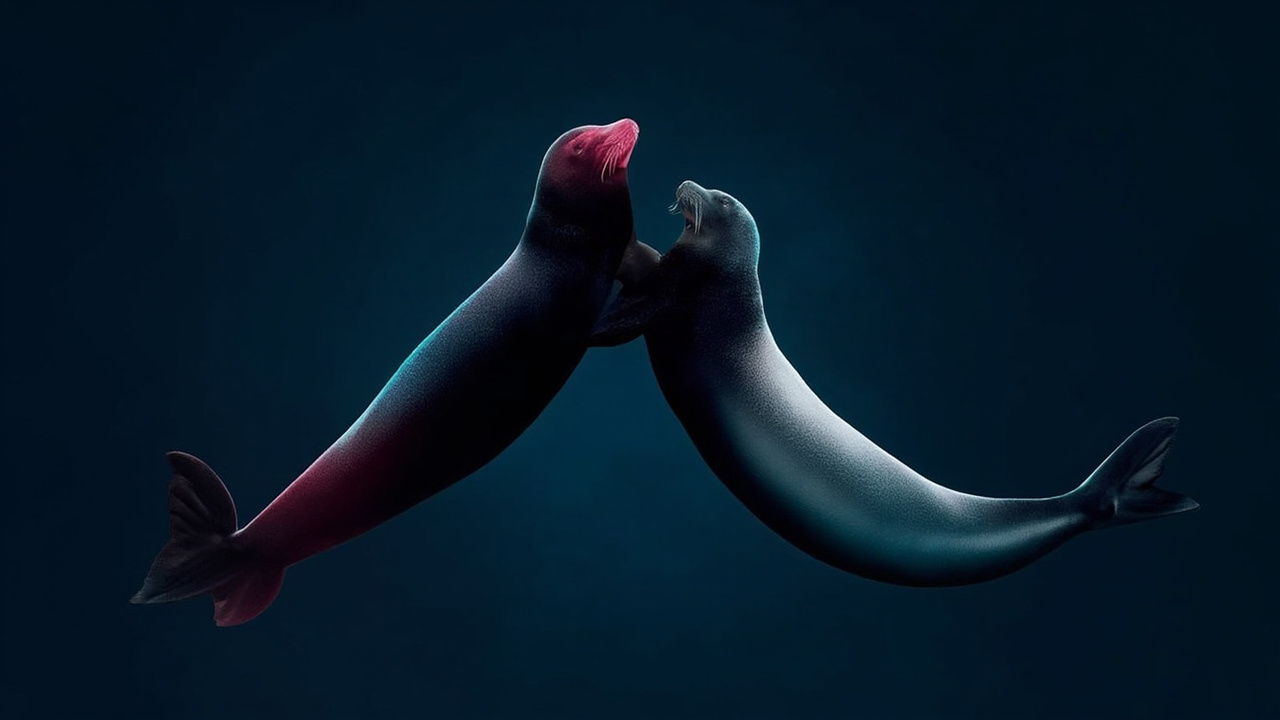
When a Fur Seal's Workday Doesn't Really End
Imagine finishing an intense workout and thinking you're done — only to have your heart suddenly start racing again hours later. That's basically what's happening to fur seals, and researchers have finally figured out why.
For decades, scientists assumed that marine mammals like fur seals did most of their recovery work while floating in the ocean between dives. But a fascinating new study flips that idea on its head. Turns out, these incredible divers are still paying off their "oxygen debt" long after they've climbed back onto the rocks.
The Ultimate Underwater Endurance Challenge
To understand what's going on, let's talk about why deep diving is so brutal on an animal's body. When fur seals plunge hundreds of meters down hunting for fish, they're basically holding their breath and working hard at the same time. Their muscles can't use oxygen the normal way, so they switch to backup energy systems that produce a nasty byproduct: lactic acid buildup.
Think of it like your muscles burning during a sprint — except fur seals do this regularly and way deeper than we ever could. Nitrogen bubbles can form in their blood, their organs get stressed, and basically everything shuts down except their heart and brain. It's genuinely impressive that they survive it at all.
Following Two Seal Species on Their Hunting Trips
Researchers at Deakin University tracked two closely related species with completely different hunting styles. Cape fur seals (hanging out off South Africa) are open-water hunters, cruising through the water column looking for fish. Australian fur seals, meanwhile, are bottom feeders, doing most of their work nosing around the seafloor.
Over several years, they equipped these seals with waterproof heart rate monitors and tracked them continuously for days at a time. The data was pretty detailed — measurements every 10 seconds over nearly 8 days straight.
The patterns were totally different between the two species:
Cape fur seals took the extreme approach. During their deepest dives (we're talking over 400 seconds at 190 meters down), their heart rates crashed to just 10 beats per minute. But here's the crazy part: it only happened briefly.
Australian fur seals took a more controlled approach. Even during long bottom dives, they kept their heart rates steady at 20-30 beats per minute for minutes on end. It's like comparing a sprinter to a distance runner — both strategies work, just differently.
The Shocking Discovery: Heart Spikes on Land
This is where it gets interesting. When the seals came ashore to rest, scientists expected their heart rates to chill out. Calm, relaxed seals lounging on the beach, right?
Wrong.
Six to eight hours after climbing out of the water, their hearts suddenly started racing — sometimes hitting 84 beats per minute. Not once either. The seals experienced multiple spikes before finally settling into the normal resting range of 42-61 beats per minute.
"Why would a resting seal have a racing heart?" is the obvious question. And the answer is genuinely cool.
The Cleanup Crew is Still Working
Researchers believe the seals aren't actually resting — not fully anyway. Those delayed heart rate spikes are probably the seal's body doing essential cleanup work that couldn't happen while underwater.
Remember that lactic acid buildup? The elevated heart rate on land likely helps flush it out of their system. Those racing heartbeats are pumping blood faster and more aggressively, which helps clear metabolic waste and restores oxygen reserves that depleted during all those dives.
It's like your body's way of saying: "Okay, we survived the underwater obstacle course. Now let's clean up the mess."
One of the lead researchers, Dr. Melissa Walker, put it perfectly: seals can stay focused on the dangerous, energy-intensive business of hunting when they're at sea, then tackle the "boring" recovery work once they're safely on land. Evolution basically said, "Survive first, recover later."
We Still Don't Know Everything
Here's what I appreciate about good science: researchers aren't pretending to have all the answers. The study opens way more questions than it answers, which means there's still cool stuff to discover.
How much does hunting success factor in? What about whether the seal's stomach is full or empty? Does the difficulty of the dive matter? All of these probably contribute to how intense those heart rate spikes are, but we need more data to be sure.
The next generation of research will dig into these details — looking at things like dive effort, how much food the seal actually caught, and digestive state. Each of those factors might tweak the recovery response.
Why This Actually Matters
This isn't just fascinating trivia about fur seals. Understanding how marine mammals recover from extreme conditions teaches us about physiology, stress responses, and adaptation. It's also relevant for conservation — if we understand how these animals really recover, we can better predict how they'll handle changes in their environment or food availability.
Plus, there's something genuinely humbling about realizing that these creatures have evolved solutions to problems we're still trying to understand. Fur seals have been perfecting deep-diving recovery for millions of years while we just figured out what they were doing.
The ocean keeps surprising us, and the animals in it keep being weirder and more wonderful than we thought.