
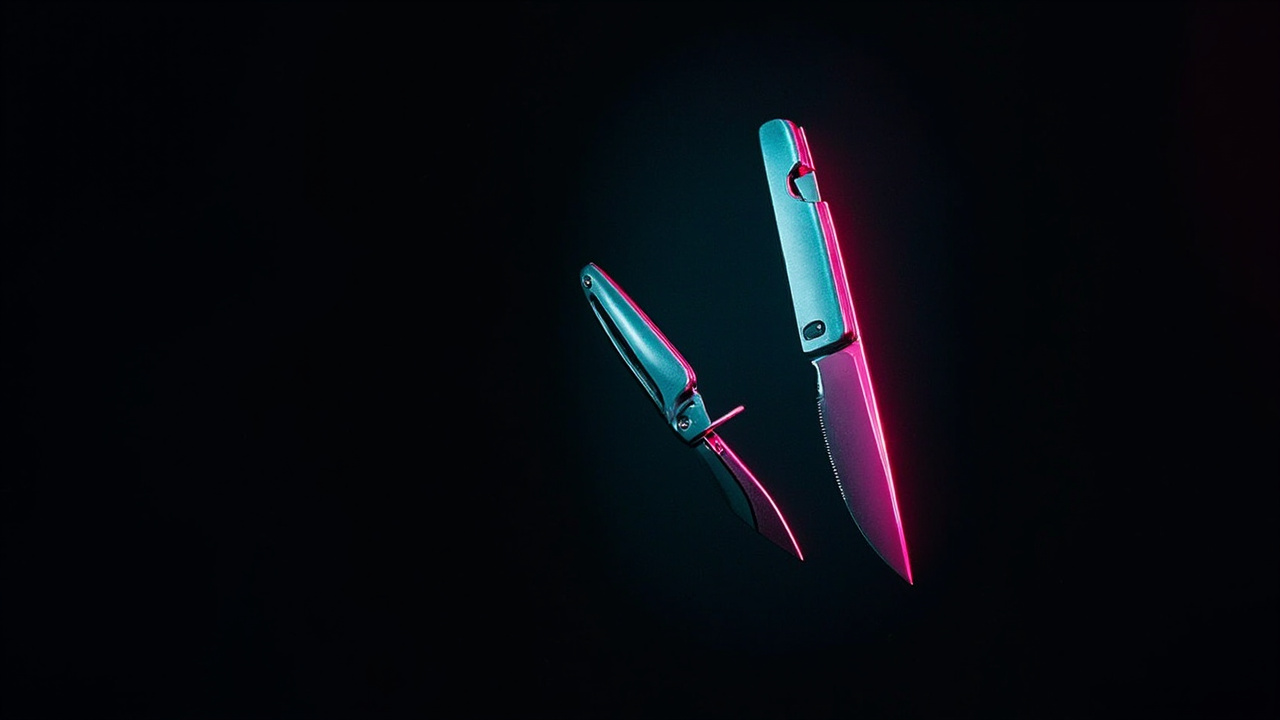
The Pocket Knife Rabbit Hole Nobody Talks About
Here's the thing about pocket knives—they're one of those items where people have opinions. Strong opinions. I'm talking about the kind of conversations where someone will passionately debate blade steel for twenty minutes straight. And honestly? Once you start learning what they're talking about, it starts to make sense.
I picked up a few popular EDC (everyday carry) knives to actually test in real life, not just theoretically, and discovered something interesting: the difference between a okay knife and a great one isn't always about price. Sometimes it's about understanding what job you actually need done.
The Goldilocks Knife: When "Just Right" Actually Matters
There's this knife from Kershaw called the Iridium that keeps popping up in recommendations, and I finally understood why after using one. It's not flashy. It's not expensive. But it hits this weird sweet spot that apparently works for most people's hands and most people's needs.
The best way I can describe it? It's the knife equivalent of a well-made t-shirt. Not fancy, but it just works. It weighs just over 3 ounces—light enough you forget it's there—but heavy enough to feel solid when you're actually using it. The 4.5-inch blade fits medium-sized hands comfortably, and Kershaw made the opening and closing motion ridiculously smooth.
One thing I appreciated: you can open and close this thing with one hand, which matters way more than I thought it would. When you're hiking and carrying a backpack, or cooking while holding other stuff, having a knife that doesn't require two hands starts feeling like a genuine quality-of-life upgrade.
The catch? The blade steel (D2) isn't the fanciest, and it can rust if you neglect it. But the fact that Kershaw offers a black oxide-coated version that solves this problem shows they actually listen to what people complain about.
When You Want to Go Ultralight (And Can Spend a Bit More)
Then there's the Benchmade Bugout, which occupies this completely different category. This thing weighs under 2 ounces. Like, barely-there light. If you're someone who backpacks, hikes serious distances, or just hates carrying unnecessary weight, this is what people are actually talking about when they get evangelical about knives.
I tested one and honestly? The first thing that strikes you is how delicate it feels compared to heavier knives. But that's kind of the point. Benchmade uses a glass-reinforced plastic (they call it Grivory) for the handle that keeps weight insanely low while still being rigid enough to actually work hard.
The opening mechanism—their "Axis Lock"—is genuinely clever. It's a spring-loaded bar that lets you open and close the knife from either hand, and more importantly, it keeps your fingers safe from the blade while you're doing it. I watched someone build one at the Benchmade factory, and the simplicity of the design was kind of beautiful.
Where you pay for quality here is in the blade steel options. The standard S30V is excellent for field use because it actually holds an edge while still being sharpenable without special equipment. The fancy stuff (S90V) lasts longer but requires more effort to touch up in the field.
Is it pricey? Yeah. But Benchmade backs it with a lifetime warranty and a sharpening service, which actually adds real value over time.
The Budget Option That Doesn't Feel Cheap
If you want to test the waters without dropping serious money, Coast's Contra is the surprising underdog here. It's small, it's all-metal, and despite being cheap, it comes with a lifetime warranty—which tells you the company is confident in it.
The blade shape is a "wharncliffe," which is honestly worth talking about because it's different from what most people expect. It's basically flat with a slight upward curve at the tip, which sounds weird but actually works beautifully for slicing and general utility work. You get the precision of a box cutter blade with enough point to actually puncture things when you need to.
The steel (7CR17) isn't going to win any edge-retention contests, but the trade-off is it sharpens easily at home with basic equipment. And Coast threw a black oxide coating on there that actually resists scratches better than you'd expect from something this affordable.
What I Actually Learned
The real takeaway here is that knife shopping isn't actually that complicated if you answer one basic question first: what's your actual use case?
Need something light for backcountry trips? Spend more and get the ultralight option. Just want a reliable everyday carry that won't break the bank? The mid-range stuff works great. Want to experiment without commitment? The budget option will teach you what you actually prefer.
And honestly, that's kind of the beautiful thing about this market right now. There are legitimately good options at basically every price point. You just have to know what you're actually paying for—whether it's weight savings, blade steel quality, or that satisfying smooth action when you open it one-handed.
The pocket knife obsession makes a lot more sense now.