
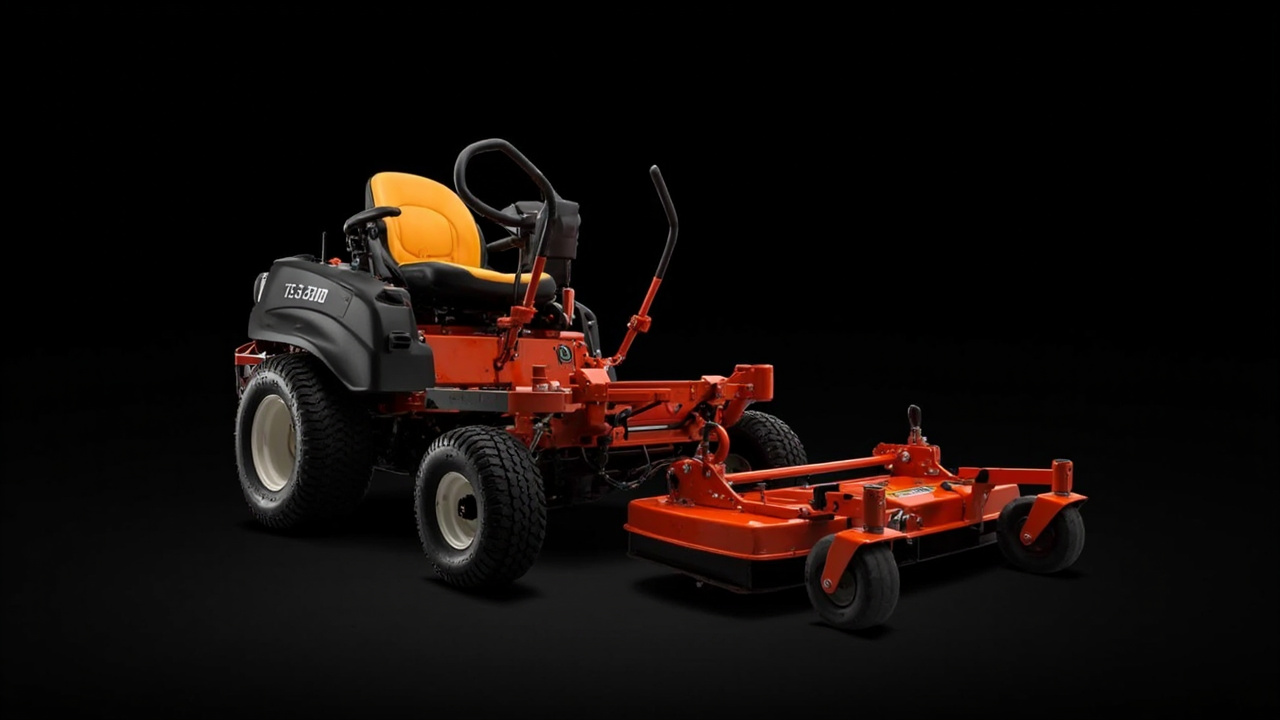
Why Your Neighbor's Zero-Turn Might Not Be the Answer
Okay, let's talk about something that's been bugging me at every neighborhood BBQ I've attended this summer. Someone always brings up the zero-turn vs. traditional riding mower debate, and everyone's quick to jump on the zero-turn bandwagon because, let's face it, they look cool and turn heads.
But here's the thing—maybe, just maybe, the boring old lawn tractor is actually the better choice for a lot of folks. And the Husqvarna TS 375XD I'm looking at today makes a pretty compelling argument for Team Tractor.
The Case for Going "Old School"
Before we dive into the specifics of this beast, let me give you the rundown on why you'd even consider a traditional riding mower in the first place.
Anyone can hop on and go. Seriously, if you can drive a car, you can drive this. No learning curve, no special skills required. Your spouse, your teenager, your 75-year-old neighbor with the immaculate lawn—they can all jump on and get to work.
Versatility is the name of the game. This is where lawn tractors really shine. During the growing season, it's a mower. But attach a few implements, and suddenly you've got a year-round workhorse. Tow a lawn sweeper to clean up leaves, hook up a cart for hauling mulch, pull a plug aerator to keep your lawn breathing, or spread seed and fertilizer like a pro.
And here's the part I get most excited about—winter. While your zero-turn neighbor is shoveling snow or dragging out the snowblower, you can attach a snow blower or plow blade to your tractor and cruise right on through. Talk about getting your money's worth from one machine!
Meet the Husqvarna TS 375XD
So if you're sold on the tractor life, the TS 375XD is worth serious consideration. Let me walk you through what you're working with here:
- 24-hp Kawasaki engine — This isn't some generic motor; Kawasaki's V-twin engines are what the pros reach for when they need something that just keeps going
- Hydrostatic drive — Fancy term, simple concept: smooth, automatic transmission with a foot pedal
- 54-inch mowing deck — This thing eats lawns for breakfast (there's also a 48-inch version if your yard is more modest)
Now, let's get into the good stuff.
What Makes the Hydrostatic Drive Worth Writing Home About
I'm a big fan of the hydrostatic transmission, and here's why. You run the engine at full throttle to keep your blade speed consistent, but you control your driving speed completely independently with a foot pedal. This might not sound revolutionary until you're trying to power through wet, thick grass—you can slow down your forward motion without your blades slowing down and choking.
There's also cruise control. Pull up a lever, and you're locked in at that speed. No foot fatigue, no drift. Just set it and forget it (until you hit the edge of your property, anyway). Releasing it is as simple as pushing the lever down or tapping the pedal.
The reverse function has its own pedal, which is nice and intuitive. Oh, and here's a safety tidbit: if you try to back up with the blades engaged, the machine shuts off. This is actually required on all lawn tractors made after 2004, so don't think it's a design flaw—it's protecting you and anyone else who might be wandering behind you.
Locking Differential: The Feature You Didn't Know You Needed
Let me paint you a picture. You've been mowing for a couple hours, you're in the zone, and suddenly—spinout. One wheel catches, the other just sits there uselessly, and you're stuck or digging up your lawn.
Sound familiar? It happens to everyone eventually. Traditionally, people would add wheel weights or even chains to get more traction. But the TS 375XD has a button for that—literally. Hit the dashboard button to lock the differential, and both wheels spin at the same rate. Problem solved, instant traction.
I tested this feature, and it works exactly as advertised. No drama, no getting off to push, no feeling like a complete doofus in front of the neighbors.
That Suspension Seat Life
Now, I'm not going to sit here and tell you this seat will make your bumpy lawn feel like a memory foam mattress. Let's be real. But it does help, and I appreciated that.
The dial on the side lets you set it for your weight, and you can fine-tune from there. For my rougher areas—I'm talking about spots that really should have been graded years ago—it tamed the bumps enough that I didn't feel like my teeth were going to rattle out of my head. I still slowed down over the worst parts, but that's probably smart anyway.
My only minor complaint? The seat sits pretty close to the steering wheel. Getting on and off required a bit of maneuvering, and at first, I thought this might be an issue while driving too. But honestly? Once I was in position, it wasn't a problem at all.
That Kawasaki Engine: Built to Last
Here's where I get a little nerdy, and I'm not even sorry.
The 24-hp FR Series Kawasaki engine on this machine is the real deal. These V-twin engines are practically legendary in the commercial mowing world. Pros choose them because they're durable, reliable, and don't quit when you need them most.
Kawasaki estimates these engines can last well over 3,000 hours with proper maintenance. Now, let me do some quick math for you. If you're like most homeowners and log somewhere around 100 hours a year on your mower, that's 30+ years of service. Even if you're a more enthusiastic mower and push 150 hours annually, you're still looking at two solid decades.
In a world where so many things are built to be replaced, that's genuinely refreshing.
The Clear Cut Deck: Serious Grass-Throwing Power
The 54-inch Clear Cut deck is where things get fun.
This thing doesn't just cut grass—it launches it. We're talking impressive discharge distance and force. The design and those high-lift blades move air through the deck faster, which means clippings get distributed much more evenly across your lawn.
No more clumps of grass sitting on top of your freshly cut lawn, looking all sad and yellowing. The clippings are spread far enough that they break down faster and actually feed your lawn instead of smothering it.
And that deck is built to last. It's fabricated from 10-gauge steel, which is genuinely heavy-duty. Cheaper mowers use stamped decks that can flex, warp, and rust. This one is a tank.
The Bottom Line
After putting the TS 375XD through its paces, here's my take: if you're in the market for a traditional riding mower (and I hope I've convinced you there's a case for that), this machine is a serious contender.
Yes, it's got a wide 54-inch deck, but don't let that fool you into thinking it's cumbersome. The turning radius is tighter than you'd expect for a lawn tractor, and it handles beautifully. The cut quality is excellent, and heavy wet clippings are no match for that Clear Cut deck.
That locking differential? It kicks in instantly when you need it. The suspension seat smooths out enough of the bumps that long mowing sessions don't punish your back. And that Kawasaki engine? You're looking at a machine that's built to be part of your life for a very, very long time.
For anyone who wants versatility, simplicity, and a mower that can genuinely do more than just mow, the Husqvarna TS 375XD delivers. Sometimes the less flashy option is the smarter one.
Your lawn will thank you.