
The Case for Staying Corded
Here's something nobody wants to admit: not every tool needs a battery pack. We've been sold this idea that cordless is always better—more convenient, more modern, more professional. But I'm here to tell you that's not always true, and there's one tool in particular that's changing how I think about workshop power.
I've been that person. You know the one. The tool collector who has five different saws hanging on the wall because "you never know which one you'll need." It's silly, really. Most of them do basically the same thing. But after years of accumulating circular saws in various shapes and sizes, I keep reaching for the same one: a good, honest corded worm-drive model. And when I got my hands on Makita's 5377, it reminded me exactly why.
Let me be blunt about the main thing that makes me nervous about battery-powered saws: reliability when you actually need it. Picture this: You're halfway through cutting a piece of plywood and your saw just... stops. Or worse, you're balanced on a ladder making cuts for rafters, and your battery dies right in the middle of it. There's something genuinely reassuring about plugging in and knowing you've got unlimited, uninterrupted power for as long as you're working. That's not nostalgia talking—that's practical experience.
It Looks Like a Spaceship (And That's a Good Thing)
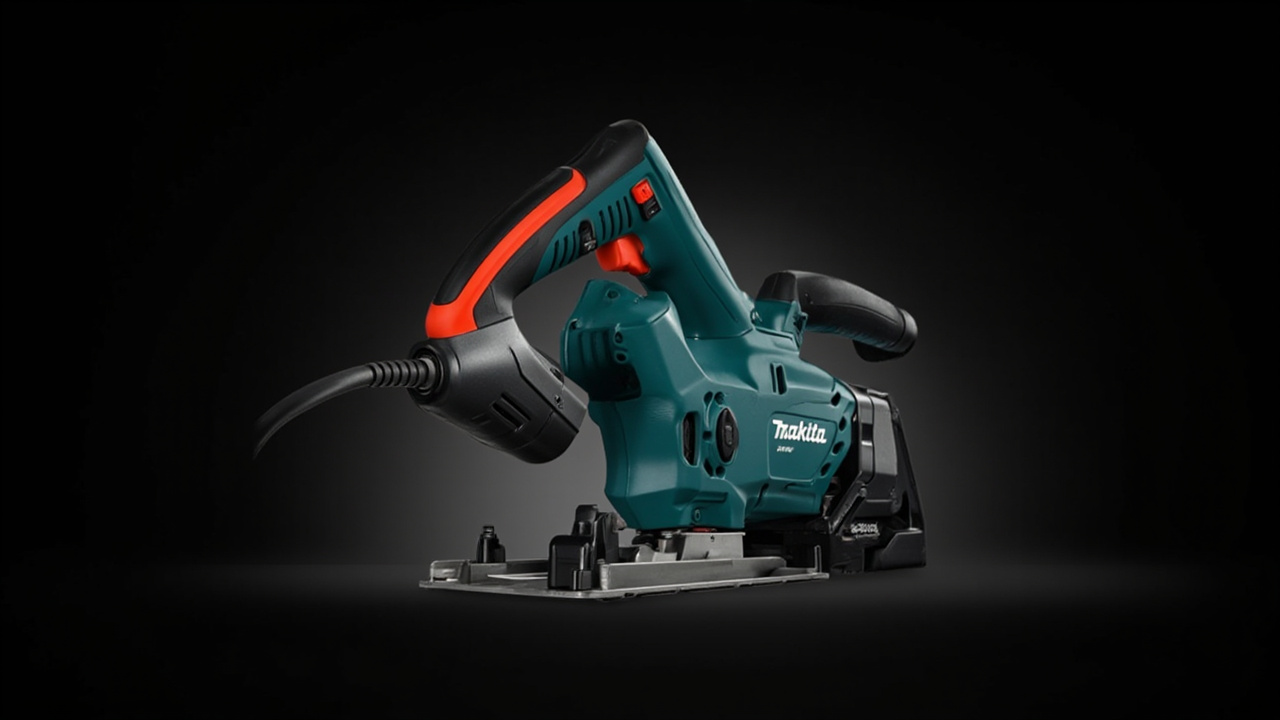
The moment I pulled this saw out of the box, I was grinning. Makita has this aesthetic thing going on that just works. The teal color paired with chrome accents? It's got retro-futuristic vibes reminiscent of classic American cars—think Galaxie or Nova. These machines looked like rockets because they were powerful machines. This saw carries that same design philosophy, and it actually matters because good design usually means good ergonomics.
The grip is substantial without feeling bloated. The handles are oversized and positioned in a way that just makes sense. When you squeeze that trigger, you feel the saw come alive—that initial torque twist is addictive. You immediately know you're holding something with serious power.
Raw Power Where It Actually Counts
Here's where the Makita really shines: straight-up cutting performance. This thing spins at 4,500 RPMs, which is actually lower than a lot of sidewinder models (the more common horizontal motor saws). But that's the point. Lower RPMs with serious torque means this saw bites through framing lumber, LVL beams, and pressure-treated wood like it's nothing. It's not trying to be the fastest—it's trying to be the strongest, and it succeeds.
I spent a good chunk of time ripping through 3/4-inch plywood, and what struck me was the balance. Whether I was reaching across the sheet to see my line or pivoting to keep the blade true, the saw felt like an extension of my body rather than something fighting against me. Part of that comes from the magnesium construction, which shaves weight compared to traditional worm-drive saws. Your arms don't hate you by the end of the day.
The Little Details That Matter
The depth and bevel adjustments are intuitive, with clearly marked measurements that are actually accurate (you'd be surprised how often that's not the case). What really impressed me was the bevel system—you can set preset stops at 22.5, 45, and 51.5 degrees with a simple locking dial. If you're doing a lot of angle cuts, this saves you from constantly fumbling with adjustments.
The included rafter hook might seem like a minor feature, but it's brilliant for hanging the saw between cuts. These little things add up to a tool that respects your time.
The Secret: Oil That Never Needs Changing
Traditional worm-drive saws require periodic oil maintenance because the gearing system needs lubrication. Makita's hypoid gear system changes this equation. The gearbox comes factory-sealed and bathed in oil that continually lubricates everything as the saw runs. You don't do anything. No maintenance. Just use it.
I'm still waiting to see how this holds up over years of abuse, but historically, worm-drive saws from quality manufacturers practically last forever on job sites. This could be a tool you pass down.
Who Is This Really For?
Here's where I'll push back against the obvious narrative. Yes, this is a professional-grade tool. But that doesn't mean you need to be a contractor to benefit from it. Think about the versatility.
This saw isn't locked into just cutting lumber. Swap in a demolition blade and you can remove underlayment during a kitchen remodel. Use a diamond-segmented blade for concrete. Attach a water feed for pavers. There are specialty blades for aluminum, for steel, for materials you might not think a circular saw could handle.
That's the real value here. You're not buying a one-trick pony. You're buying a tool that grows with your needs—whether you're a weekend DIYer tackling bigger projects each year or someone who occasionally needs specialized cutting capabilities.
The Bottom Line
We've gotten obsessed with the idea that progress means cutting the cord. But sometimes the old way works better. The Makita 5377 is evidence that "legacy tool" isn't just marketing speak—it's a genuine category of product built to outlast trends and actually get the job done right.
If you've been on the fence about worm-drive saws because they feel old-fashioned, I'd encourage you to reconsider. This isn't about being stuck in the past. It's about using the right tool for the job. And sometimes, the right tool has a plug on the end.