
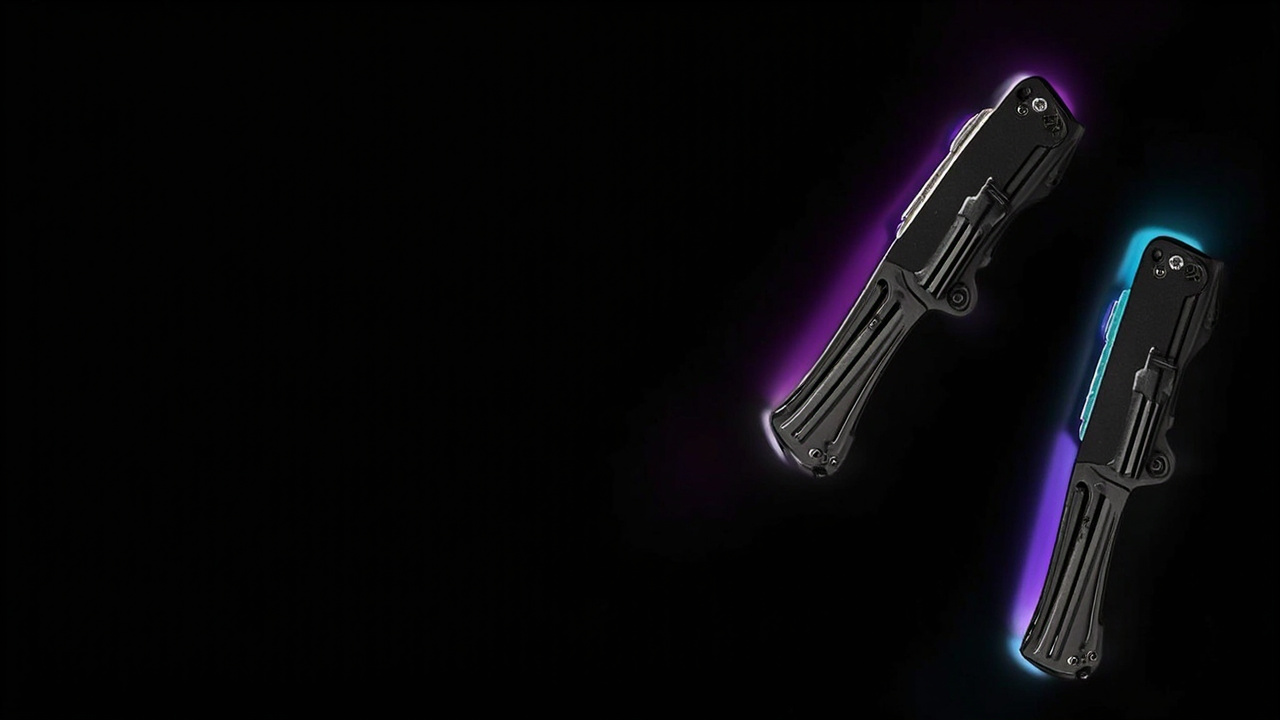
(markdown formatted) Okay, confession time: I was a manual knife snob. For years, I dismissed automatic knives (also called switchblades) as either illegal gimmicks or "tactical bro" territory. Turns out, I was missing out on something genuinely useful—and honestly kind of cool.
The Unfair Reputation
Let's get this out of the way first. Automatic knives have a bit of a sketchy reputation, and some of it is deserved while much of it isn't. Yes, they're regulated or even banned in some places (more on that later). But here's the thing: in the right situations, having one-handed deployment isn't just convenient—it's genuinely practical.
Imagine you're wearing thick gloves. Maybe you're working outdoors in cold weather, or you're a tradesperson with work gloves on. Fumbling around trying to flip open a manual folder with clumsy fingers isn't fun. With an automatic? One button press and you're cutting.
Or consider you're carrying equipment and need to make a quick cut while your other hand is occupied. That's where these knives shine. The speed advantage isn't just novelty—it's real utility.
The Tech Has Gotten Really Good
Here's what impressed me most when I started researching: the quality has skyrocketed. We're seeing premium blade steels like MagnaCut becoming standard in higher-end automatics, which is a huge deal. MagnaCut offers that rare combination of excellent edge retention AND impressive corrosion resistance. It's basically the "have your cake and eat it too" of knife steels.
The locking mechanisms and deployment actions have also matured significantly. These aren't your grandfather's switchblades with sticky, unreliable actions. Modern automatics feel like refined tools, not cheap novelties.
Understanding the Two Main Types
Before you buy anything, you need to know the difference:
Side-opening automatics look like traditional folding knives and deploy with a button release. The blade swings out from the side. These generally have stronger lockups and are easier to maintain.
Out-the-front (OTF) knives deploy straight out the front of the handle using a thumb slider. They look aggressive and have that "cool factor," but they're more complex internally.
Here's the important nuance: most side-opening automatics are "single-action," meaning they open automatically but you close them manually. OTF knives can be either single-action or double-action—the latter means you can also retract the blade with the same switch.
The Trade-offs You Should Know
Look, automatic knives aren't perfect, and it's only fair I mention the downsides:
OTF knives typically have a small amount of blade play when deployed. That's just how the mechanism works, and it's normal—but if you're coming from a rock-solid frame-lock folder, it might feel weird at first.
They're also heavier and more expensive than comparable manual knives. You pay a premium for that automation system, and the internal components add weight.
And honestly? More moving parts means more potential failure points. Springs under tension, delicate mechanisms—these are harder to repair in the field compared to a simple manual folder.
The Legal Stuff (Important!)
I can't stress this enough: check your local laws before buying or carrying any automatic knife. Regulations vary wildly by state, and sometimes even by city. Some places allow unrestricted ownership and carry, while others ban them entirely or limit blade length. A few jurisdictions even treat side-opening and OTF knives differently.
Manufacturers often provide state-by-state guidance on their websites, but laws change. Do your own homework—it's not worth the legal trouble.
So Which Ones Are Actually Good?
From my research, here's what stands out:
Best Overall: Kershaw Livewire OTF — This hits the sweet spot between premium quality and everyday usability. At 4.8 inches, it's a solid medium size, and the drop-point blade shape handles everything from opening packages to food prep. The double-action mechanism is smooth and doesn't require excessive thumb pressure. Kershaw's use of CPM Magnacut steel is a major win. It's approachable enough for newcomers but refined enough for enthusiasts. The trade-offs: some blade play (normal for OTF), aluminum scales that get slippery when wet, and a fairly understated look if you wanted something more aggressive-looking.
Best Lightweight: CRKT Twist Tighe — For those prioritizing pocket carry, this delivers the automatic advantage without weighing you down.
Best for Hard Use: Gerber 06 Auto — Built like a tank for outdoor and tactical applications.
Best MagnaCut Option: Kershaw Launch Iridium G10 — If blade steel matters most to you, this brings that excellent Magnacut performance into a reliable automatic platform.
My Take
I get it—automatic knives aren't for everyone, and the legal restrictions in some areas make them impractical for many folks. But if you live somewhere that allows them and you've dismissed automatics like I used to, I think you're doing yourself a disservice.
These knives have evolved from novelty items into legitimate tools. The technology is mature, the quality is high, and the deployment advantage is real. Whether you're a tradesperson, an outdoor enthusiast, or just someone who appreciates well-made tools, there's likely an automatic knife that could genuinely improve your daily carry experience.
Just do your homework on the laws first. And maybe practice your deployment a few times before you need it for real.
What do you think? Are automatic knives part of your EDC, or are you sticking with manual folders? I'd love to hear your perspective in the comments.
Source: Popular Mechanics - The 7 Best Automatic Pocket Knives for Fast, One-Handed Deployment