
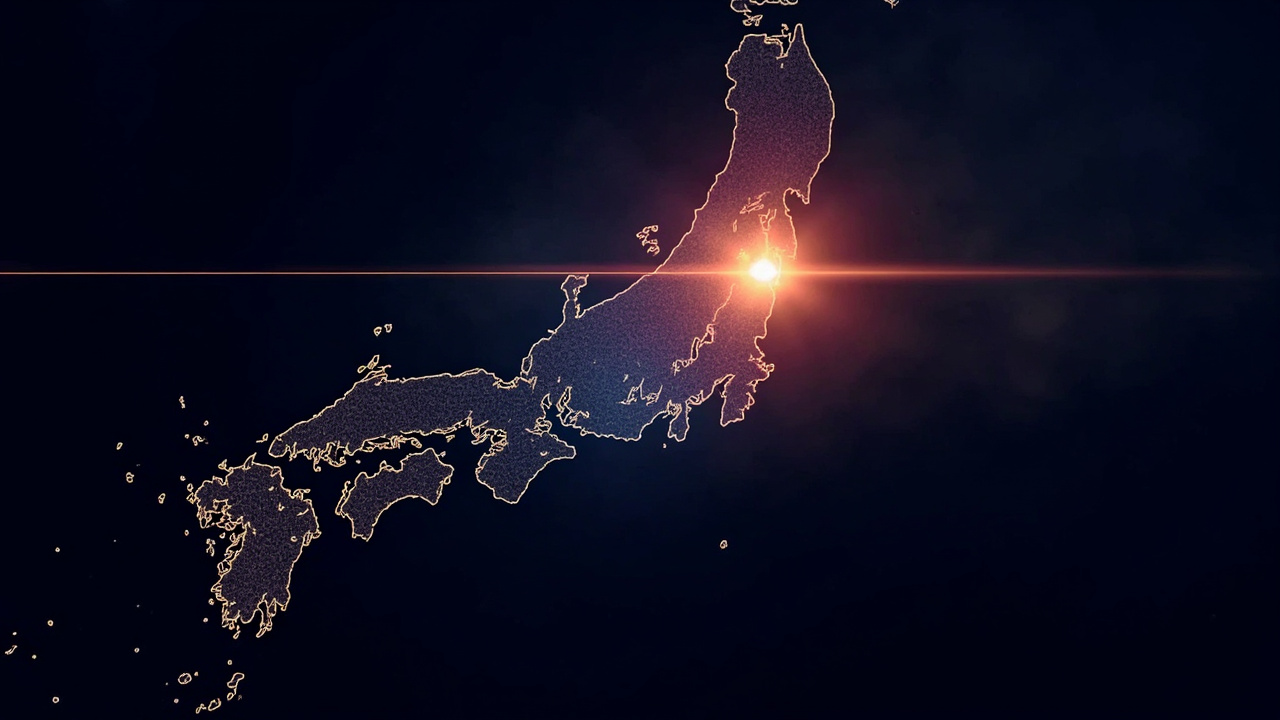
The Fault Line That Keeps Japan Up at Night
Imagine living in a country where the ground beneath your feet is basically a geological time bomb. That's Japan's reality. Sitting at the collision point of four massive tectonic plates, Japan experiences more earthquakes than anywhere else on Earth. It's like the planet decided to concentrate all its tectonic drama in one island nation.
But among all those tremors and quakes, there's one fault line that geologists are particularly worried about: the Nankai Trough. This underwater megasplay fault has been terrorizing Japan for centuries, and it just might be the key to understanding how to predict catastrophic earthquakes.
A Pattern Hidden in the Rocks
Here's what makes this so fascinating: the Nankai Trough doesn't just randomly shake things up. It has a rhythm—albeit a terrifying one. Historically, it's produced devastating earthquake pairs roughly every 90 to 150 years. The most recent ones hit in 1944 and 1946, killing thousands and causing massive tsunamis.
The good news? We're currently in a quiet period. The bad news? Scientists want to understand this fault better before the next eruption happens, because it will happen eventually.
Getting Your Hands (and Rocks) Dirty
A couple of German geophysicists named Matt Ikari and Alexander Roesner decided to do something pretty cool: they got their hands on actual rock samples pulled from deep beneath the ocean floor. These samples came from a massive research project called the Nankai Trough Seismogenic Zone Experiment, which basically involved drilling into the most seismically active zone imaginable.
Instead of just studying these rocks in a display case, Ikari and Roesner did something more hands-on. They simulated what happens during an earthquake by dragging these rock samples across each other at different speeds and pressures—basically recreating the crushing, grinding forces that happen miles underground.
The Math Wasn't Adding Up
Here's where it gets interesting. Scientists have been using mathematical models to predict earthquake behavior for years. These models rely on variables—think of them as the key ingredients in a recipe. For a long time, they thought one or two variables were enough to explain how fault zones behave.
But when Ikari and Roesner ran their experiments on these actual rock samples, something surprising popped up. At shallow depths—the most dangerous zone where earthquakes actually rupture and cause tsunamis—the traditional math just wasn't cutting it. They discovered you actually need two state variables to accurately predict how the rocks would behave, especially under lower pressure conditions.
This might sound technical and boring, but it's actually huge. It means our models were oversimplified. We were trying to describe incredibly complex geological behavior with incomplete equations.
What This Second Variable Actually Means
The second variable describes something pretty specific: how porous the rock is and how it deforms when pressure builds up. Basically, rocks aren't solid blocks—they're full of tiny spaces and weaknesses. When a fault zone starts moving, the way these spaces compress and shift really matters for predicting what happens next.
By accounting for this additional factor, scientists can now build more accurate models of how the Nankai Trough specifically behaves. And more accurate models mean better predictions.
Why This Matters (Beyond Just Japan)
While the research focuses on Japan, the implications are global. Understanding one megafault better teaches us about all megafaults. The techniques and discoveries from studying the Nankai Trough could eventually help scientists improve earthquake predictions in other high-risk zones around the world.
Plus, this research shows us something important about the scientific process. Even with decades of study, we're still discovering that our fundamental understanding of how earthquakes work needs updates. It's humbling and exciting at the same time.
What Comes Next?
The goal now is to use these improved models to identify which specific areas along the Nankai Trough are most dangerous and to get better estimates of when the next major quake might strike. It won't be a magic crystal ball that tells us the exact date—earthquakes are still too complex and chaotic for that. But even improving our odds from a vague "sometime in the next century" to something more specific could change how cities prepare and how people plan their lives.
For the millions of Japanese people living near the coast, this research represents scientists getting slowly closer to understanding the threat they live with. It's not a solution, but it's progress—and in the face of Earth's most powerful forces, progress is something worth celebrating.