
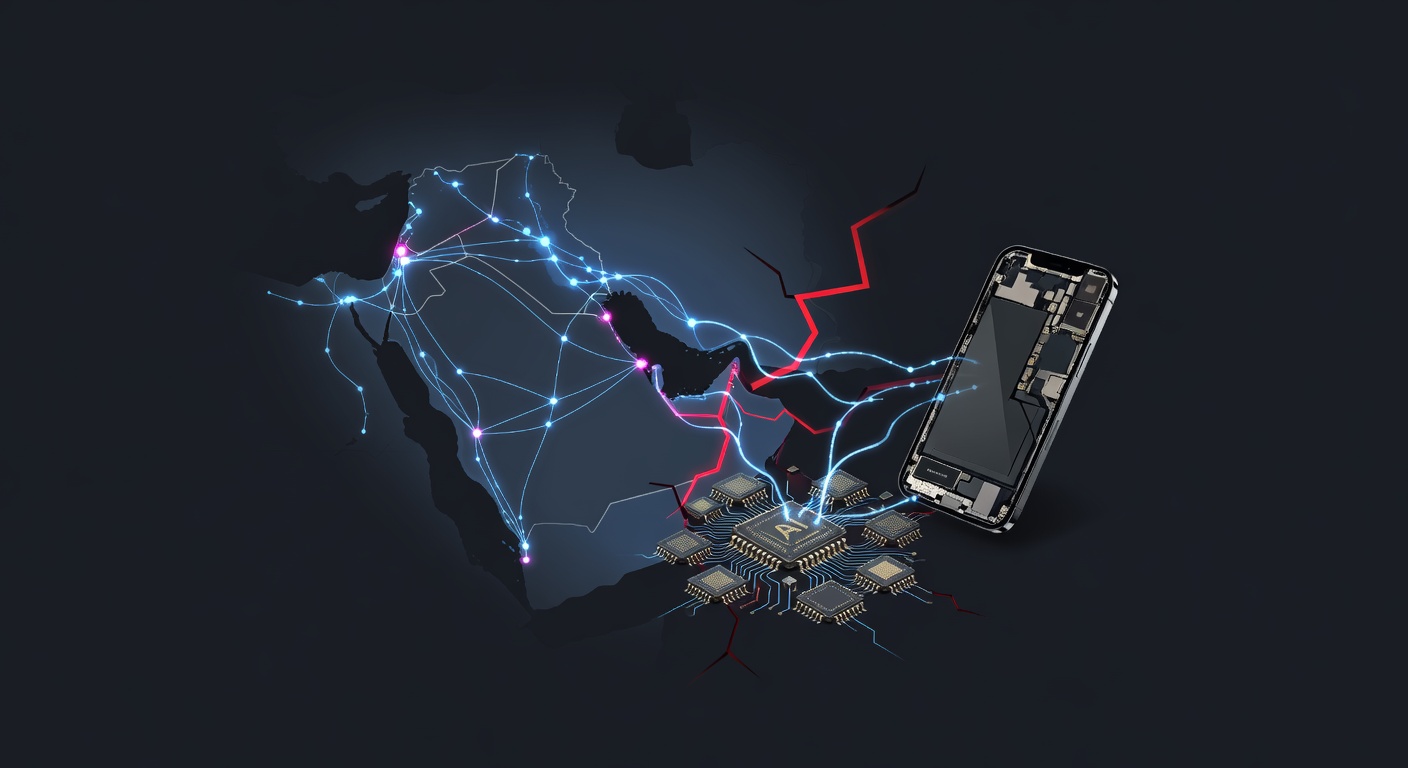
The Hidden Connection Between Geopolitics and Your Gadgets
You know that feeling when your phone starts acting up and you realize you desperately need an upgrade? Well, here's something that might keep you up at night: the ability to actually get that upgrade could depend on whether countries halfway around the world are getting along.
I've been following tech supply chains for years, and honestly, the more I learn about how our devices get made, the more amazed I am that any of them reach store shelves at all. It's like watching a incredibly complex dance where one misstep can throw everything off.
Why Iran Matters More Than You Think
When we think about semiconductor manufacturing, most of us picture factories in Taiwan, South Korea, or maybe China. And that's not wrong – those are indeed where the magic happens. But here's the thing: the materials and components needed to make those chips have to travel through some pretty dicey neighborhoods to get there.
Iran sits right in the middle of crucial shipping routes and supply networks. When tensions escalate in that region, it's not just about oil tankers (though that's important too). We're talking about rare earth elements, specialized chemicals, and other materials that are absolutely essential for chip manufacturing.
The AI Angle Makes Everything More Urgent
Now, let's talk about why this matters even more today than it did five years ago. The AI boom has created an absolutely insatiable demand for semiconductors. Every time ChatGPT processes your question or your phone recognizes your face, it's using chips that are already in short supply.
AI companies are basically in an arms race right now, trying to secure as many high-end processors as they can get their hands on. When supply chains get disrupted, it's like musical chairs – except instead of losing a seat, entire AI projects might get delayed or canceled.
The Domino Effect Nobody Talks About
Here's what really gets me: most consumers have no idea how interconnected everything is. When there's a supply chain disruption in one part of the world, it doesn't just affect that region. It ripples out everywhere.
Let's say a conflict disrupts shipping routes through the Persian Gulf. Suddenly, raw materials can't get to factories in Taiwan. Those factories slow down production. Tech companies can't get the chips they ordered. Your new gaming console gets delayed. The startup working on the next breakthrough in medical AI has to push back their launch by six months.
It's all connected in ways that would make your head spin.
What This Means for Regular People
So what can you and I actually do about this? Well, we can't exactly call up world leaders and ask them to play nice (though wouldn't that be something?). But we can be smarter consumers.
If you're thinking about upgrading your tech, maybe don't wait until your current device completely dies. Keep an eye on global news – not just the political headlines, but the economic implications. When tensions rise in key regions, prices tend to follow.
For businesses, especially smaller ones, this is where having good relationships with suppliers and maybe keeping a little extra inventory becomes really valuable. I know it ties up cash, but it beats having to explain to customers why their orders are delayed indefinitely.
The Bigger Picture
Looking at all this, I can't help but think we need to have some serious conversations about diversifying our supply chains. Putting all our eggs in geopolitically volatile baskets seems... well, risky.
Some companies are already working on this. There's been talk of "nearshoring" – bringing production closer to home – and investing in alternative supply routes. But these things take years to implement, and they're expensive.
The question is: how much are we willing to pay for supply chain security? Because right now, we're getting efficiency and low costs, but at the price of incredible vulnerability to global events completely outside our control.
What do you think? Are you willing to pay more for your gadgets if it means more stable supply chains? Let me know in the comments – I love hearing your thoughts on these complex issues that affect all of us.
Source: https://www.wired.com/story/the-war-on-iran-puts-global-chip-supply-and-ai-expansion-at-risk