
The Regeneration Mystery We've Been Chasing for Years
Imagine losing a finger in an accident and then... just growing it back. No surgery, no prosthetics, just your body naturally rebuilding what was lost. Sounds like science fiction, right? Well, some animals do this all the time. Salamanders regrow entire limbs. Zebrafish regrow their tails. And now scientists think they've figured out why — and what it could mean for us humans.
Here's the thing: over a million people lose limbs every year because of diabetes, accidents, infections, or cancer. Prosthetic limbs are incredible technology, don't get me wrong, but they're not the same as having a real arm or leg with all the sensation and natural movement your body is used to. So researchers have been asking one persistent question: Can we teach human bodies to regenerate the way other animals do?
A brand new study published in the Proceedings of the National Academy of Sciences suggests we might finally have found a clue.
Three Labs, Three Animals, One Big Breakthrough
This research is pretty cool because it brought together scientists from Wake Forest University, Duke University, and the University of Wisconsin-Madison to study three completely different creatures: Mexican axolotl salamanders, zebrafish, and mice. Each of these animals has different regenerative superpowers, and researchers wanted to see if there was something they all had in common.
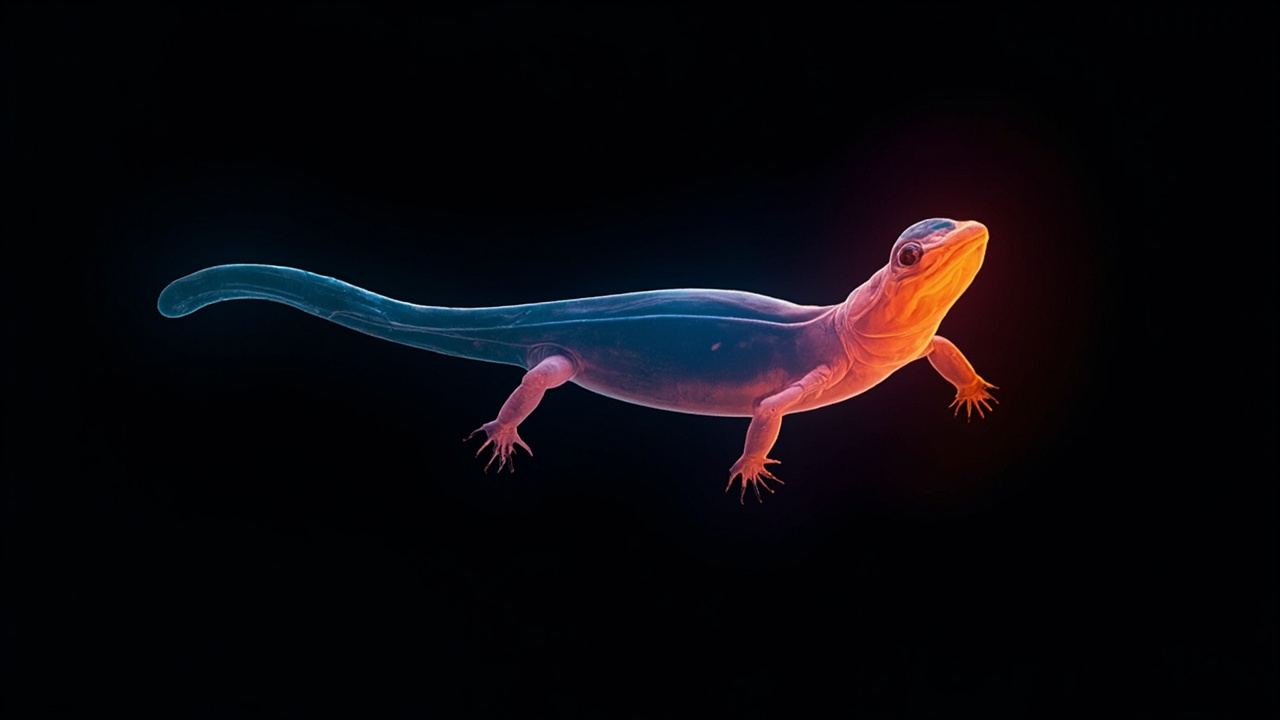
Axolotls are basically the regeneration all-stars. These little salamanders can regrow entire limbs, tails, parts of their spinal cord, and even chunks of their organs — including their heart and brain. It's genuinely wild.
Zebrafish aren't far behind. They can regrow damaged tail fins repeatedly, plus they can repair their hearts, brains, spinal cords, kidneys, and even parts of their eyes.
And then there's mice. They seem less impressive at first — they can only regrow the tips of their digits. But here's why they matter: mice are mammals, just like us. Interestingly, humans can sometimes regrow fingertips too if the nail bed stays intact. So mice are actually more similar to us biologically than salamanders or fish are.
The "Magic Genes" That Start the Regrowth Process
When researchers compared all three animals, they discovered something fascinating: they all activated the same two genes when they started regrowing tissue. These genes, called SP6 and SP8, seem to be the genetic "on" switch for regeneration.
This was the real "aha!" moment. It meant that regeneration might follow the same basic blueprint across wildly different species. That suggested there was something universal and fundamental happening at the genetic level.
To prove this wasn't just coincidence, the research team did something clever. Using CRISPR — that famous gene-editing technology — they removed the SP8 gene from axolotls. What happened? The salamanders lost the ability to properly regrow limb bones. They couldn't complete the regeneration process without that gene.
The same thing happened in mice when SP6 and SP8 were missing. Without these genes, the animals couldn't regrow their digit tips properly. This confirmed that these genes were genuinely essential for the whole regeneration process.
From Genes to Actual Treatment
Here's where it gets really exciting. Once the researchers understood what SP8 does, they started thinking about how they could create a therapy based on this knowledge.
SP8 normally activates something called FGF8 — think of it as a chemical messenger that tells the body "hey, it's time to start rebuilding." The Duke team designed a viral gene therapy that delivered FGF8 directly to damaged mouse digits.
And it worked. The treated mice showed improved bone regrowth, and some of their lost regenerative abilities came back. It's still early-stage stuff, but it proved the concept: if you can deliver the right biological signals, you can encourage regrowth even when the natural regeneration process is broken.
Why This Matters for Humans (Even If We're Not There Yet)
Let's be real: we're not going to wake up tomorrow with the ability to regrow lost limbs like a starfish. The research is still very early, and there's a massive gap between what works in mice and what will work in actual humans. Scientists are being appropriately cautious about expectations.
But here's what's genuinely encouraging: we now know that the genetic programs controlling regeneration might follow similar rules across different species. That means the biological "instruction manual" for regeneration isn't some completely alien system that only works in exotic creatures. It's something that could potentially be replicated or enhanced in human tissue.
Josh Currie, the Wake Forest researcher leading this work, explained that gene therapy approaches like this could eventually work alongside other technologies — things like bioengineered scaffolds and stem cell therapies. The solution to human limb regeneration probably won't come from a single breakthrough. Instead, it'll likely be a combination of different approaches all working together.
The Real Lesson Here
What I find most interesting about this research isn't just the science itself — it's the approach. The team deliberately studied completely different animals and compared their results. That kind of cross-disciplinary collaboration often gets buried in academic silos, where researchers only focus on one organism or system.
But this team recognized that nature had already solved the regeneration problem multiple times over. The trick was figuring out the underlying principles that worked across all those different solutions. That's the kind of thinking that leads to actual breakthroughs.
We're still years away from real clinical applications, probably decades away from helping patients regrow limbs the way salamanders do. But for the first time in a long while, we have a genuinely promising lead. We know what genes to look at. We know we can influence them with gene therapy. And we know the basic principles might work across different species — including mammals like us.
That's not science fiction anymore. That's just science.