
Wait, Scientists Are Doing WHAT Now?
Picture this: You're a seismologist trying to study earthquakes, but there's one tiny problem — earthquakes don't exactly show up on schedule. They're like that friend who says they'll text you back "later" and then disappears for three months. Except instead of ghosting you, earthquakes ghost entire decades or centuries before showing up uninvited to wreck everything.
This is exactly the frustration that led to one of the coolest (and slightly terrifying) scientific projects I've come across lately. Meet the FEAR project — and yes, that acronym is as ominous as it sounds.
Deep Underground Science Fiction Becomes Reality
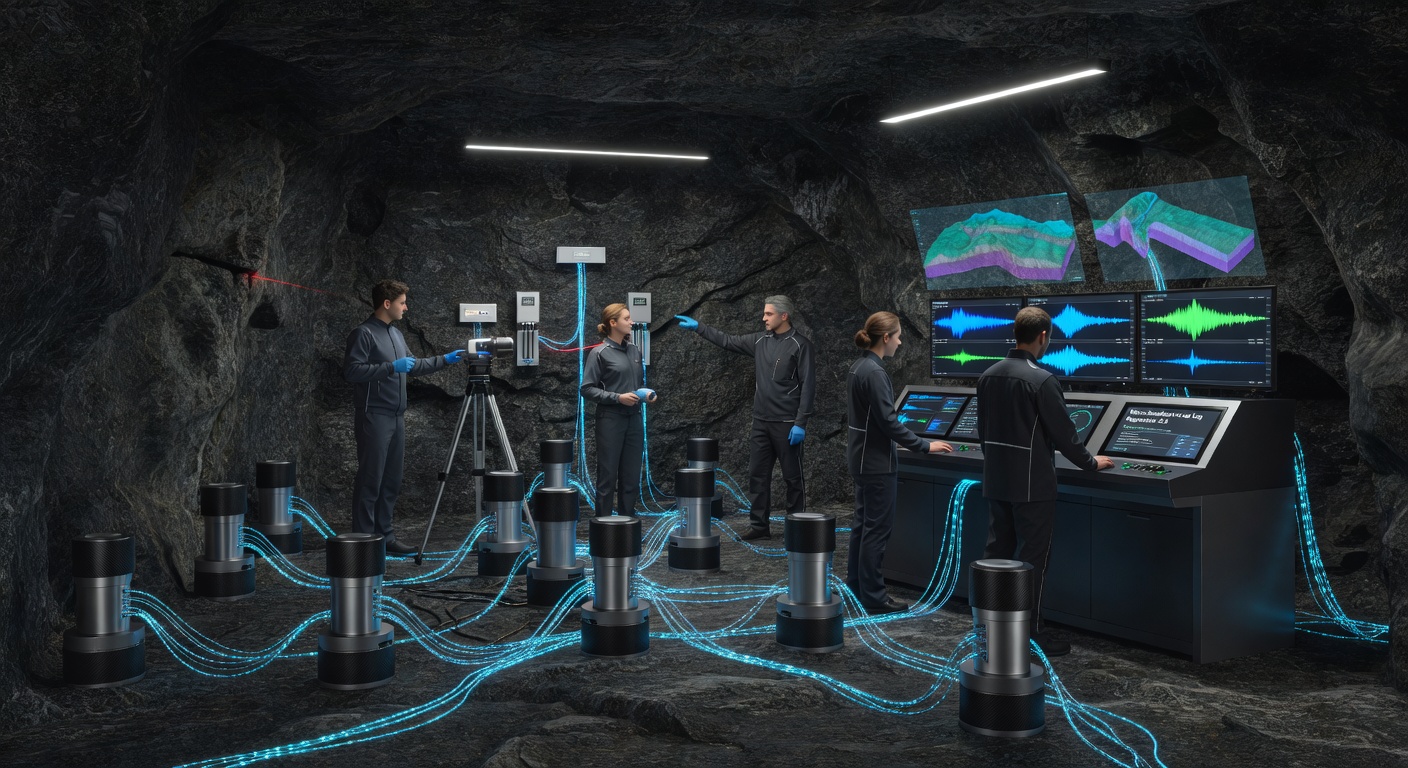
Buried 1,500 meters beneath the Swiss Alps, there's a laboratory that sounds straight out of a Bond movie. The Bedretto Underground Laboratory was originally just a side tunnel during railway construction, but scientists saw an opportunity and thought, "You know what this place needs? Controlled earthquakes."
The researchers at ETH Zurich and their international team have turned this underground space into something remarkable — a place where they can create tiny earthquakes on demand and study them with sensors placed just meters away from the action.
The Problem With Studying Nature's Tantrums
Here's the thing about earthquakes that makes them so tricky to study: they're incredibly unpredictable, and when they do happen, scientists are almost never in the right place at the right time with the right equipment. It's like trying to study lightning by standing in a field with a metal pole during a thunderstorm — technically possible, but not exactly practical or safe.
Traditional earthquake research has been limited to either lab experiments (which don't capture the complexity of real geological systems) or studying the aftermath of natural earthquakes (which is like trying to understand a car crash by looking at the wreckage).
Creating Earthquakes: The Ultimate Controlled Experiment
This is where the FEAR project gets brilliant. Instead of waiting around for nature to cooperate, the team is using hydraulic injection — basically pumping water into rock formations — to trigger tiny earthquakes along a natural fault line called the MC fault.
Don't worry, these aren't the kind of earthquakes that'll knock your coffee mug off the table. We're talking about micro-earthquakes so small they can only be detected by instruments placed within a few meters. The recent FEAR-1 experiment created about 9,000 of these microscopic seismic events, and I'm betting most of the local wildlife didn't even notice.
Why This Matters More Than You Think
What makes this project fascinating isn't just the "wow, we can make earthquakes" factor. It's the potential real-world applications. The same hydraulic injection techniques that cause problems in fracking and geothermal energy operations are being studied here in a controlled environment.
Think about it: if we can understand exactly how and why these injections trigger seismic activity, we might be able to prevent unwanted earthquakes in industrial operations. That's a pretty big deal when you consider how much we rely on these technologies for energy production.
The Beautiful Physics of Small and Large
One of the coolest insights from this research is something the lead scientist Stefan Wiemer pointed out: "Whether it's a micro-earthquake of magnitude 1 or a gigantic earthquake of magnitude 7, the physics are the same."
This means that by studying these tiny, controlled tremors, scientists can gain insights into the massive, devastating earthquakes that make headlines. It's like studying how water flows in a small stream to understand how rivers behave during floods — the principles scale up.
Safety First (Obviously)
Before anyone starts panicking about scientists playing with geological forces, the team has built in multiple safety measures. They're planning to gradually increase the magnitude of their experimental earthquakes to magnitude 1 — which is still incredibly small and poses no danger to people or structures.
These aren't mad scientists cackling while they unleash geological chaos. These are careful researchers trying to solve one of nature's most dangerous puzzles in the safest way possible.
The Future of Earthquake Science
Projects like FEAR represent a fundamental shift in how we approach earthquake research. Instead of being passive observers waiting for disasters to study, scientists are becoming active investigators, creating controlled conditions to answer specific questions.
This approach could revolutionize our understanding of seismic activity and potentially save countless lives by helping us predict, prevent, or better prepare for earthquakes. And honestly, in a world where natural disasters seem to be getting more frequent and intense, we need all the scientific innovation we can get.
The fact that this is all happening in a converted railway tunnel deep under the Swiss Alps just makes it even cooler. Science fiction is becoming science fact, one tiny earthquake at a time.