
The Long Nail Problem Nobody Asked For (But Everyone With Manicures Understands)
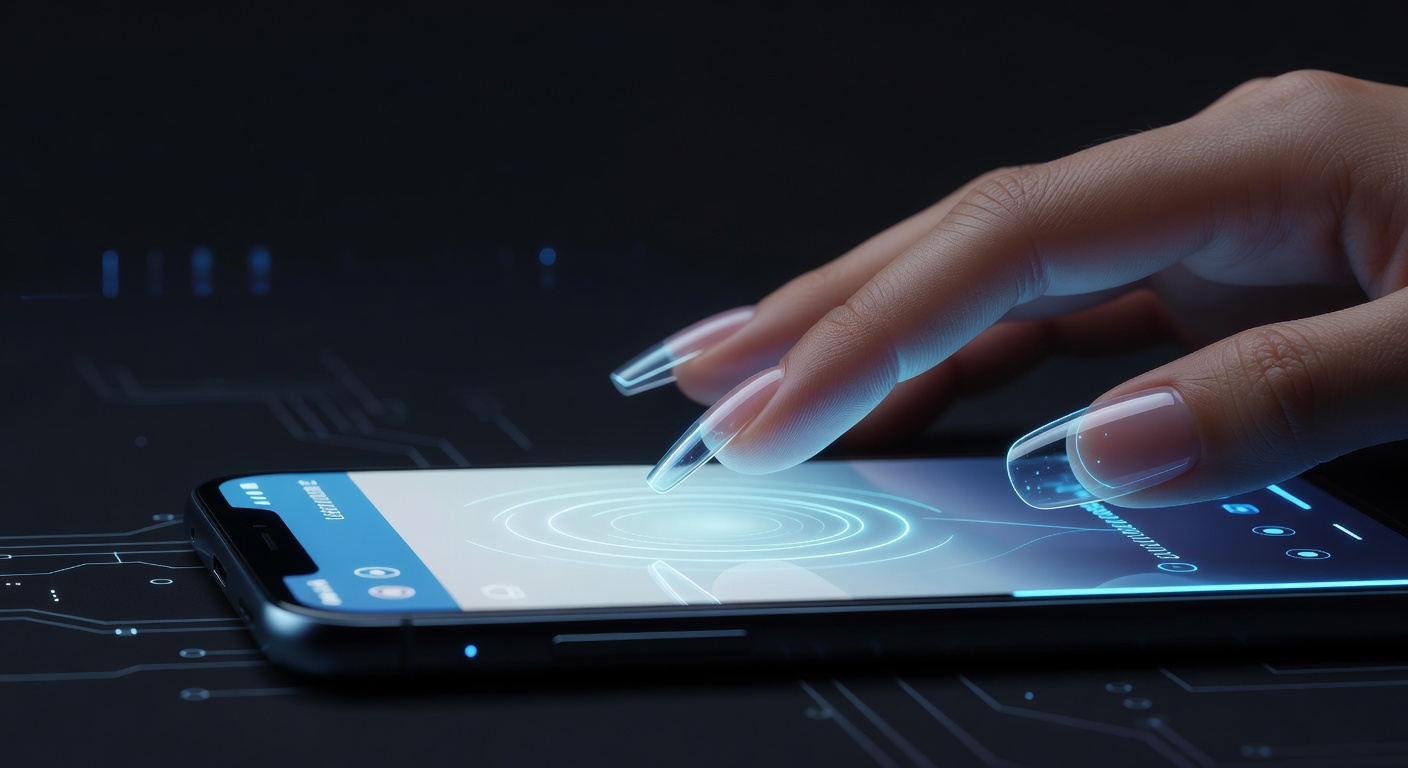
Let's be real: if you've ever had long nails, you know the struggle. You're trying to check your messages, respond to emails, or catch a Snapchat moment, and suddenly you're contorting your hand like you're performing surgery just to tap the screen with the side of your finger. Your nails are literally just sitting there, useless pieces of keratin mocking your ability to use modern technology.
Well, a team of chemists at Centenary College of Louisiana just decided: "This is dumb. Let's fix it." And honestly? I'm kind of obsessed with this solution.
How A Phlebotomist Sparked A Scientific Mission
The whole thing started in the most relatable way possible. Manasi Desai, an undergrad chemistry student, was looking for a meaningful research project. She and her advisor Joshua Lawrence were brainstorming everyday problems that chemistry could solve—the kinds of things that annoy regular people.
Then they ran into a phlebotomist during a blood draw appointment. Awkward small talk ensued, and somehow the conversation turned to how impossible it is to use your phone with long nails. The phlebotomist's response? "Yes, please!" to any solution.
That's it. That's literally all it took. One frustrated healthcare worker + one curious chemistry student = a research project that could change everything for anyone who's ever wanted their manicure to be functional.
Why Your Phone Doesn't Care About Your Nails
Here's the tech part (don't worry, I'll keep it simple): Your phone's touchscreen is basically playing an invisible electrical game with your finger.
Smartphones use something called a capacitive touchscreen. Think of it like this: the screen creates a tiny electrical field across its surface. When you touch it with your finger, you—and your electrically conductive flesh—mess with that field. The phone detects the disruption and goes, "Oh! Someone touched me here!" Then it registers your tap.
But here's the problem: your nails? They're not electrically conductive. They're just keratin. They don't interrupt the electrical field because they're electrically invisible to your phone. Same reason a pencil eraser won't work—it's nonconductive. Your phone literally cannot feel it.
For nails to work with touchscreens, they'd need to carry an electrical charge. And that's where the polish comes in.
The Dark Side of Previous Solutions
Before Desai and Lawrence came along, some researchers had already tried to solve this. They'd add conductive materials to nail polish—stuff like carbon nanotubes or metallic particles. And yes, it worked! Your nails would become little styluses.
But there were catches. Big ones:
Safety concerns - Those materials are sketchy to manufacture and inhale. Not ideal when you're just trying to look good.
The cosmetic problem - Metallic and carbon-based additions make your polish dark and shiny in a way that screams "I have special nails." Not exactly subtle.
Most people with long nails want them to look nice, not like they're secretly conducting electricity. So these earlier solutions basically required choosing between function and fashion.
The Chemistry Lab Becomes A Beauty Lab
Desai decided to be ambitious. She wanted a polish that was:
- Clear (so it looks like regular nail polish)
- Conductive (so it actually works)
- Safe (for you, manufacturers, and everyone inhaling fumes at the salon)
So she did what chemists do: she experimented. A lot.
We're talking 13 different clear polish bases and over 50 additives tested through trial and error. That's not a casual weekend project—that's serious dedication. She was basically throwing chemistry spaghetti at the wall and seeing what stuck.
Eventually, two compounds stood out:
Taurine - Yeah, that stuff in energy drinks. It's an organic compound, totally safe, but it made the polish slightly cloudy. Not ideal.
Ethanolamine - Another organic molecule that delivered the conductivity they needed, but it had some toxicity concerns.
Here's the clever part: when they combined them, the mixture actually worked. The polish stayed clear, it conducted electricity, and—most importantly—phones could actually detect touches on nails coated with it.
"It could go over any manicure," Desai explained. "It could even help people with calluses on their fingertips who have trouble with regular touchscreen use." Suddenly this wasn't just about fashion—it had actual accessibility benefits.
The Secret Sauce: Acid-Base Chemistry
Want to know the real magic? The researchers think their formula doesn't work the way earlier attempts did. Those used inherently conductive materials—basically electrical highways built into the polish.
This works through something way cooler: acid-base chemistry.
Ethanolamine is what's called a base, and when it sits on a capacitive touchscreen's electrical field, it releases tiny charged particles (protons). These particles hop between molecules, creating just enough of an electrical response for the phone to go, "Hey, something's touching me!"
It's elegant. It's clever. It's the kind of solution that makes you go, "How did nobody think of this before?"
The Reality Check
Here's where I have to be honest: this isn't ready for you to buy at Ulta yet.
The formula still has problems:
Inconsistency - It doesn't work reliably when applied to actual nails every single time. Lab conditions are one thing; real fingernails are messier.
The evaporation problem - Ethanolamine evaporates quickly. The polish only stays conductive for a few hours. That's... not great for a product that's supposed to last with your manicure.
The toxicity thing - Ethanolamine has safety concerns, and the researchers want to replace it with something completely nontoxic. The taurine-based version doesn't have toxicity issues, but it's not quite as conductive.
So yeah, this is still in the "we know it's possible, now we need to make it practical" phase. Which is honestly where all the best tech starts.
Why This Matters (Even If It Fails)
Here's what I love about this research: it started because someone bothered to ask a real person if their problem was annoying, then actually cared about the answer.
That's not how a lot of innovation works. Usually, tech companies build solutions to problems they invented. But Desai and Lawrence looked at an actual everyday frustration—something millions of people deal with—and said, "We have chemistry knowledge. We can probably solve this."
"Chemists are here to solve problems and to try to make your world better," Lawrence said, and honestly? I believe him. This is what good science looks like.
Even if the final product never makes it to store shelves, the researchers have proven it's possible. They've opened up a new way to think about making materials conductive without dangerous additives. That methodology could apply to all kinds of other products and problems.
Plus, they've already filed a provisional patent, which means they're serious about this.
The Long Game
The team is continuing to test new compound combinations, trying to find something that's completely safe, stays effective for hours, and actually works on real nails every single time. It's tedious work—mostly testing things that don't work until something finally does.
"We're doing the hard work of finding things that don't work," Lawrence said, "and eventually, if you do that long enough, you find something that does."
That's science in a nutshell right there.
So next time you're struggling to tap your phone with a fresh manicure, remember: somewhere in a chemistry lab, someone's working on making that a non-issue. It might not be tomorrow. It might take months or years. But the groundwork is there.
And honestly? I'm rooting for these researchers. Because there's something genuinely delightful about the idea that your nails could just... work. No awkward finger contortions. No compromises. Just beautiful, functional, touchscreen-compatible fingernails.
That's the kind of innovation that makes me smile.