
The Weird History of Bones in the Wrong Place
Here's something that'll make you do a double-take: your bones didn't start inside your body. They started in your skin.
I know, that sounds backwards. But according to new research, somewhere around 475 million years ago, some of the earliest vertebrates were basically walking around with bony armor embedded in their skin before they even developed proper internal skeletons. Wild, right?
Fast forward to today, and this weird trick of evolution keeps showing up again and again in different animals — especially reptiles. Fish have it. Crocodiles have it. Turtles have it. Even some dinosaurs had it.
But for centuries, scientists couldn't figure out why. And that's where this new study comes in.
Detective Work Across 320 Million Years
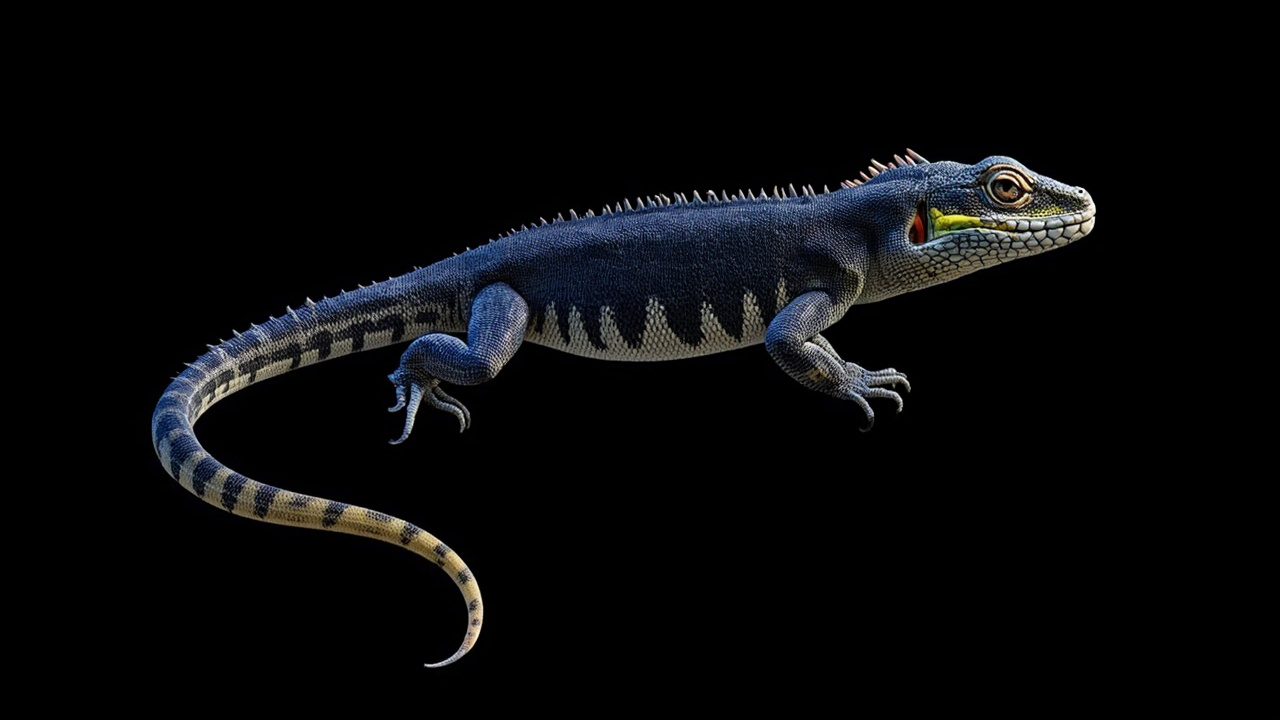
A team of researchers just published their findings in the Biological Journal of the Linnean Society, and they basically became evolutionary detectives. Instead of trying to solve a crime, they were solving the mystery of why these bony skin plates — called osteoderms — keep popping up in different lizard families.
Think of it like this: imagine you're trying to figure out what happened at a crime scene, but you only have fragmented testimonies from hundreds of witnesses who each saw different parts of the story. That's essentially what scientists do with evolution. They look at fossils, they study living animals, and they piece together a timeline of what probably happened.
In this case, the "witnesses" were 643 different lizard species — both living and extinct. By analyzing which species had osteoderms and which ones didn't, researchers could trace the family tree of these bony plates and figure out when different groups independently evolved them.
The Big Revelation: They Weren't Inherited
Here's the plot twist that surprised even the researchers: most of those lizards didn't inherit their armor from some ancient ancestor. They evolved it independently, in separate lineages, over and over again.
Most of the lizard groups that have osteoderms today acquired them during the Late Jurassic and Early Cretaceous periods — you know, that era when dinosaurs like Brachiosaurus and Stegosaurus were hanging out on Earth. The climate was chaotic, ecosystems were reshaping, and apparently, growing bone plates became a useful survival strategy. They probably helped with protection, water conservation, or adapting to new habitats.
After that initial wave of osteoderm evolution, most lizard families just... kept them. Once you've got armor, it's hard to let go.
But one group did something completely unexpected.
The Comeback Nobody Saw Coming
Monitor lizards — the ones Australians call goannas — are absolutely fascinating because their ancestors actually lost their osteoderms at some point. Probably because they preferred being lean and mean for an active hunting lifestyle. Less weight, more speed.
So far, so normal. Things evolve, things get lost.
But then something remarkable happened: when goannas migrated to Australia around 20 million years ago, they grew the armor back.
I'm not talking about a different kind of armor. I'm talking about the same type of skin bones they'd abandoned millions of years earlier. And they grew them back specifically during the Miocene period when Australia was getting drier and harsher.
This is genuinely mind-blowing because it violates something called Dollo's Law — this super old principle that says once evolution loses a complex feature, it can never come back. It's supposed to be a one-way street. Evolution doesn't have an "undo" button.
Except apparently it does, at least sometimes.
Why This Matters (And It's Not Just Nerd Stuff)
This discovery settles a debate that's been raging since the early 1900s. Back then, scientists thought all osteoderms came from one ancient ancestor that passed them down. Then they switched to thinking different groups evolved them separately. But nobody could really prove which story was correct.
Now we know: it's the second story. Multiple evolution, multiple times.
What's really cool is that this kind of research is only possible because we've got both ancient fossils and modern computers. Researchers could take fossil evidence and use computational tools to test thousands of different evolutionary scenarios simultaneously. That's something paleontologists fifty years ago simply couldn't have done.
It's the perfect mashup of old-school detective work and cutting-edge technology.
The Bigger Picture
This whole discovery reminds me why evolution is so fascinating. It's not some rigid blueprint where traits follow predictable paths. It's messy, it's surprising, and it's full of creatures finding creative solutions to their problems.
Lizards grew armor when they needed it. Lost it when they didn't. And then grew it back when circumstances changed. That's not a bug in evolution — that's the feature. Life is flexible. It adapts. Sometimes it even takes the same road twice.
And now, thanks to scientists who care enough to piece together evidence from hundreds of millions of years ago, we finally understand how that story unfolded.
Pretty cool if you ask me.
Source: https://www.sciencedaily.com/releases/2026/05/260520093709.htm