
The Moment Everything Changed
So here's something that will probably gross you out a little: your "clean" floors probably aren't as clean as you think they are.
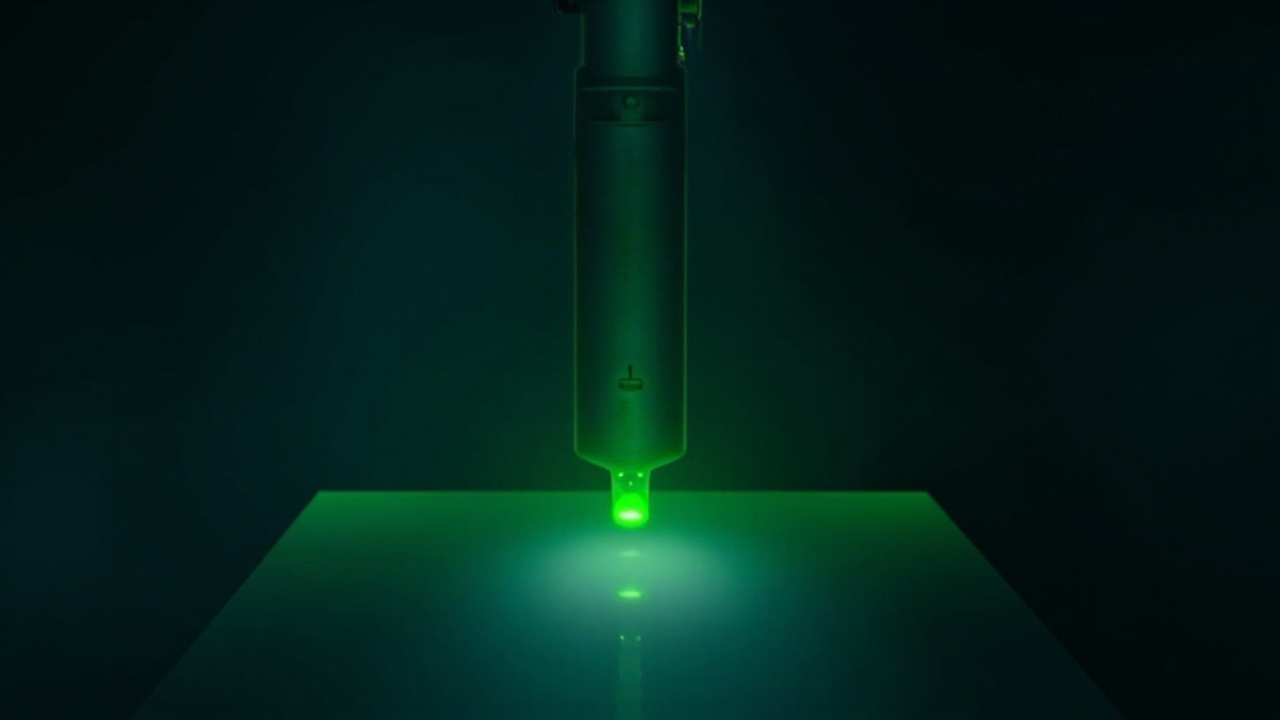
I learned this the hard way when I first saw a vacuum with a green laser attachment in action. The second that beam hit my living room floor, I literally gasped. The dust, pet hair, and tiny debris particles that were completely invisible to my naked eye suddenly lit up like a cosmic map. It was one of those unsettling moments where you realize how much nasty stuff you've been walking on without knowing it.
But Why Green? It's Not Just Marketing
Here's where it gets interesting. Dyson didn't just pick green because it looks cool (though it definitely does). There's actual science involved.
Your eyes are weirdly particular about which colors they perceive as bright. Our vision peaks at something called yellow-green light—specifically around 555 nanometers on the light spectrum. Scientists even have a fancy name for this: the photopic luminous efficiency function. Basically, it means green light looks brighter to your brain than red or blue light at the exact same power level.
When a vacuum manufacturer wants to make dust visible, they want light that your eyes will naturally pick up on. Green isn't just a random choice—it's the color your eyeballs are literally most sensitive to. It's like the vacuum company figured out how to hack human vision.
The Dust Physics Actually Matter Too
But there's more happening than just color psychology. Light behaves differently depending on what it bounces off.
When a laser sits flat against your floor at a shallow angle (rather than shining straight down like a regular flashlight), it hits dust particles in a way that makes them scatter light back at you. This is called light scattering, and it's been studied extensively by researchers. A single dust particle that would normally disappear into the background suddenly becomes visible because of the angle and color of light hitting it.
It's the same reason a car's headlights suddenly reveal tons of rain and dust when you're driving at night, but you wouldn't see much with overhead lights. The angle matters just as much as the brightness.
Real-World Results Are Actually Shocking
In practice? This makes a real difference in how thoroughly you can clean.
I've tested vacuums with standard LED headlights, and they do okay at showing you the bigger pieces of debris. But the green laser catches the fine stuff—the barely-visible dust that hangs around under couches and accumulates on laminate floors. You spot these problem areas you wouldn't have noticed otherwise, so you actually spend more time cleaning the places that need it.
The effect is honestly most dramatic in those ignored zones: under furniture, along baseboards, and in corners where light normally doesn't reach. It's less about the vacuum being stronger and more about you being able to see what needs cleaning. That's a clever approach when you think about it.
The Copycats Are Coming
Dyson pioneered this laser dust detection thing, but they're not the only ones anymore. Brands like Tineco and Roborock have started adding their own versions of laser or LED detection systems. Some of them work pretty decently, honestly.
But here's the thing—not all laser vacuums are created equal. The power, the angle, the way the system integrates with the vacuum's overall design—these details actually matter. Just slapping a laser on a mediocre vacuum doesn't automatically make it great. You can kind of tell when a feature is genuinely thought through versus just being added to match a competitor.
The Takeaway
Five years later, that green laser is still one of the main reasons I recommend certain vacuums to people. It's not flashy or complicated, but it works because it's based on how human vision actually functions.
Your floors are probably dirtier than you think. And honestly? Knowing that might be the motivation you need to actually clean more thoroughly. Sometimes the best technology is just technology that helps you see the problem more clearly.