
The Problem with How We Currently Clean Water
Okay, here's something that blew my mind while researching this story: roughly half of all the energy used in manufacturing worldwide goes toward separating stuff. Separating medicines from impurities. Separating dyes from wastewater. Separating water from everything else in it.
Half. Of. All. Industrial. Energy.
That's not a small number. And the reason it matters so much is that most factories still rely on methods that are basically like boiling water to make tea—effective, sure, but incredibly energy-hungry. We're talking about distillation, evaporation, the whole "heat everything up and hope for the best" approach.
But now, researchers from some pretty impressive institutions (including India's CSMCRI, IIT Gandhinagar, and partners in Singapore) have developed something that could flip this problem on its head. And it all comes down to holes. Really, really small ones.
Meet the POMbranes: Nature's Tiny Copycats
Here's where it gets fun. The researchers created something called "POMbranes"—and honestly, I wish they'd picked a catchier name, but the science behind it is anything but boring.
Think about how your kidneys filter blood. They don't boil anything. Instead, they use incredibly precise molecular gates called aquaporins—channels that are exactly the right size to let water through while blocking bigger stuff. It's nature's filtration system, working perfectly after millions of years of evolution.
These scientists basically said, "Let's build that, but on purpose."
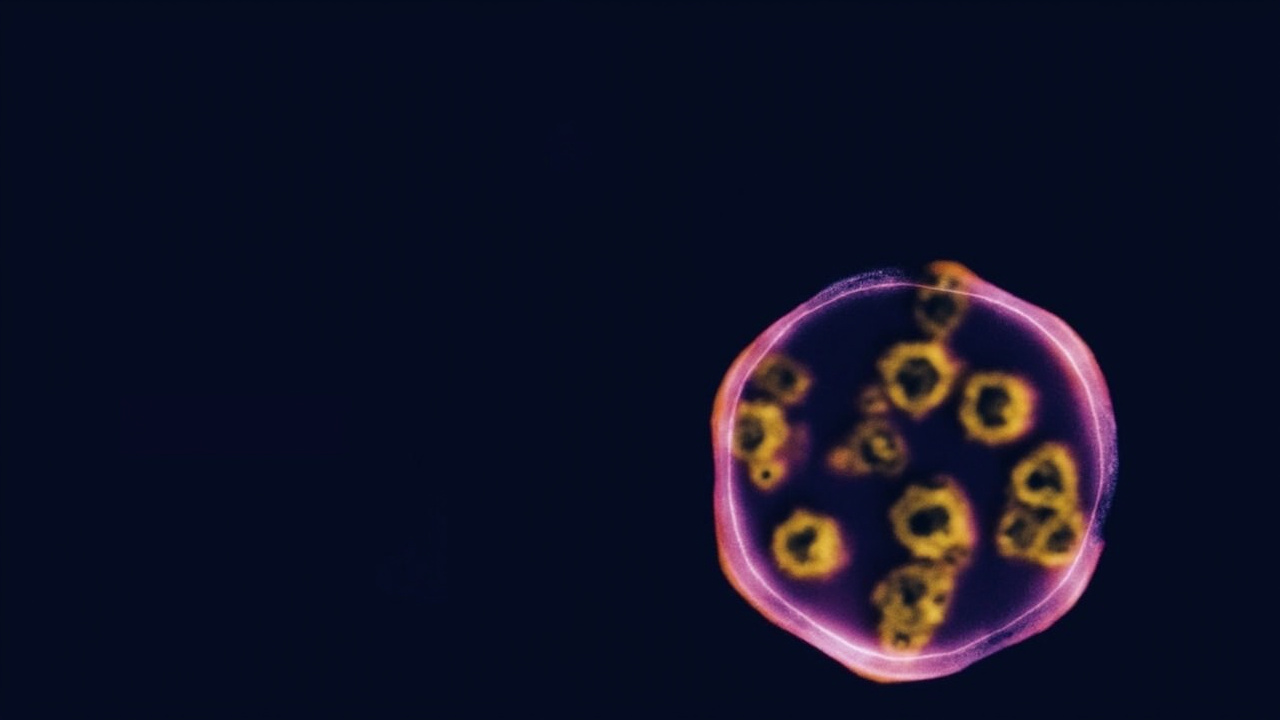
They used tiny metal clusters called polyoxometalates (POMs—there's the acronym) that naturally have a hole in their center. Not just any hole. A hole that's exactly one nanometer wide. For reference, a human hair is about 80,000 nanometers thick. So these pores are impossibly small.
The cool part? Unlike traditional plastic filters, these holes never change shape or degrade. They're permanently locked in place, like nature's own perfect design.
How Do You Build a Filter Out of Clusters?
Here's where the engineering gets really clever. You can't just dump a bunch of these POM clusters together and expect them to filter anything. You need them to form one continuous, seamless layer.
So the researchers attached flexible chemical chains to each cluster. When they placed these modified clusters on water, something beautiful happened: they spread out and organized themselves into a thin, uniform film. By adjusting the chain length, they could control exactly how tightly the clusters packed together.
The result? A molecular sieve where the only way for anything to pass through is those perfect one-nanometer holes. No shortcuts. No gaps. Just pure, precise filtration.
The Numbers Are Actually Impressive
I'm usually skeptical when I see "revolutionary" claims in science news. But here's what made me do a double-take: these membranes showed nearly ten times better separation performance compared to existing technologies.
Ten times.
They could distinguish between molecules that differ by only 100-200 Daltons (a unit of molecular weight). That's like being able to tell the difference between a bowling ball and a slightly heavier bowling ball. Conventional polymer membranes would laugh at that challenge.
And here's what really matters for real-world use: these membranes are flexible, stable across different acidity levels, and can be manufactured in large sheets. That's the trifecta of "actually usable in industry," not just "works in a lab."
Why This Could Be a Big Deal for Textiles and Pharma
India's textile industry is worth hundreds of billions of dollars, and it has a dirty secret: dyeing and finishing clothes requires enormous amounts of water and generates massive wastewater problems. That colored water from fabric processing? It has to go somewhere, and right now, treating it is expensive and energy-intensive.
These new membranes could selectively remove dye molecules while letting water through—basically creating a shortcut for recycling that water instead of just dumping it or using more energy to clean it.
The pharmaceutical industry could benefit too. Drug purification is notoriously finicky, and getting those last traces of impurities out is both difficult and energy-intensive. A membrane that can do molecular-level separation? That's valuable stuff.
My Take: This Gives Me Cautious Optimism
I know what you're thinking: "Great science, but will it actually help?" Fair question. We've seen plenty of promising lab results that never make it to real-world application.
But here's why I'm cautiously excited about this one:
First, the performance gains are massive—nearly 10x improvement isn't incremental. That's the kind of leap that gets industry attention.
Second, they specifically mention scalability. Large sheets. Manufacturable. That's not always a given with cutting-edge materials science.
Third, the applications (textiles, pharmaceuticals, water treatment) are industries that are actively looking for better solutions. There's demand here.
Is it going to "change how the world cleans water" overnight? No. But could this be a genuine piece of the puzzle for more sustainable manufacturing? I'm betting yes.
Sometimes the smallest innovations—holes measured in billionths of a meter—turn out to be the biggest breakthroughs of all.
Source: ScienceDaily, June 2026 (https://www.sciencedaily.com/releases/2026/06/260612032049.htm)