
The Plot Twist Nobody Saw Coming
Okay, I need to tell you about something that just blew my mind, and trust me — scientists are equally shocked.
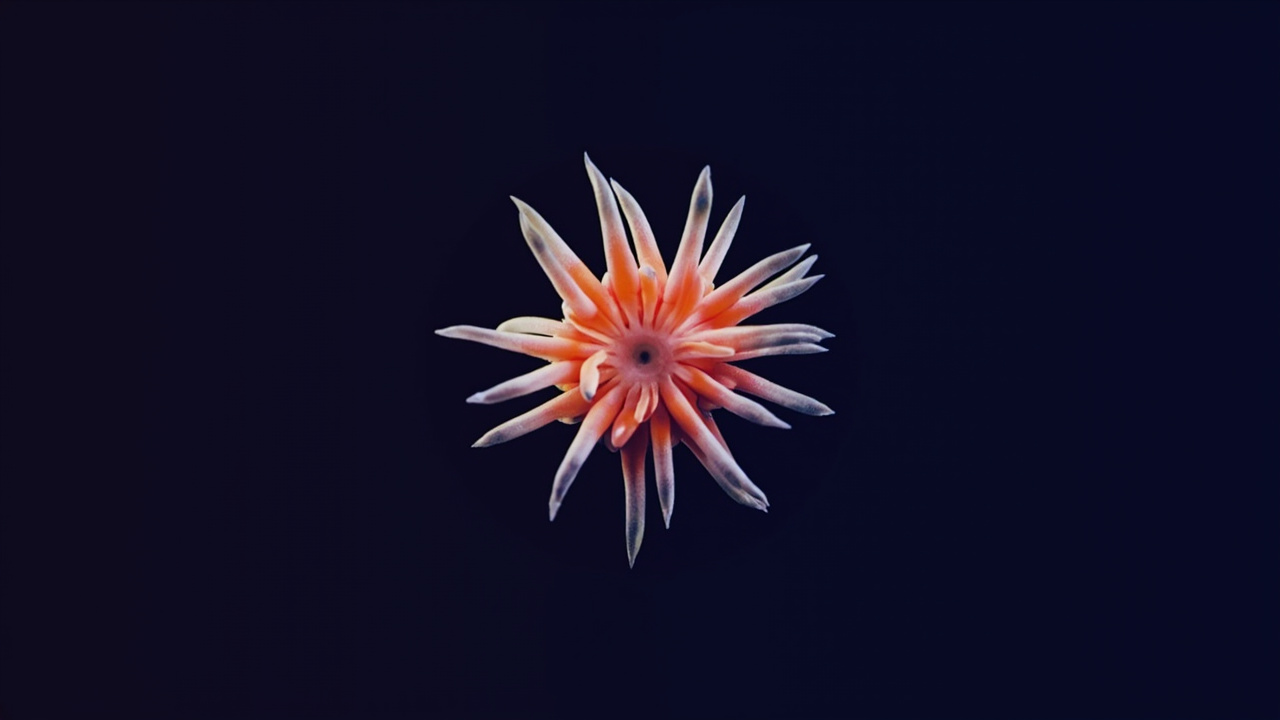
Researchers studying sea anemones — those colorful, tentacled creatures you see swaying in tide pools — stumbled onto something that challenges everything we thought we knew about how animals fight viruses. And here's the wild part: the key to their survival isn't about turning ON their immune defenses.
It's about keeping them OFF.
Meet CARDIB, the protein that doesn't play by the rules.
A Protein That Looks Familiar But Acts... Weird
When scientists at Hebrew University of Jerusalem and their colleagues first spotted this protein in sea anemones, they thought they knew what they were looking at. The molecule, which they named CARDIB, looked remarkably similar to one of our most important antiviral proteins called MAVS.
In humans, MAVS is like an alarm system. When a virus invades, MAVS helps sound the bells and mobilize our immune defenses.
So naturally, researchers assumed CARDIB would do the same thing.
"But everything about CARDIB suggested it should function like MAVS," explained Professor Yehu Moran. "Instead, we discovered that it does the exact opposite. Rather than activating antiviral defenses, CARDIB normally suppresses them."
Wait — the what now?
Why Would Suppressing Your Immune System Help You Survive?
I know what you're thinking. If viruses are attacking, wouldn't you want your defenses firing on all cylinders? What kind of backwards logic is this?
Here's where it gets really interesting. The researchers used CRISPR gene editing to remove the CARDIB gene from sea anemones, then watched what happened when they exposed them to viruses.
The results? Sea anemones without CARDIB became much more susceptible to infection. Viruses multiplied rapidly, the animals couldn't properly activate their defenses, and they struggled to fight back.
"The results were completely counterintuitive," said PhD candidate Ton Sharoni. "Although CARDIB acts as a brake on the immune system under normal conditions, that brake turns out to be essential for mounting an effective antiviral response."
So CARDIB acts like a governor on a car — limiting speed under normal circumstances — but that limitation is somehow crucial for ultimate survival. Without it, everything goes haywire.
Nature Matters — A Lot
But here's what I love most about this research. The scientists didn't just stop at lab experiments. They took their genetically modified sea anemones and moved them from cozy laboratory aquaria into outdoor marine mesocosms filled with natural estuarine water.
This exposed the animals to the real world — complete with the messy, unpredictable mix of viruses and microorganisms they'd encounter in nature.
The difference showed up within days. Sea anemones missing CARDIB accumulated substantially more viruses than their unmodified cousins. Some immune genes that seemed only moderately important in the lab suddenly became clearly crucial in natural conditions.
"This demonstrated that the pathway we discovered is not simply a laboratory phenomenon," Moran said. "It plays a crucial role in helping these animals cope with the viral challenges they face in nature."
Evolution Gets Creative
Here's the big picture takeaway. For a long time, scientists assumed that animals inherited a single core antiviral system from a common ancestor — that the basic molecular machinery for fighting viruses was essentially the same across the animal kingdom.
This research throws that idea out the window.
Sea anemones split from the evolutionary line that led to humans over 600 million years ago. Yet both lineages developed ways to protect themselves from viral threats. The problem is, they didn't necessarily arrive at the same solution.
"Humans and sea anemones both need protection from viruses, but this work shows that evolution can organize those defenses in fundamentally different ways," Moran noted.
Think about that. Evolution didn't just copy-paste the same immune strategy across all animals. It experimented, tried different approaches, and multiple solutions emerged independently.
Why This Matters Beyond the Science
First of all, it's a reminder that nature is far more creative than we give it credit for. We shouldn't assume our way of doing things is the only way — or even the best way — especially when we're looking at creatures that have been evolving for hundreds of millions of years.
Secondly, this highlights why studying "non-model" organisms — creatures outside the usual lab mice and fruit flies — is so valuable. Sea anemones might seem like oddball research subjects, but they offer genuine windows into the deep history of life on Earth.
And who knows? Maybe someday this counterintuitive "brake" strategy could inspire new approaches to treating viral infections in humans. Science has a funny way of finding wisdom in unexpected places.
Source: ScienceDaily — Scientists discover a completely different way to fight viruses