
The Mystery of Missing Gold (That We Actually Found)
Gold is weird. It's one of the rarest elements we know about, yet somehow it shows up in wildly different amounts depending on where you look on Earth. For the longest time, geologists knew that volcanic island arcs—those dramatic chains of islands formed where tectonic plates collide—had way more gold than other volcanic regions. But nobody could explain why.
That's where a new study comes in, and honestly, it's pretty cool.
Finding Gold in Glass
A team of international scientists decided to tackle this puzzle by studying something pretty unglamorous: volcanic glass from the seafloor. When lava cools super fast in the ocean, it traps its chemical fingerprint inside the rock, like nature's own time capsule. The researchers collected 66 samples from the Kermadec Island Arc (which sits near New Zealand in the South Pacific) and analyzed them to death.
What they found was wild—the gold concentrations in these samples were six times higher than what you'd find in similar rocks near mid-ocean ridges. That's a huge difference, and it demanded an explanation.
Here's Where It Gets Hot (Literally)
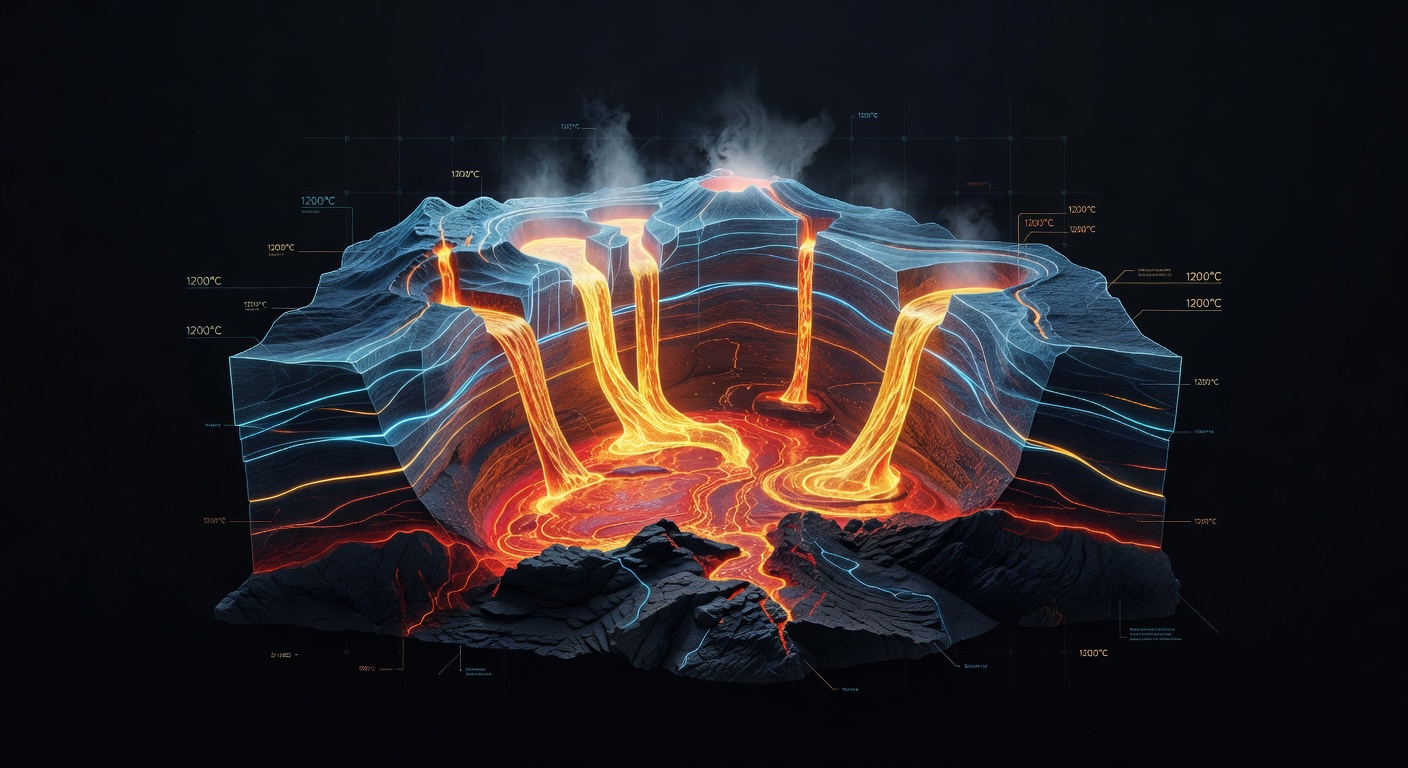
The breakthrough came down to temperature. These volcanic island arcs experience something called hydrous melting—basically, water-rich rock melting at extremely high temperatures. The key insight? Gold loves to hang out with sulfur in the rock, but only while it's relatively cool. Once the temperature climbs high enough, the sulfur breaks its chemical bonds and releases the gold into the molten magma.
Think of it like this: sulfur is like a really overprotective parent keeping gold locked in the house. But when things heat up enough, that parent gives up and lets gold run free into the magma.
The Reheating Trick
Here's the really clever part—these volcanic zones don't just melt once. They undergo repeated remelting. Imagine taking a piece of dough, squishing it flat, reheating it, then doing it all over again. Each time you repeat this process, you're extracting more gold that was previously locked away.
This combination of extreme heat and multiple meltings is what gives these volcanic islands their reputation as Earth's "gold kitchens." It's a natural concentration mechanism that's been running on autopilot for geological timescales.
So... Can We Mine It?
Here's the buzzkill: not really. While these volcanic regions do concentrate gold impressively compared to other areas, the absolute amounts are still tiny—we're talking nanograms per rock. And since most of these treasure troves are on the seafloor in the middle of nowhere, mining them would be a logistical and economic nightmare. The gold just isn't there in quantities that make sense to extract.
But that's not really the point.
Why This Actually Matters
What's genuinely exciting about this research is that it helps us understand how Earth works at a fundamental level. Gold doesn't magically appear—it moves through our planet in specific, predictable ways. Knowing how it gets concentrated tells us something deeper about the planet's internal plumbing, the way rocks melt, and how elements migrate through the mantle.
As the lead researcher put it, "the alchemy starts long before the metal reaches the surface." Understanding these processes gives us insight into countless other geological phenomena and helps us piece together how our dynamic, churning planet actually functions.
Sometimes the most valuable discoveries aren't about finding treasure—they're about understanding the geological machinery that's been quietly reshaping our world all along.