
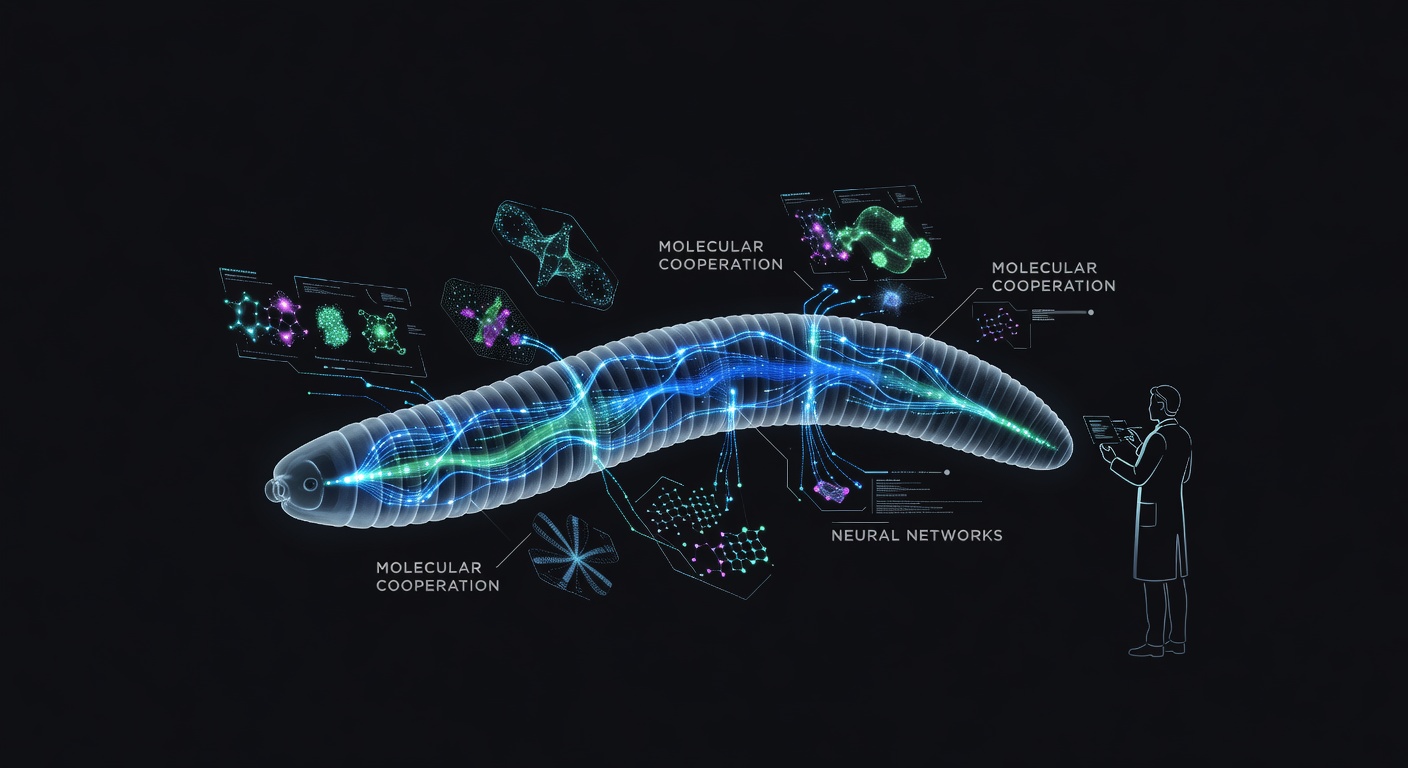
The Tiny Heroes of Collective Intelligence
You know what's absolutely fascinating? Some of the biggest breakthroughs in understanding teamwork and collective behavior aren't coming from studying dolphins, bees, or even humans. They're coming from tiny, seemingly simple worms.
I've been following research in collective behavior for a while now, and honestly, it never ceases to amaze me how much we can learn from the smallest creatures on our planet. These microscopic worms are basically living laboratories that help us understand one of life's most intriguing puzzles: how do individual creatures suddenly decide to work together as a team?
It's All About the Molecular Magic
Here's where it gets really cool. Scientists are now able to peek inside these worms at the molecular level – we're talking about the actual proteins and chemical signals that make collective behavior happen. It's like having a backstage pass to see how nature's most impressive coordinated performances actually work.
What blows my mind is that these aren't conscious decisions. There's no worm CEO calling a team meeting or sending out memos about working together. Instead, it's all happening through incredibly sophisticated molecular communication systems that have evolved over millions of years.
Why This Matters More Than You Think
Now, you might be wondering, "Why should I care about worm teamwork?" Great question! This research is actually super relevant to our modern world.
Think about it – we're living in an age where we're trying to create:
- Swarms of delivery drones that work together
- Self-organizing computer networks
- Better understanding of how social movements spread
- More effective team dynamics in workplaces
All of these challenges involve the same fundamental question: How do individual units spontaneously organize into coordinated groups?
The Bigger Picture
What excites me most about this research is how it's bridging biology and technology. By understanding the molecular basis of collective behavior in simple organisms, we're essentially reverse-engineering nature's solutions to coordination problems.
It's like having millions of years of R&D handed to us on a silver platter. Nature has already figured out how to make collective intelligence work efficiently, and now we just need to decode the instruction manual.
Looking Forward
The implications stretch far beyond just understanding worms. This research could influence how we design everything from artificial intelligence systems to smart cities. Imagine urban traffic systems that flow as smoothly as a coordinated swarm, or AI networks that can spontaneously organize to solve complex problems.
The beautiful thing about science is how studying something as simple as worm behavior can unlock secrets that transform our understanding of cooperation, teamwork, and collective intelligence across all scales of life.
Who knows? The next time you're stuck in traffic or dealing with a dysfunctional team at work, you might find yourself thinking about what those tiny worms have figured out that we haven't quite mastered yet.
Source: https://iisc.ac.in/events/worming-out-molecular-secrets-behind-collective-behaviour